


6G development is progressing rapidly, with new figures from Dell'Oro Group projecting global wireless capital expenditure to reach $500 billion by 2034.
The analyst firm’s 6G Advanced Research Report suggests that as the next-generation standard nears, spending will soar, with cumulative 6G Radio Access Network (RAN) revenue expected to top $100 billion.
6G might seem a way off, especially with the botched 5G rollout meaning operators are still placing catch up in places, but development is well underway.
The U.S. National Telecommunications and Information Administration (NTIA) is working on picking its preferred frequency band for 6G, with 7 gigahertz (GHz) the current leader. China is also aggressively moving on its 6G plans, with a timeline already mapped out, a GHz band picked for large-scale field trials, and even pre-6G test networks having reportedly been conducted.
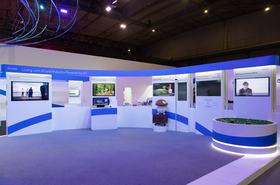
NTT DoCoMo imagines 6G in the space age
Talking robots and AI with 6G-technology chief Satoshi Nagata
On the operator side, partnerships have already been struck to develop 6G technologies, with the most recent team-up between Ericsson and Telstra. Beyond partnerships, vendor efforts are ramping up, with brands like SoftBank, Apple, and NTT DoCoMo hard at work on next-gen connectivity concepts.
6G’s success, however, depends on where 5G failed: tangible use cases to justify the capex.
Already, AI is among the early advantages being touted for next-gen networks, with Qualcomm CEO Cristiano Amon using his MWC keynote earlier this year to recast 6G as a global “AI data center network.” Nvidia too, is leaning into AI for 6G, contending it could be used to bring AI agents from centralized data centers closer to the network edge.
Dell’Oro’s report frames 6G’s base-case scenario as an “evolutionary” technology that builds on the existing benefits of 5G foundational Massive MIMO (Multiple-Input, Multiple-Output) systems, as wider channel bandwidths to “deliver step-change improvements in radio access network (RAN) economics.”
“While the G decoupling movement is gaining momentum for all the right reasons, the most likely scenario is still that 6G will be another G, with 6G RAN capex expected to accelerate toward the end of the decade,” said Stefan Pongratz, VP of RAN and telecom capex research at Dell'Oro Group.
“At the same time, operators are in a much stronger position today from a network capacity perspective than they were during the transition from 4G to 5G. As a result, cumulative 6G RAN revenue during the first six years of the cycle is projected to be 10 to 20% lower than during the comparable period of the 5G cycle.”
The analyst firm’s report suggests 6G won’t expand the overall RAN market. However, Dell’Oro projects a 1% CAGR between 2030 and 2034, with cumulative 6G RAN investments accounting for nearly half of total RAN capex during that period.


Comments