

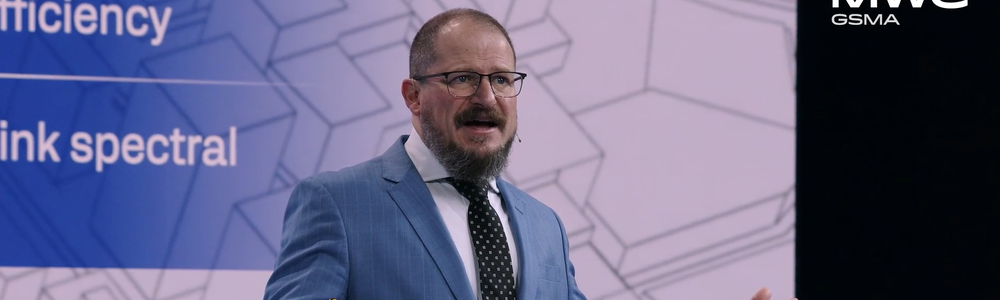
Qualcomm CEO Cristiano Amon used his MWC keynote to recast 6G as nothing less than a global “AI data center network," claiming future telecom infrastructure will sense cities in 3D, police drone traffic, and power a new wave of AI “agents” across devices.
Speaking in Barcelona, Amon said the shift in network infrastructure promised by next‑generation standards will be “as profound as going from a dial‑tone network to today’s high‑performance broadband.”
Amon argued that 6G will bake AI into every layer of the network, from base stations to edge sites and core infrastructure, turning telecom systems into what he called “AI data center networks” rather than simple connectivity pipes.
The next-generation networks Amon bragged about will be built around three pillars: connectivity, computing, and sensing.
On the latter of those pillars, the Qualcomm CEO touted sensing’s potential as a “brand new feature of 6G," claiming sensing could be used to process radio frequency signals to power applications like drone sensing “at the centimeter or millimeter level” or even map every car or pedestrian on a road.
Amon described a shopping scenario where a user walking through a city sees something they like, and their smart glasses, connected to an AI agent, can identify the item, show them how it would look on them, and even facilitate a conversation with a friend about the purchase.
This “completely different mobile experience” is based on AI agents being fully immersed in the user's environment, seeing what they see, and enabling them to buy and try items instantly.
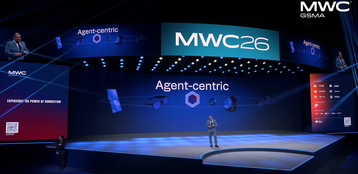
Beyond the consumer space, though, Amon highlighted the potential of the network's sensing capabilities.
He said the 6G sensing network will be a “whole new service,” with significant enterprise applications for such glasses, like using them as a moving camera, allowing for the real-time broadcast of events, and providing assistance from a control center or an agent.
“It's a very, very big opportunity, and it's a big transformation for the sector,” Amon said. “I believe, as a generational opportunity, it will create and drive new capabilities in the sector, not only the new devices that we're going to see in the ecosystem, but actually the completely new business models that are going to get created by this AI network, not only the ability to provide important data that is essential to the evolution of models, the ability to cleanse and enrich the data, but the ability to provide completely new services that is based on the sensing infrastructure.”
Stressing the need to start laying the foundation for that apparent “generational opportunity,” Amon framed Qualcomm as a central orchestrator, pointing to a coalition of 58 partners already signed up to its 6G vision.
Amon said the company is targeting 6G demonstrations in 2028, with infrastructure, semiconductors, and devices arriving toward the end of that year, ahead of a potential commercial launch “as early as 2029.”
That roadmap, Amon argued, means operators and vendors need to “start planning for it right now” as networks “evolve into a computing system” to become “critical infrastructure for many, many industries.”
“It's a very bright future for the wireless industry, and that's going to be another very big step in the evolution of wireless. And nobody can do that alone. That's the story of this industry," Amon said. "Every generation of wireless requires massive collaboration. … And we have a lot of work to do within the next few years for this incredible future together.”







Comments