

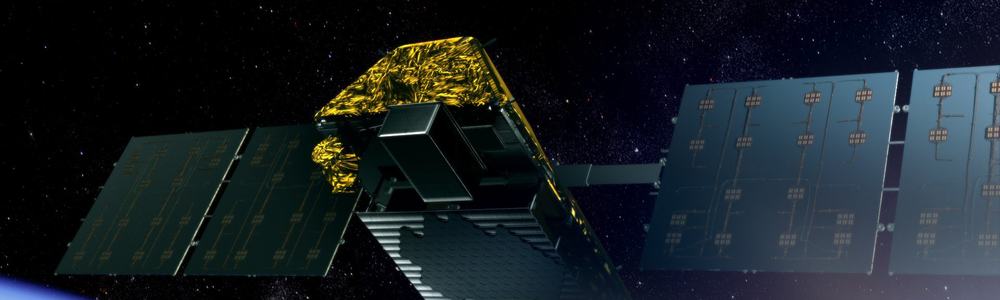
Iridium Communications, a legacy satellite operator and provider of services such as positioning, navigation, and timing (PNT), announced the commercial availability of its Iridium PNT application-specific integrated circuit (ASIC), a jam-resistant chip optimized for GPS and GNSS-dependent devices.
“The market response to the Iridium PNT ASIC has reinforced what we're hearing from customers around the world: assured PNT is becoming an essential capability across critical industries,” Michael O’Connor, EVP for PNT at Iridium, noted in a statement. “With commercial availability, we're enabling manufacturers to integrate trusted timing and location capabilities into smaller, more efficient designs, making assured PNT accessible to more applications than ever before.”
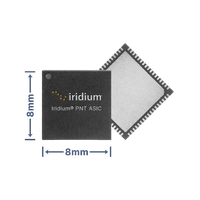
The ASIC measures eight-by-eight millimeters and weighs less than 0.2 grams. It’s designed to deliver cryptographically secure timing and location data from the Iridium satellite network through one-way signal bursts, which can verify information when GNSS fails.
Iridium unveiled the ASIC in October 2025, a move coming on the heels of having acquired PNT specialist Satelles for $115 million in 2024.
Speaking exclusively to SDxCentral's sister title DCD in May, Iridium CEO Matt Desch emphasized the critical importance of precision timekeeping to critical locations like stock exchanges, power grids, government buildings, telecom networks, and data centers.
“[Data centers are] full of hardware that must be precisely synchronized, both amongst the racks of a data center and everything they connect to,” Desch said. “Everyone is starting to appreciate that the time those data centers keep is at risk of manipulation or jamming. Operators of these sites are looking for better guarantees of resilience here.”
Iridium Cited data from the U.S. National Institute of Standards and Technology (NIST) that a GPS outage would be estimated to exceed $1.3 billion per day in 2026.
Space launch firm Rocket Labs late last month put in an $8 billion bid to acquire Iridium, effectively forging a SpaceX-like company that could develop satellites, connectivity services by orbit, and the rockets that can get them into space.
Speaking to SDxCentral in January, Desch hoped Iridium could sidestep the growing noise of “billionaires and meme stocks” drowning out the fundamentals of the satellite sector.
“There's this narrative that we’ll be crushed by the mega-constellations coming, and I think 2026 will be the year we proved that wrong,” Desch said. “We’ll show that we have our own narrative, and it's an exciting narrative, it's differentiated, it's resilient, it's valuable, and really will be more growth.”




Comments