

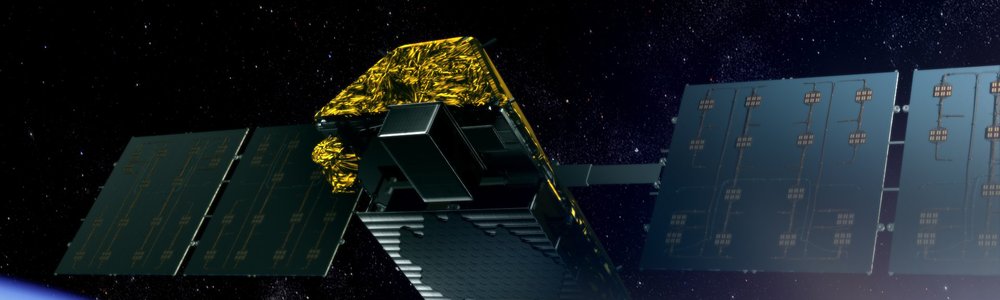
Iridium Communications recently completed a successful on-air test of its soon-to-launch satellite-based IoT service, a move CEO Matt Desch said is a significant milestone for the company’s long-simmering commercial ambitions.
The test included two-way message transmissions over Iridium’s low-Earth orbit (LEO) satellite network. It used a new 5G waveform algorithm implemented on the software-defined satellites to support the message transmission using a 3GPP-defined narrowband (NB)-IoT standard beamed from a mobile device powered by a Nordic Semiconductor module.
That semiconductor emerged from a deal Iridium struck with Nordic in late 2024, which itself emerged from Iridium’s ambitiously titled “Project Stardust” initiative unveiled earlier that year. That semiconductor deal was important for Iridium as a previous agreement with Qualcomm had fallen through, causing some uncertainty toward Iridium’s operating future.
Iridium is marketing the newly tested service as its NTN Direct offering, which Desch described as being a standards-based NB-IoT and direct-to-device (D2D) non-terrestrial network (NTN) service. That service will be marketed to mobile network operators as a way to offer satellite-based IoT services on a commercial basis.

“It was a big deal to us to have a truly end-to-end connection through pre-production Nordic chip, all the way through … and actually have that proof point,” Desch recently told SDxCentral. “We’re in kind of a tuning stage now, but we hit that milestone.”
Desch added that the milestone resulted in bonus money being paid out to employees, “so I can imagine there was a lot of people working very late hours, and there was a lot of celebration when that happened.”
That milestone also now sets Iridium to show progress to potential customers.
“There are a number of industry players who really want to see how it performs, what kind of devices that can go into, what the link budgets are, that sort of thing, and we're planning on doing that here in the next coming weeks and months,” Desch noted.
Satellite-based IoT space expectations
This approach is targeted at tapping into a satellite-based IoT market that many analysts expect is set to prosper.
ABI Research has predicted the direct-to-cellular market will generate $11.6 billion in revenues by 2030, with the IoT space itself generating $4 billion in revenues. Juniper Research is touting slightly smaller opportunities, noting it expects satellite-based IoT services to generate $2.3 billion in revenues by 2030.
However, analysts have also started to question the ability for the market to support several satellite-based service options, especially if they try to compete on a level-playing field with already established terrestrial-based telecommunication providers.
Analysys Mason in a report last year wrote that the satellite communication industry is quickly moving from a legacy of limited capacity to one of abundance, which will produce new challenges.
“For an industry that has been defined by niche markets and scarcity economics, the shift to abundance is a new paradigm; with its own challenges and opportunities,” Analysys Mason’s Christopher Baugh wrote. “A broadening industry scope could fuel revenue growth for years, which could benefit several satellite players. In addition, some players may be required to make risky strategy decisions, and not all will succeed.”
Desch noted that Iridium’s IoT focus is allowing the company to avoid the growing noise of “billionaires and meme stocks” emanating from the satellite communications space. This has been most recently highlighted by SpaceX’s nearly $20 billion spend on new spectrum assets to power its satellite-based broadband service.
“There's this narrative that we’ll be crushed by the mega-constellations coming, and I think 2026 will be the year we proved that wrong,” Desch said. “We’ll show that we have our own narrative, and it's an exciting narrative, it's differentiated, it's resilient, it's valuable, and really will be more growth.”




Comments