


The Iridium Communications takeover by Rocket Lab Corporation took a step closer to fruition with stockholder approval of the $8 billion acquisition.
First revealed in June, the deal sees Rocket Lab acquiring the satellite communications provider in a bid to merge satellite launch and operations capabilities under one umbrella.
Iridium stockholders adopted the previously announced agreement and merger plan with approximately 99.6% of the votes in favor of the transaction, representing around 81% of Iridium’s outstanding shares of common stock entitled to vote.
Matt Desch, CEO of Iridium, labeled the vote as an “important milestone toward bringing together two companies with complementary capabilities, a shared commitment to innovation, and deep experience supporting some of the world’s most critical missions. We look forward to completing the transaction and entering this exciting next chapter with Rocket Lab.”
Sir Peter Beck, Rocket Lab founder and CEO, expressed similar views, commenting that the firm was “closer to combining Iridium’s trusted global network, spectrum and decades of operating experience with Rocket Lab’s extensive launch and space systems capabilities to unlock a new era of space applications. We’re excited about what we can build together for customers, governments and millions of people around the world once the transaction closes.”
Iridium suggests GPS security capability is 5 years ahead of its time
Bold claims of decisive satellite location and timing advantage suggest foundational lead in PNT capability that goes far beyond operator
Rocket Lab launches services, spacecraft, payloads, and satellite components serving commercial, government, and national security markets. Its flagship Electron rocket is claimed to be the world’s most frequently launched orbital small rocket, and that its components have enabled more than 1,700 missions to date, spanning commercial, defense, and national security missions, including GPS, constellations, and exploration missions as far as Venus.
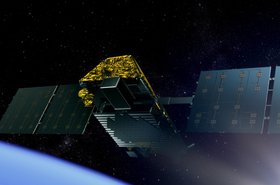
Iridium meanwhile touts a 65-plus satellite constellation using satellite-specific L-band spectrum, effectively providing complete global coverage and supporting newer use cases in IoT, direct-to-device (D2D), and safety services.
In an exclusive conversation with this title, Iridium’s CEO claimed that it has a GPS security capability in the works, which is at least five to 10 years ahead of competitors.
In no doubt what was music to Rocket Lab’s ears, Desh said, “I’m not really worried about selling this thing; people are going to buy it as soon as people find out it exists … This is a unique, ground-breaking technology targeting fraud, spoofing, infiltration, and cyber threats to come that we don’t even understand yet.”
Iridium’s time then has seemingly come more than 25 years after its formation, as the satellite communications space becomes frothier off the back of SpaceX’s various machinations, as well as Jeff Bezos’s Blue Origin launch and Amazon efforts via its Leo satellite service and its pending $11.6 billion acquisition of satellite constellation operator Globalstar.
Referencing both Bezos and Elon Musk's space efforts, Desch told SDxCentral earlier this year that Iridium’s specific focus allowed it to avoid the growing noise of “billionaires and meme stocks” emanating from the satellite communications space.
“There's this narrative that we’ll be crushed by the mega-constellations coming, and I think 2026 will be the year we proved that wrong,” Desch said at that time. “We’ll show that we have our own narrative, and it's an exciting narrative; it's differentiated, it's resilient, it's valuable, and really will be more growth.”





Comments