

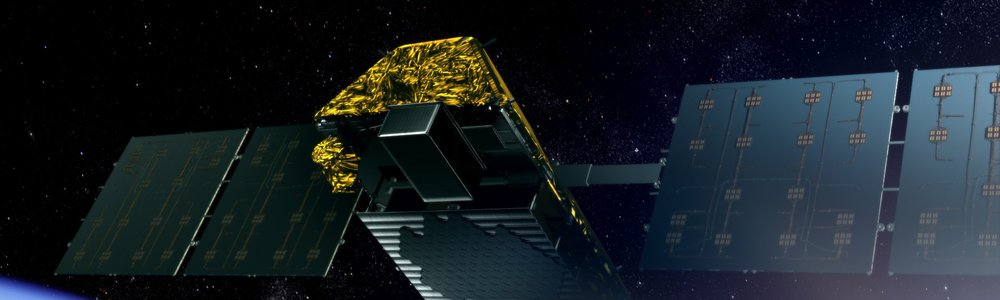
Satellite operator Iridium has a problem. Company CEO Matt Desch reported his customers are dumbfounded and flabbergasted by an unseen Iridium technology in satellite positioning, navigation, and timing (PNT). He told this title that prospective procurers are shocked, not principally by performance measures or special capability, but that they didn’t realize such a solution was even deliverable in the first place, suggesting it’s at least five-to-10 years ahead of competitors.
“My marketing team hates that I talk about a product that hasn’t been announced yet,” Desch admitted. “I’m not really worried about selling this thing; people are going to buy it as soon as people find out it exists.”
As bold claims go, it’s a doozy. Let’s rewind.
In October 2025, Iridium announced it was integrating new GPS security technology into an application-specific integrated circuit (ASIC) for GPS-connected devices, enabling a new kind of protection against spoofing and jamming.
Iridium released that PNT ASIC commercially in July this year. An eight-by-eight millimeter, 0.2 gram chip, the offering enables cryptographically secure PNT data from the Iridium satellite network through one-way signal bursts, which can verify information separately to the Global Navigation Satellite System (GNSS).
The company already had partners like aviation-grade PNT navigation hardware developer Skyband Systems on board to integrate the Iridium PNT ASIC into its M100 LRU for business and commercial aviation. Skyband was just one of the adopters eager to layer in new PNT resilience to its own solutions.
Iridium, which is in the process of being acquired by Rocket Lab for $8 billion, has suddenly found itself with a new kind of scale to accelerate and expand its PNT ambitions.
“There’s a knowledge gap here,” Desch said. “Few people are explaining the vulnerability in PNT today. We now have a growing number of companies growing their PNT offerings, and Iridium is looking for more, to better establish these kinds of tools. There are PNT developers operating today who may not even realize its Iridium technology making their solutions possible.”
The ASIC is part of a set of PNT solutions Iridium has been hard at work on.
In May, SDxCentral sister site DatacenterDynamics broke the story about Iridium’s Project Authentic solution, a novel method of verifying PNT information. That product remains under development.
Desch reported that he was only allowed to talk about it because no one else can do it, but that it was not in the announcement phase.
“This is a unique, ground-breaking technology targeting fraud, spoofing, infiltration, and cyber threats to come that we don’t even understand yet,” Desch said. “We believe we have an ability to prove the origination and passage of data, as well as where it terminates to. Using this ASIC, it’s something that can either be built into a router, a standalone edge device, or even directly into a smartphone.
“We’re talking about a whole new layer of security to filter out bad actors. You could call it trusted location," Desch continued. "For those in the IT industry, the ability to meaningfully prove the location of bits, and where they’ve been, is very powerful.”
Iridium's PNT story
Technology usually does not emerge fully formed from the glistening seafoam like a Greek goddess. It tends to have a longer, more substantiated history. Iridium’s relationship with PNT is no different.
“The idea goes back well over 10 years ago, originally floating out of a science project at Boeing Phantom Works working with the U.S. Government on timing and protecting GPS,” Desch recalled. “I went to the then-CEO of Boeing to tell him the technology had incredible, global commercial appeal, but Boeing wasn’t the company to turn it into a product. He agreed to spin it out through its inventors into a company called Satelles, which were a prized Iridium partner.”
"When acquirers came for Satelles, Iridium made it to the front of the queue and bought it. I was concerned the wrong owners wouldn’t make the most of this technology – maybe the owners knew me well enough to stress that impression. That was two years ago," Desch said. "By the time of the acquisition, Satelles had already started the PNT ASIC as part of a major investment into a big technical achievement. That’s now all coming to fruition and Iridium is taking advantage of all that work.”
"Ten years ago this was still a niche idea, a possible problem government folks were a little worried about, but critical infrastructure providers weren’t – hyperscale wasn’t a word back then," Desch continued. "Now that massive digital systems are reliant on accurate time, we’re here with a powerful solution right as the market needs it.”
This connection with PNT was something the company was aligned with Rocket Lab on, very conscious it was a growth area solely on the strength of an innovative capacity.
Alternative PNT, alternative methods
Desch is a rarity by modern standards in that he’s an executive who started out as an engineer – having spent years focusing on the technology and how it fits together more so than branding or fast talk. He isn’t the only executive at Iridium with that background.
Once an afterthought, the timing and positioning capability of digital systems has become more a critical keystone beneath the world’s connectivity hubs, data centers, and control centers.
“Some of the jamming we’re seeing is being conducted in high-tension areas,” Rohit Braggs, VP of PNT at Iridium, told this title “A single event could take down a large hyperscaler and cascade through a wider set of digital architectures. … We’re seeing the highest demand [for PNT resilience] in Europe and the Middle East, and it’s no coincidence that these are regions seeing geopolitical conflict including jamming and spoofing against critical infrastructure across multiple domains.”
Speaking to SDxCentral in January, Desch hoped Iridium could sidestep the growing noise of “billionaires and meme stocks” drowning out the fundamentals of the satellite sector. It’s a philosophy Rocket Lab CEO Peter Beck has occasionally echoed, implying he’s different from the fabulists spinning tales across the space industry today.
“You don’t hear me talking about mining asteroids orbiting Mars,” Beck recently told the FT, insisting his company was focused on its fundamentals.
“Our customers are telling us we’re at least five, 10 years ahead of anyone else they’ve talked to on PNT,” Desch said. “There just aren’t many people thinking about this. Together with Rocket Lab, we’re going to be able to hold onto that lead. … [instead of a marketing masterplan] I would much rather open the door to bring innovators into our network to build on top of our technology than fear someone stealing our technology. Especially since it’s too hard to steal – you kind of need to have spent the last 10 years building a system around it like Iridium has to replicate what we’ve done. To me this is a conversation about adoption.
"Every time we show this to someone they tell us they didn’t know it was even possible and wished more people were interested in explaining it – so I’ve been more forthcoming than the average executive," Desch added.




Comments