

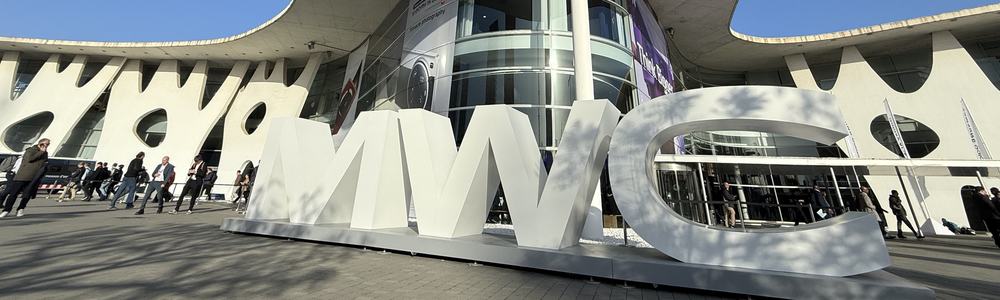
The curtains have closed on yet another Mobile World Congress. The annual cacophony of mithering mired in a sense of superciliousness that is best observed from what’s said on its biggest stage.
And that’s just it. For all the ostensible glitz and glamor of leading industry voices, the actuality can be boiled down simply to the same old things: more investment, regulatory appeasement, and notice me, senpai.
If one were to create a supercut of stage showcases, the sheer repetitiveness of themes, phrases, and views would give you a nosebleed.
But that’s the beauty of MWC. If you, as an industry, repeat things enough, form enough alliances, create enough initiatives, and launch enough standards bodies then eventually you’ll get what you want. Or was that the definition of insanity often attributed to Albert Einstein?
Sunil Bharti Mittal, the billionaire founder and chairman of Bharti Enterprises, referred to such an effect on stage this year, harkening back to his time as chair of industry trade group and MWC organizer GSMA when he called for a crashing of roaming rates, saying: “Within one year of that clarion call, all of you in my industry responded to it.”
The antithesis of that on 2026’s MWC main stage was AI. Each and every single company and industry wants to be in on the AI game right now. Heck, even my washing machine supposedly has AI in it. It hasn’t got a built-in processor or anything, but it does have a nifty little sticker saying so.
That’s how this year’s main stage felt at times. The telecom sector is so desperate to be seen as an AI enabler, to be hip and cool. But like Steve Buscemi in "30 Rock," you won’t convince everyone.

GSMA director general Vivek Badrinath said it himself during the event’s opening keynote, claiming telecom operators have “a crucial role to play” in the buildout of AI as “a foundational layer” in the technology stack.
Qualcomm CEO Cristiano Amon went one further, recasting 6G connectivity as nothing less than a global “AI data center network” and that future telecom infrastructure would power the ability to sense cities in 3D, police drone traffic, and power a new wave of AI agents across devices.
We get it. There are huge opportunities for telecom operators to make more moolah from AI. But we’ve gone from AI is going to change networks to generative AI, then multimodal and foundational. And now it’s agents, agents, agents.
You can put a donkey in a dress and spin it around and around and convince yourself it’s a princess, but eventually they’ll stop spinning, and you’re left with what you started: a donkey.
To put aside a very bucolic and intrinsically unglamorous analogy, the real innovation is going past the repeated buzzwords and hyperbole from the keynote stage.
Take U.K. tower company Cornerstone. They’re actually making efforts to deploy micro-edge compute capabilities on its sites after years of the tower sector saying, "hey, we should do that." Or researchers at King’s College London who are developing a wireless networking architecture for 6G that’s capable of enabling network infrastructure to coordinate in real time based on semantic understanding rather than simply transporting data.
AT&T CEO John Stankey was the surprising voice of reason from this year’s stage-dwellers when he said that efficiencies gained from AI “generally get competed away in the market.”
His view then was that true efficiency gains in his carrier was in fact taking those initial time-saving wins and instead focusing on offering customers more value, like in pricing.
“When you start thinking about what we know about a particular building, particular location, the number of competitors, the amount of fallow capacity we have in an area and being able to dynamically price that so you get to a yield construct, allows us to be a lot more effective in the market, in places where we typically would maybe not have gone on pricing before,” Stankey said during a fireside chat on day one.
The real innovation, the real cost-savings, and true augmentations and approbations take place away from the unabashed pizzazz and hyperbole of the keynote stage.
Sovereignty washing: All show, no bite
If agent-washing was front and center in Barcelona, then the looming specter of so-called sovereignty was as pronounced as the situation unfolding a few thousand miles away.
In the weeks prior to MWC, many a firm in the telecom space or otherwise sought to position itself as an autonomy auteur. And that in and of itself led to murmurings of sovereignty washing from some industry commentators.
But the untold madness unfurling in the Middle East seemed to spur leaders on at MWC even more, giving fuel to their desire to diminish dependencies on technologies from elsewhere in the world.
Eutelsat CEO Jean-François Fallacher, for example, said his team was in a “fighting mode” to take on not only Chinese constellations but the “giants” from the U.S. like Starlink and, now, Amazon Leo.
It’s an incredibly sad time to be alive. We’re making the play for technological independence when we’ve already let the cat outta the bag. We’re already dependent on products and services originating from countries we’re currently talking about being distrustful of.
It’s like continuously whining about needing to lose weight and then eating a Big Arch burger. But in actuality, current sovereignty efforts on display in Barcelona were about as dense and significant as the McDonald’s CEO’s attempt to eat a burger. All show, no bite.
For all that’s going on in the world, saber-rattling for the sake of fiduciary responsibility? For shame.



Comments