

The 2026 iteration of Mobile World Congress kicked off this week, marking the event’s 20th edition in sunny Barcelona. The main-stage cosplay curtain-raiser saw themes revolving around the four S’s: security, sovereignty, satellites, and synthesized significance.
Leading the curated spectacle of intent for the first time as director general of the GSMA was ex-Vantage Tower CEO Vivek Badrinath, who took to the stage to proclaim the mobile and telecom space has “become essentially the nervous system of the digital world.”
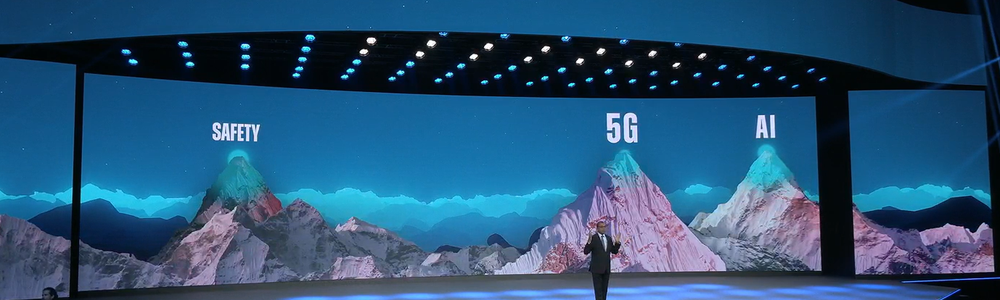
But central to the opening of the industry’s annual curated spectacle of intent were three challenges – or “mountains” – Badrinath argued the industry needed to overcome to unlock its true potential.
The first mountain was the need to “complete the 5G journey.”
Network buildouts for the 5G standard began back in 2019, and total 5G connections surpassed 2.7 billion by the end of 2025. But if 5G rollouts were a car, the check engine light would be on, and a worrying alarm would be sounding as investments haven’t yielded previously promised profits, leaving operators scrambling for new means of revenue generation.
Badrinath stressed the importance of realizing 5G, claiming it was “the modernization of society itself,” and adding: “In a future where cities think for themselves, where factories run autonomously, where robots are part of daily life, investing in 5G standalone is essential.”
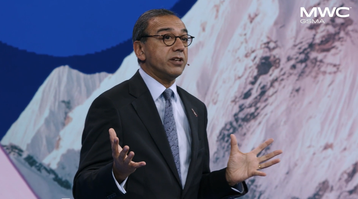
“Countries that hesitate will fall behind,” Badrinath said. “In markets where adoption is at least 10%, operators are seeing double the revenue growth compared to those without it, and 5G standalone could add up to $187 billion to mobile revenues by 2030.
“Look at China. Look at the Gulf states. They have ports, factories, and hospitals, all running on 5G-Advanced," Badrinath continued. "These are not just proofs of concept, they're not test beds, they're real-life operations. Their services are in commercial use. But here in Europe, we are losing ground. There is much more to be done to unlock the potential of 5G and, in particular, the feature, which is called slicing, in order to support these use cases.”
Badrinath stressed that overcoming that first mountain would help lay a healthy foundation for a 6G future, adding: “We must recognize the urgency.”
If 5G was Kilimanjaro, then the GSMA DG’s second mountain he feels the industry needs to overcome was AI.
Badrinath claimed telecom operators have “a crucial role to play” in the buildout of AI as “a foundational layer” in the technology stack.
“Our infrastructure allows AI to run at the edge in real time for billions," Badrinath said. "So as an industry, we have embraced AI. Operators are investing at scale, from Deutsche Telekom's €1 billion ($1.2 billion) AI factory, to China Mobile doubling its AI investments by 2028, to AT&T going all in on agentic AI. Indeed, there is incredible opportunity.”
But the positioning of AI as a mountain then comes from the fact that in Badrinath’s view, today's AI models “fall short of telco-specific needs,” adding: “If we want to unlock the full benefits of AI for telco, we need telco-grade AI.”
In a bid for the summit then, the GSMA unveiled Open Telco AI, an initiative aimed at development and deployment of telco-grade AI models and systems through open collaboration.
The likes of AT&T, TensorWave, and AMD signed onto the project, with the latter’s Instinct line of GPUs being used to train models made available on an open platform.
“We will work with partners to launch a suite of open telco models and datasets, open access to more compute so that models can be trained for telco needs, and benchmark progress across what we call the Telco Capability Index, and through this, build a community to improve AI for telco," Badrinath claimed.
The final of the three mountains, then, was safety. Specifically, scammers.
Badrinath said that scammers are currently winning the arms race, using technology to stay ahead. But called on the wider industry to get involved to beat back the rise of the fraudster.
“Our flagship program, GSMA Open Gateway, is a key tool in this," Badrinath said. "For instance, the scam signal API has improved scam detection rates by up to 40% and it's being rolled out globally. Indeed, we'll continue to do our part as an industry to address this challenge, but the reality is that the majority of scams happen beyond the control of operators. So this is not a challenge that will be solved by one industry alone.”
Badrinath called on financial services, social networks, and governments to fight the tide.
“If we are to remain the nervous system, more than ever, we have a responsibility to grow, to evolve, to also become bridges between countries, industries, and people because even as the global landscape shifts, the world still needs a seamless connection," Badrinath added.
Mittal appeals to WhatsApp, Telegram to combat scams
Another speaker looking at tackling the latter of of those three mountains was Sunil Bharti Mittal, founder and chairman of Bharti Enterprises.
Mittal used his opening keynote address to talk safety, specifically calling on platforms like WhatsApp, Signal, and Telegram to “come together” with regulators and governments to address the rising scammer epidemic.
“There is a large field out there which is being completely ignored, the OTT (over-the-top) players, [and] many other institutions are not within the same framework. We need to bring them in,” Mittal said. “I would like to appeal to all of them, whether it's WhatsApp or other messaging platforms, to come and collaborate and be a part of this regulation. Don't resist regulations to say we are the OTT and we are not telecom, and therefore we're outside this.”
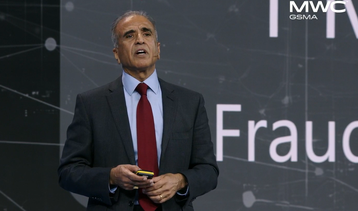
The billionaire said his own Bharti Airtel brand has seen a pattern whereby when scam users have been blocked, they move to a messaging platform like WhatsApp or Telegram, adding: “They will find the victims through whichever means they can.”
“It is therefore our duty to ensure that we have complete collaboration across all actors," Mittal said. "The regulators need to wake up to say 'we now need to bring you in because we are losing half-a-trillion-dollars a year in scams and frauds that it's only going to go up.'”
Mittal said Bharti Airtel’s aspiration is to fully compensate victims, but that it isn’t at that point yet, which was why he used his keynote to make that impassioned plea.
“Celebrate companies that are taking the lead and are becoming exemplar in this area,” Mittal said. “There are few companies, including Bharti Airtel, which are showing that it can be done. Celebrate them. They get encouraged. More people join that particular cohort, and more and more protection will come through. If this requires a large United Nations type of a body to come together [or] a regulatory system. Let's do that.”
Orange CEO on Agentic AI: telcos new trust battleground
Orange Chief Executive Christel Heydemann used her slot to push a simple idea: in an AI‑driven world, trust is no longer a soft value, but the core infrastructure where telecom operators can and must lead.
“Agentic AI will not replace our infrastructure or reduce the need for connectivity," Heydemann said. "On the contrary, it will demand more powerful, faster, and more resilient networks than ever before.”
For Heydemann, the AI shift means telecom operators need to move “from connectivity providers to architects of a trusted environment,” bringing out another list of threes – protection, resilience and continuity, and trust as competitive edge.
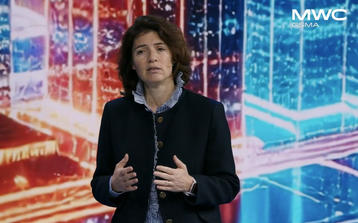
Heydemann argued that privacy, cybersecurity, and data protection should be treated as “the quiet infrastructure of trust,” spanning encrypted equipment, secure clouds, sovereign networks, and end‑to‑end protection of data and usage.
“We don't just sell products, we deliver a trusted environment, securing data infrastructure and usage end-to-end for nations and societies, it is the foundation of sovereignty, the condition to innovate with confidence,” Heydemann added.
The Orange CEO also said operators need to design for failure, and be ready for unpredictability, while also guaranteeing service continuity even when everything else is under stress.
Heydemann's final driver was contending what used to be a “soft” differentiator – trust – should now be a hard performance driver.
“It is the operating system of progress,” Heydemann said. “Trust means making daily life simpler and safer at home and on the move while protecting personal data. It means enabling businesses to thrive with reliable connectivity, digital tools, streamline processes, and strong cybersecurity. It means accelerating digital development, expanding access, and building the skills people need to succeed. In the age of AI, trust itself becomes infrastructure and telcos have a unique role in building, operating, and governing this infrastructure.”
Vodafone’s Della Valle on taming the ‘wild west’ in the sky
If Badrinath’s mountains were on land, Vodafone Group CEO Margherita Della Valle took the audience to the stars, framing what she viewed as the new frontier in the sky.
Vodafone is among operators investing heavily in satellite connectivity, providing significant backing to Starlink rival AST SpaceMobile.
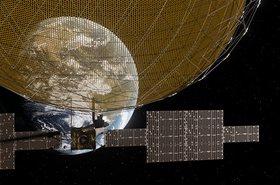
Della Valle’s choice of topic was timely as in the days leading up to MWC, Vodafone’s joint venture with AST SpaceMobile that was teased last March, officially launched. Dubbed Satellite Connect Europe, the operator will provide open access, direct-to-device (D2D) satellite broadband services across Europe.
But despite investment in this new orbital layer, Della Valle warned it was stuck in a “wild west” phase.
“On an Earth which is raising new borders with new tensions across power blocks, we really don't know how to deal with the sky, a vast expanse without borders," Della Valle said. "It requires coordination and cooperation across nations.”
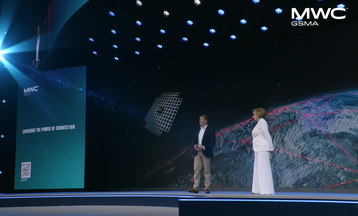
To help frame the concept of cooperation in the heavens, Della Valle enlisted Tim Peake, the first British astronaut to join the crew of the International Space Station (ISS).
Peake spent 186 days on the ISS, humanity's answer to cooperation in space, with Peake telling the Vodafone CEO that by working together, the 26 countries that have sent humans into space have “created the necessary scale” to make such a project happen.
“Now is the time for us to learn from these experiences and define a new, coordinated set of rules that can be applied to our use of the sky,” Della Valle said. “Our ambition today is to ensure that all European customers from all European operators have the possibility to be connected wherever they are, safely and securely, fully respecting local rules and regulations.”





Comments