


It is 2018. Cisco is trying to rethink networking beyond speeds and feeds, pushing an intent-based architectural approach.
It is 2022. Cisco is still trying to rethink networking beyond speeds and feeds, this time by promising simpler networks and more unified cloud management.
It is 2026. Cisco is trying to rethink networking beyond speeds and feeds again, this time by baking more “compute-like” decision-making into the fabric.

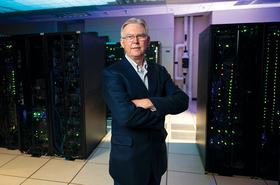
Back in that first wave of “intelligent” networking, when Cisco took its first steps on the long road leading away from faster ports equals better networks, Nick Kucharewski was at Qualcomm leading its Wireless Infrastructure and Networking (WIN) business unit.
Mere months before the recent EMEA leg of Cisco Live, Kucharewski found himself taking the reins of Cisco’s silicon strategy. Despite being new in the role, Kucharewski has picked up the banner emblazoned with the idea that speeds and feeds are no longer enough on their own, and run with it. In its place, Cisco wants the network judged on speeds and feeds plus intelligence and velocity – a kind of heraldic banner for what comes next.
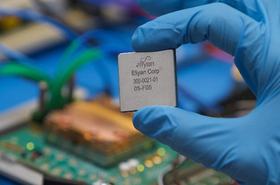
Six years on from those early intent-based promises, compute is now front and center at Cisco Live, culminating in the debut of the Silicon One G300 – a switch line capable of supporting up to 102.4 Tb/s.
Big number aside, Kucharewski argued the differentiated advantage of the application-specific integrated circuit (ASIC) was twofold: P4 programmability and path-based intelligent load balancing.
“Programmability is really tough to do at 100 Tb/s, but we did that because these networks are not just about building it once, it’s build it and then build another section of the network,” the SVP told SDxCentral. “Management of these networks means that you really want to be able to have consistent mechanisms for visibility, load balancing, steering, and so the ideal situation is to have the ability to upgrade some of those features in the field so you can level up your network and have that consistency.”
That idea essentially sets Cisco’s G300 up to appeal to the very largest vendors with the most cash to play with – the hyperscalers – as they’re going to be the ones looking to continually upgrade their stack in line with the annual rhythm of shiny new GPUs coming from the likes of Nvidia and AMD.
But in an AI world where time‑to‑new-network-behavior is becoming as important to the big spenders as raw bandwidth, Kucharewski was more inclined to liken Cisco’s revamped silicon approach to the network as maximizing that “velocity.”
“When we think about velocity in terms of new network design, data center design, the most visible one is certainly the speeds," Kucharewski said. "Are you going to the latest optical interconnect, the latest switch density? But there’s also an element of having the latest intelligence in terms of the instrumentation you're doing across the network, in terms of how you're actually identifying hot spots and reacting to them. What is the intelligence you're applying for load balancing? So I think that's a whole other vector.
“When you look at the evolution of the network, and I think it's programmability that allows you to address that other vector besides the speeds and feeds," Kucharewski continued. "Obviously, going to higher speeds and feeds means new silicon, but it's that whole other element that's really critical, which we think that programmability provides a great solution for.”

The other part of Cisco’s flagship compute engine is an advanced traffic management technique that harkens back to its 2018 playbook of being beyond bandwidth and instead enabling deeper visibility and troubleshooting.
The intelligent load balancing component of the G300 is all part of its Silicon One line’s “intelligent collective networking,” where shared packet buffers, proactive network telemetry, and that load balancing element are converged to boost performance, yielding an apparent increase of 33% in network utilization and a 28% reduction in job completion time versus simulated non-optimized path selection.
Kucharewski explained: “When you look at choosing the most optimal path through a multipath data center network, you can look at your local state [and] you can look at your path state in the spirit of how you can choose the most intelligent path for the whole traffic in the network.
“We use a path-based scheme, so not locally, [but] look further down the path to take into account congestion events and link failures," Kucharewski explained. "It’s the confluence of all of those elements that forms our solution, and where we show those performance advantages.”
For Kucharewski, that shift isn’t just about one big ASIC; it’s about what Cisco can now do with a whole product line of silicon underpinning the rest of the stack.
The same month the exec joined Cisco, the firm unveiled the P200, a mid-tier offering when compared against the G300, but a line that still packs a serious switching speed punch with 51.2 Tb/s.
But in Amsterdam, it wasn’t just about the G300, with the prior P200 set to feature in additional server lines, including the new N9000 server series.
Having spent his entire career working with network semiconductors, watching Cisco from the sidelines as a kind of permanent reference point, Kucharewski now sits inside the company and says the appeal is less about any single offering and more about how the pieces fit together.
“What’s exciting now with Silicon One is it’s not only about building dedicated silicon for a given platform, but building a whole product line,” he explained. “How do you plan in advance for a set of chips that have commonality in architecture to serve a broad set of applications? And then how do you build a unified platform in terms of the higher-layer software and the orchestration software?

A tale of two Ciscos: The AI-driven comeback to 'Apple of infrastructure'
CPO Jeetu Patel backs bold claim of 'extreme and obsessive clarity' on full-stack platform play
“I think you can make a lot of innovations when you’re taking that product-line view, and when you’re looking at software, hardware, and silicon as an opportunity for joint innovation, or co‑innovation," Kucharewski noted.
Internally, that aligns with the platform push championed in Amsterdam by Cisco CPO Jeetu Patel and his bullish view of the company transitioning to the “Apple of infrastructure,” in that the giant should not just be selling faster switches, but deciding where new capabilities belong and then exposing them in a consistent way.
“When you look at that platform approach,” Kucharewski said, “I look at that platform and say, here’s a set of new solutions we can provide. Where’s the right place to place it, in terms of the high-level software, the network operating system, or the silicon, and how can we do something different. The ability to look across all the layers instead of just looking at the component … it’s just a joy.”




Comments