

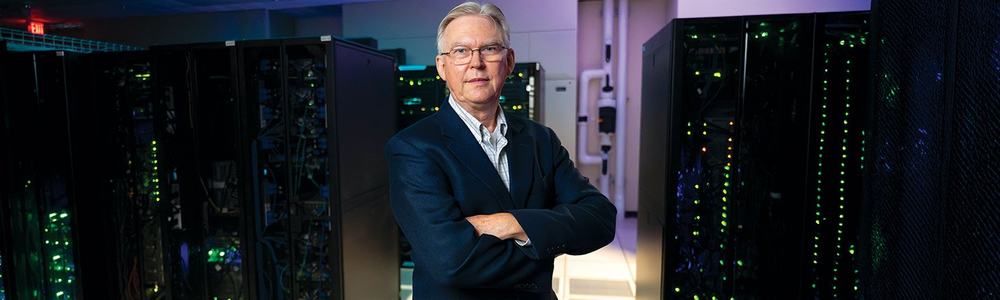
The Pittsburgh Supercomputing Center (PSC) is partnering with Rigetti Computing and Hewlett Packard Enterprise (HPE) to deploy a hybrid quantum-classical supercomputer.
The TangleLab testbed pairs Rigetti's nine-qubit Novera quantum processing unit (QPU) with graphic processing unit (GPU)-accelerated compute nodes, storage, and networking. The project is backed by a $5 million National Science Foundation (NSF) grant and is expected to begin construction in September.
The project aims to help researchers develop and benchmark applications that distribute workloads across quantum and classical processors. Researchers will use the system to investigate workloads where quantum processors may outperform classical computing while developing applications that span both environments.
"We are not deploying a standalone quantum computer," Bruno Abreu, PSC's deputy scientific director and co-principal investigator for the project, explained. "Our goal is to make TangleLab the prototype open platform for a future where quantum information processing and distribution are core elements of advanced cyberinfrastructure."
According to the NSF award abstract, the platform includes the quantum and classical management, data, and cooling infrastructure needed to operate the system. It is intended to help researchers prototype and scale hybrid quantum-classical applications while contributing to future heterogeneous computing architectures.
The deployment expands an existing collaboration between Rigetti and HPE to commercialize hybrid quantum-high-performance computing (HPC) systems for research institutions, public-sector organizations, and enterprises using Rigetti's on-premises Novera platform.
"Making quantum computing practical will require quantum systems to work seamlessly with high-performance computing and networking," Masoud Mohseni, senior distinguished technologist and director of HPE Quantum at HPE Labs, noted. "Through TangleLab, we plan to build a testbed at PSC that lets researchers benchmark hybrid quantum-classical applications and better understand how these systems can work together from pre-processing and compilation to workload management and orchestration."
PSC said researchers will access the system through a competitive proposal process that will allow dedicated use of the platform when required. Educators will also be able to use it for classes and workshops. The center will provide onboarding, training, and research consulting to support users with varying levels of quantum computing experience.
PSC has operated some of the U.S.'s leading research supercomputers since 1986, giving it decades of experience integrating new computing architectures into scientific research.
TangleLab also continues PSC's long-standing use of heterogeneous computing systems, which distribute workloads across different processor types. By adding a quantum processor alongside conventional HPC resources, the center aims to explore how quantum processors can complement central processing units (CPUs) and GPUs within future HPC systems rather than replace classical computing, reflecting a broader industry shift toward treating quantum processors as another accelerator within heterogeneous computing environments.




Comments