


AMSTERDAM – Just a few weeks after launching its long-anticipated 360 partner program, Cisco is looking to its partner dependency as an effective moat in the AI infrastructure space and offensive strategy.
Opening the EMEA leg of networking giant’s Live event series, regional president Gordon Thomson told a packed keynote that partners account for 98% of the company's business in the region.
“History is written by those who show up, and more often by those who move with speed and with conviction,” Thomson said, as he espoused the recently launched 360 program as being a “a transformation designed for this dynamic era.”

“Together with our partners, and combined with the pace of innovation, we're delivering like never before, there is an incredible opportunity for every single one of you here to build the infrastructure with the speed, with the security, and the scale that is necessary,” the exec added.
Despite being wrought with initial concerns from some partners over losing hard-earned designations under the previous program, Cisco has since launched 360 off the back of what it claims was a 15-month consultation with partners to quell any unhappiness.
Thomson used the opening keynote to further that effort, saying that Cisco’s partner ecosystem is “a key part of the fabric of trust to support our customers in EMEA.”
“With our partners, we're building a critical infrastructure for the AI era to ensure your data centers are AI ready. Your workplaces are smarter and your businesses are more digitally resilient," Thomson said.
The continuation of its partner-first approach looks to be a core tenet to the fundamental shift president and CPO Jeetu Patel said has transformed Cisco over the past four to five years.
Speaking after Thomson, Patel pointed to two cultural dimensions that have repositioned the company: moving from products to platforms, and embracing an “open ecosystem.”
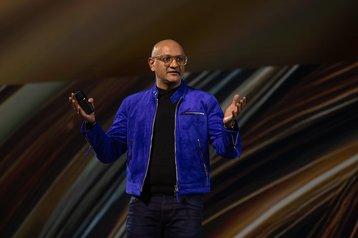
The headline example? Its partnership with Nvidia. While in certain areas, the pair could be construed as competitors, Patel stressed the importance of Cisco “not operating in a walled garden, even if at times the players we're integrating with are competitive.”
“The way that we think about this, we start from the customer and work backwards,” Patel explained. “If you've invested in technologies from two or three different providers, it's our job to make sure that you can realize the best amount of benefit from those technologies.
“We have to operate as an open ecosystem," Patel continued. “These are fundamental culture shifts that we actually made in the way in which we operate as a company.”
That openness is particularly critical as AI infrastructure faces what Patel called three potential constraints: infrastructure capacity, a trust deficit, and a widening data gap – core pillars that he suggested Cisco was at the center of helping to solve.
“The way that you should think about us is we are the critical infrastructure company for the AI. We're going to make sure that we can provide you with high-performance, low-latency networking that's energy efficient. We're going to provide you with compute. We're going to provide you with optics. We're going to provide you with security. We'll provide you observability and collaboration,” Patel said. “The core point that's going to be needed so that you have the entire necessary apparatus that's going to be essential to making sure that we can move forward.”
The new currency of competition
Where Cisco’s reimagined partner ecosystem becomes valuable is the metric described by Patel at the “new currency” for evaluating data center performance: tokens per-dollar, per-watt.
“Agentic AI’s demands are unprecedented from a scale perspective. These agents are going to be working seven by 24 on our behalf. For every human, there might be 10, maybe 100, maybe 1,000 agents,” Patel said. “At some point in time, we're going to be accommodating billions and tens of billions of digital workers to help get the job done.”
The predicted amount of agents coming in the near future essentially reframes infrastructure investment entirely, shifting beyond traditional measures like uptime and throughput to the economic efficiency of AI inference at scale.
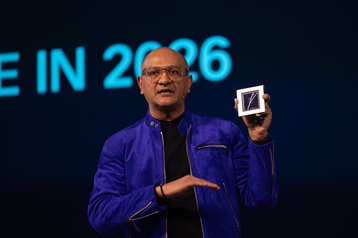
To optimize that efficiency equation, Cisco unveiled the G300 chip, its flagship showcase in Amsterdam that’s capable of supporting switching speeds of up to 102.4 Tb/s with tailoring for scale out (server-to-server) and scale across (distributed data centers powering workloads in tandem) networking.
"These data centers are now going to be operating at very, very large scale. Over time, you can expect this to be at continental scale. And it's going to actually have to continue to keep getting more and more power efficient,” Patel said. “What we've essentially done at Cisco is we have focused billions of dollars of our efforts on building these high-performance solutions that can satiate the needs of these AI data centers at scale.”







Comments