

Agentic AI may just be the talk of the town at the upcoming Mobile World Congress (MWC), and Nokia looks to make that a certainty with a new network slicing partnership with Amazon Web Services (AWS).
The team-up in time for Barcelona sees the pair showcase agentic AI-powered 5G-Advanced network slicing in a live 5G network. Nokia and AWS argue that where traditional AI infusions would largely improve monitoring and recommendations for slicing, a more agentic inclined approach would instead manage slicing operations with little to no human involvement.
Among the early users of the agentic offering were Emirati carrier Du and Orange, who were given a chance to pilot the solution on live networks.
“This is, quite frankly, an industry first where we are using agentic capabilities enabled through Amazon Bedrock, specifically Agentcore, through a network parameter optimization, beyond the traditional way of looking at network slicing from a 5G core perspective,” said Amir Rao, AWS’s global director for go-to-market and telco solutions, before stressing the solution is solely at the pilot stage and not ready yet for production. “From a Du perspective ... we are not really dependent on running the Du software on AWS. It's running the AWS agentic capabilities and services and offerings to AWS regions, and the decisions for network slicing are being made at the radio network operation center, which is sensing all of the the radio network parameters,” Rao added in a media briefing, explaining radio parameters can be "sensed" by Amazon's agents to provide real time network slicing on the on the radio access network (RAN) side.
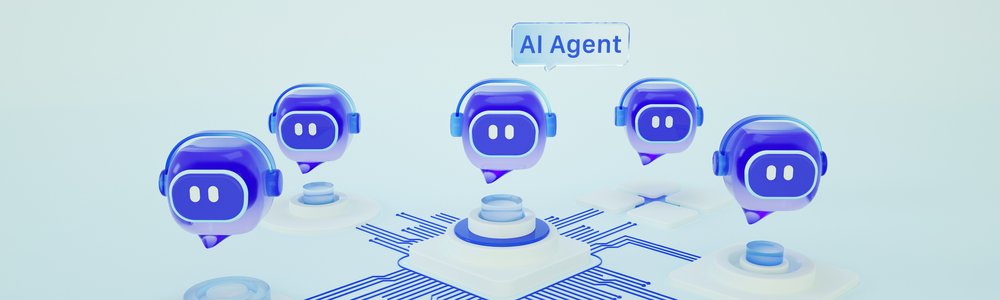
The next shiny object in the magpies’ AI nest, agentic is essentially moving way beyond those chatbots we know and tolerate, with an ‘agent’ system given a set of defined goals and the wherewithal to perform related actions to achieve them – without the need for a command or fixed script.
Both players in this MWC-induced partnership have raced to join the agentic bandwagon: Nokia explored agent systems capable of enabling interoperable telecom network APIs, while its hyperscaler colleague has been toying with everything from firewall tools to automating server migrations. The two firms also tout a 5G core software-as-a-service (SaaS), as recently deployed by Belgian operator Citymesh.
This latest effort, though, looks at applying the incipient innovation to manage data analytics, inference, and RAN policies for intent-based network slicing. The offering can be inferred based on contextual data from multiple sources across everything from Nokia’s 5G AirScale base station and MantaRay product family.
The pair tout it as a means to support use cases ranging from boosting network performance for selected 5G base stations to enhancing premium slicing services for applications like drones and manufacturing.
There’s also the ability for the agentic offering to help with providing broader capacity availability during high-demand moments, a touchpoint brought to the fore during Taylor Swift's Eras Tour concerts, but is set to linger a while longer in a year featuring a Winter Olympic and Paralympic Games, soccer World Cup, and Commonwealth Games.
“This transforms network slicing from a technical capability into a true business enabler, allowing operators to monetize their 5G investments through differentiated, premium services that adapt automatically to customer needs,” Rao said in a pre-prepared statement. “Agentic network slicing is the beginning of an era that will enable telecommunications providers to enable real-time intent-based service provisioning for end customers.”
“By combining Nokia’s advanced network slicing capabilities with agentic AI, we are enabling operators to deliver premium, intent-based services that adapt dynamically to real-world conditions,” added Pallavi Mahajan, chief technology and AI officer at Nokia.
“Agentic AI-powered slicing will allow us to deliver highly responsive, premium services to our customers, whether for critical enterprise applications or enhanced consumer experiences, said Du CTO Saleem Alblooshi.



Comments