

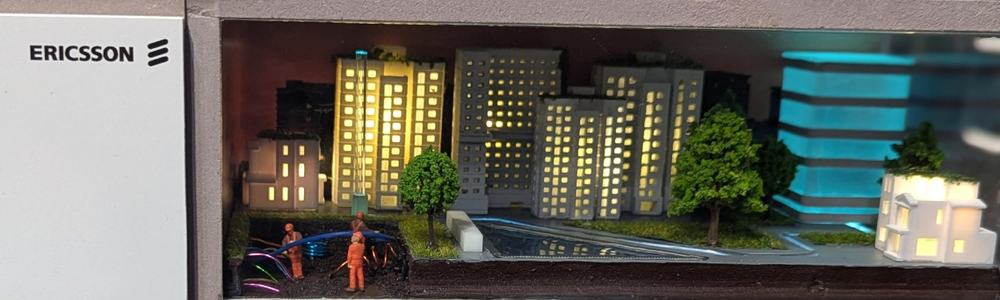
Ericsson and KDDI completed an AI-driven field trial that claimed to pave the way for level-four autonomous networks.
The Japanese field trial marked the first time globally that Ericsson’s AI-powered Uplink Interference Optimizer (UIO) rApp was deployed in a live network environment. The trial combined Ericsson’s rApp with a third-party rApp from Tokyo-based Fyra, and marked the first live use in Japan of Ericsson’s Intelligent Automation Platform (EIAP).
The trial ran across a multitechnology, multiband cluster of about 1,500 5G cells and 1,300 4G cells. Ericsson said the AI-based optimization delivered an average throughput improvement of 9.6% in 4G and 3.1% in 5G, while 5G signal-to-interference-plus-noise ratio improved by 27%.
Ericsson noted those results came during a period of 10% higher uplink traffic, which it said showed the model held up under sustained load, adding that the UIO rApp reached general availability during the activity, signaling readiness for broader deployment.
The UIO rApp also reportedly enabled "level 3.86" autonomy for uplink optimization, using an adaptation of TM Forum’s Autonomous Network Levels Evaluation Tool (ANLET), with the use case supporting the path toward level-four autonomy.
The trial also highlighted successful integration of Fyra’s third-party rApp validated EIAP compliance with the R1 interface – the defined standard for connecting third-party applications to a communications service provider's (CSP) network – and its support for both Ericsson and non-Ericsson rApps.
vRAN in Japan
Stéphane Téral, chief analyst at Téral Research, told SDxCentral the development is one of many virtual RAN (vRAN) projects in Japan.
"So you have this KDDI/Ericsson achievement while KDDI is also deploying open RAN-compliant vRAN in collaboration with Samsung for vRAN software," Téral said. "Put another way, this is just a piece of the KDDI puzzle, itself a piece of Japan’s big open vRAN and autonomous network ambitions."
KDDI declined to comment when contacted by SDxCentral about the demo.
According to a recent report from Téral Research, Japan boasts more advanced telecom cloud-based technologies than other nations, with base transceiver station (BTS) shipments, including open virtualized centralized unit (O-vCU), open virtualized distributed unit (O-vDU), and open radio unit (O-RU), accounting for 80% of total units deployed in 2025.
Téral Research notes that Nokia is the leading vendor of this equipment, followed by Ericsson, Samsung, Rakuten Symphony, 1Finity, and NEC.
The report predicts Japan's RAN market to see a 91% year-on-year growth to more than $4 billion in revenue. It also forecast open vRAN BTS will account for 95% of the total footprint by 2029.




Comments