


It’s been a while since we’ve witnessed a meme-like stock rally, but in the past few days, Intel has gone the way of GameStop: straight to the moon. To go from around $20 to more than $100 in a matter of days defies traditional investment fundamentals.
And yet, the house of Moore's Law has slowly but surely gotten its act together, taking it from deep in the doldrums to a point where, for a brief moment, its leadership looks to be smiling.
Cast your mind back to mid-2024. Intel was, frankly speaking, the butt of all industry jokes. Its stock price languished at around the $20 mark – even dipping below for a time that September.
But beyond market cap madness, the cracks in its armor were so visible they could be seen from space.
It emerged that the firm was spending around $100 million on complimentary food and hot drinks across global offices, which it dropped as part of sweeping efforts to slash costs – only to then bring back free coffee as a last-ditch morale booster. In fact, morale among its subordinates was so low it was next to dinosaur bones, with each day bringing a new kicks to the teeth in headlines of fab projects being shuttered or looming layoffs.
It wasn’t just coffee Intel splurged on unnecessarily, either. It turned out the firm was leasing private jets that would shuttle staff between sites in Oregon, Arizona, and its corporate headquarters in Santa Clara, California, which was also briefly paused as a cost-cutting measure before being brought back.
Cash was also wasted on research projects that, unlike its jets, went nowhere. A staggering $16.5 billion was spent on R&D in 2023, per TechInsights figures – some 28% more than Nvidia at the time. That same year? Intel’s Foundry business went on to lose $7 billion.
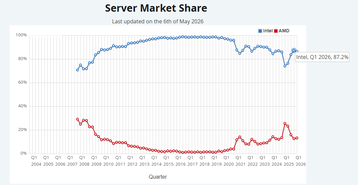
There are so many strands to all this, though. From complacency in its dominance of the central processing unit (CPU) server space, which ultimately led AMD to yank some of its market share, to further capitulation in the booming mobile processor market against the likes of Qualcomm and Apple. Add to that instability issues with its 13th and 14th Gen Raptor Lake processors, a failed Jim Keller-led effort to revitalize its chip architecture, and even a leadership team that reportedly passed on the opportunity to acquire OpenAI.
In short, Intel was a bulging mess, swollen on an over-inflated sense of market position and malaise.
So when Pat Gelsinger was given the heave-ho by a dissatisfied board in late 2024, they turned to the one man who had somewhat sounded the alarm. Lip-Bu Tan resigned from the board that fall, reportedly frustrated over what he perceived as a company beholden to unnecessary bureaucracy, a bloated workforce, and a complete failure by leadership to set out a coherent AI strategy.
Just a few months later, it would be Tan who would take charge, with Intel leadership essentially throwing him the reins with a cry of, "if you think you can do better, do better."
By no means is turning a tanker with this many holes an easy feat, but in a little under two years, Tan looks to have steadied the ship. Well, sort of.
The former Cadence CEO has since moved to change the firm’s mindset, making R&D a central part of the business. And despite mammoth layoffs, selling off a majority stake in its Altera field-programmable gate array (FPGA) crown jewel for $8.75 billion, and dithering on whether or not to shutter or sell its networking unit ("not" being the conclusion), Intel looks to be in a much better position.
While its stock price sits a little over $100 today, the near two-year journey from stagnation to stonks is more a tale with a little more nuance. Memes, sure, but more a case of right place, right time.
The agentic AI wave Intel didn't see coming (but will gladly surf)
If there’s one thing Intel is good at, it's processors. Raptor Lake headaches aside, the firm holds a strong share of the CPU server market, some 87.2% per PassMark Software data, with AMD sitting on the rest.
But right now, the world needs CPUs. At least AI infrastructure developers think they do as the agentic craze gets into full swing.
Agentic AI workloads require more nuance, if you will, from underlying hardware. If you think of graphic processing units (GPUs) as a brute force machine, then CPUs are, for lack of a better term, the brains of the operation, performing more complex, latency-intensive orchestration.
And what’s more, there’s an apparent shortage – because of course there is. As if RAMageddon isn’t enough, price hiking of server-grade CPUs has already begun amid an apparent dearth, with both x86 players believed to be prioritizing capacity for server CPUs, rather than things like gaming.
As a result, Intel’s hardware suddenly becomes sexy again, overnight. Suddenly, hyperscalers have begun to pen deals with Intel left and right to secure processor pipelines, like Google Cloud, which, though it already deploys Intel’s Xeon processors across its workload-optimized instances, now wants more.
That deal also included an agreement to expand co-development efforts on custom infrastructure processing units (IPUs), which would put more cash in the coffers of its design business. A win-win.
It's a straightforward decision: when you excel at something, possess a significant market share, and offer a product people are crying out for, the logical play is to capitalize on that success and double down. And that’s exactly what Intel is doing.
But they’re also looking at other strategic plays to bolster their strong processor position. The firm has brought in a new chief GPU architect, while it’s also eyeing another shortage in memory components, teaming up with SoftBank subsidiary Saimemory to develop Z-Angle Memory (ZAM) – a supposed high-bandwidth memory (HBM) killer. Both of these lean on Tan’s idea of a strong engineering core, while also bering strategic relevant to its core processor play.
And what do you know? Revenues for its first fiscal quarter of 2026 hit $13.6 billion, a 7% increase year-over-year (YoY). Just like that, things look a little different. A 22% uptick in its data center business. Even its long-struggling Foundry arm saw revenue growth during the quarter, up 16% to $5.4 billion.
Add to that repurchasing a stake in its Fab 34 in Ireland, a “multiyear strategic collaboration” with SambaNova, and a place in Elon Musk’s $20 billion TeraFab project. And suddenly, hope.
Nothing changes overnight, but all these wins make it look like there’s a bit of light at the end of the tunnel. Some of it was generated by its own doing, the other, from market happenstance. Really makes you think.
Needless to say, I had the last laugh

This writer previously questioned whether Intel was the semiconductor equivalent of the Lehman Brothers in that it might be "too big to fail."
And while the comparison might seem on the nose to some, its market position at the time of writing was dangerously precarious. But unlike Lehman Brothers, Intel was bailed out, so to speak, with billions of dollars of much-needed capital injected into its veins courtesy of Nvidia, SoftBank, and the U.S. government.
And now, with said capital, combined with the crest of a processor wave to ride, it finds itself bouncing back. In fact, in our editor’s predictions last December, I said Intel would not only bounce back, but go to the moon.
The meme rally will, however, fade. The stonks will cool. But what's left underneath is a leaner engineering culture, a CPU market that suddenly can't get enough, and a CEO who actually seems to mean it, with Intel looking more durable than the headlines might have suggested.
That’s not to say Intel isn't out of the woods, though. The industry doesn't forget easily, and the competition isn't standing still. Arm has now thrown its design nous behind its own production silicon, alongside Nvidia’s fledgling processor line, and even an adversary in its own ecosystem with AMD’s strong EPYC line.
Nothing changes overnight, except maybe the price of gas. But for the first time in a long time, the house of Moore's Law looks like it might deserve the benefit of the doubt.






Comments