


It’s been a big year for networking. Nvidia reminded the world it’s the essential plumbing behind the world’s AI dreams, and big-buck deals like Hewlett Packard Enterprise (HPE) and Juniper were a reminder of networking’s market potency.
As such, networking won big in 2025. But they can’t all be winners, as they say, and the year saw its fair share of … well, losers is probably a little unfair, but let’s say some companies, technologies, and even continents weren’t on the winning team, unfortunately.
In that spirit, SDxCentral presents its winners and losers of 2025. Do not take our editor's picks as investment advice and certainly do not take it personally if you were any of the unlucky ones this year. There’s always an opportunity to turn things around in 2026.
WINNER: Ethernet
As late as 2023, InfiniBand held around an 80% share of the data center switch market. My how the turntables turn. Fast forward a little over two years, and Ethernet finds itself to be the standard that could.
On the supercomputing front, Ethernet (specifically the mid-tier 100G Ethernet) was the most populous protocol powering interconnects on both Top500 lists dropped in 2025.
Meanwhile, Slingshot, the Ethernet-based proprietary tech from HPE, commanded 48.1% of performance for the Top500 list in June, and 46.3% in November. On both lists, it powered six of the top 10 – including the top three: El Capitan, Frontier, and Aurora. That dominance extends to the top 30, with a total of 12 systems using it.
That resurgence extends to the data center-focused scale, with IDC suggesting the Ethernet switch market is exploding due to continued AI infrastructure buildouts.
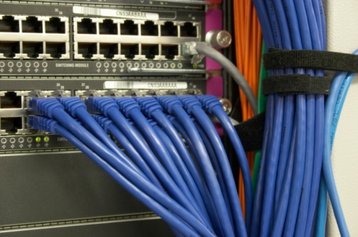
Cisco does remain an established leader with deep enterprise relationships and has made significant strides to meet the insatiable demand for technologies to power AI infrastructure.
While Cisco and Arista stand tall in this space, one name is quickly growing to take advantage of the resurgent demand for Ethernet: Nvidia.
The chip giant has a history of offering Ethernet offerings, but it has long placed its bets on InfiniBand, owing to its 2019 takeover of Mellanox. But the launch of its Spectrum-X offering in 2024 saw revenues in that segment soar by 167.7% YoY to reach $1 billion in Q3 2025 alone. Demand for Nvidia’s Ethernet offering is at such a level that CFO Colette Kress told investors in November that its Ethernet networking technologies were now “roughly on par with InfiniBand.”
The demand for Ethernet-based technologies shows no signs of slowing, with Dell’Oro Group research projecting it to dominate the data center-scale fabric space in the coming years, driving a staggering $80 billion in data center switch sales over the next five years. Expect more sales and solutions in 2026 … and beyond.
- Ben Wodecki, Senior Editor
LOSER: InfiniBand
If 2025 was the year of Ethernet, then that can only mean InfiniBand finds itself with the loser cap on.
Now, that’s not to say InfiniBand is dead or anything too grandiose. In fact, Nvidia said in August that it’s seen double-digit growth across both its Ethernet and InfiniBand fabric products. And Mordor Intelligence projects the InfiniBand market size to soar from $25.74 billion in 2025 to $127 billion by 2030, with hyperscale AI training clusters and latency-critical applications that rely on loss-free fabrics that Ethernet struggles to match, helping lead the way.
But the rise of the Ethernet-based Spectrum-X, along with standardization projects from groups like UALink and the Ultra Ethernet Consortium (UEC) are looking to take the innovations that made InfiniBand lossless and bring those to Ethernet.
The launch of the Open Compute Project Foundation (OCP)’s Ethernet-focused working group in October was yet another thorn in InfiniBand’s side. The ESUN project aims to use the open standard to help operators reduce costs and improve interoperability.
Again, InfiniBand is by no means dead. But the industry-wide Ethernet love-in doesn’t look good for its protocol rival, especially the aforementioned Dell’Oro Group report that has Ethernet leaving it in its dust.
- Ben Wodecki, Senior Editor
WINNER: Brendan Carr
When we look at today's controversial figures, I’ve noticed very few wear spectacles (in public, at least).
That’s why, as a bespectacled person, it’s been great to see the "baddie arc" of fellow squinter Brendan Carr. Now I know that kind of arc usually means a person starts off with an interesting background that eventually leads to controversial actions. But Carr doesn’t have that. He was a lawyer who this year became chair of the Federal Communications Commission (FCC). Pretty simple, really.

Now, in B2B media, Carr quickly became notorious as a gung-ho advocate of deregulation. "Delete, Delete, Delete" and all that jazz. Carr’s a Trump man, through and through, but nobody really knew that outside of readers of certain publications, such as our own.
Imagine my delight, therefore, to see Carr conclude his, err, arc when he made it into mainstream media over the whole Jimmy Kimmel cancellation debacle. Sure, he had his name out there previously over the Skydance merger deal, but that read as a politically neutral guy dotting the i's and crossing the t's behind the scenes.
With Kimmel, my dreams of finally seeing a Final Boss in glasses came true. He was out there doing Trump’s will in getting Kimmel's show (temporarily) off the screen after controversial remarks by the host.
And it got even better when he pressed the BBC over its editing of a documentary that put Trump in a less than favorable light, the fallout of which saw the British institution lose both its CEO and news chief in one fell swoop.
Wow, Carr. You’ve finally made it: leaping from the nerdy pages of obscure websites like ours to the worldwide spotlight. And you’ve managed to get all of your sweeping reforms through. That just screams winner, doesn't it? Bravo, my brother, bravo!
- Giacomo Lee, News Editor
LOSER: Scaling laws for AI
This year was the year AI scaling laws were put to the test. The concept is not too dissimilar to that of Moore’s Law in that each subsequent model should perform better if its components are scaled up. Sounds logical, but in practice, that hasn’t been the case.
Take the release of OpenAI’s GPT-5. This supposed world-ending model was launched in August, built on a fanfare of surpassing anything we’ve seen before. The end result? Underwhelming to say the least, especially compared with the generational leap from GPT-3.5 (the original model powering ChatGPT) to GPT-4.
Then there’s the sudden rise of DeepSeek, the Chinese research lab that claimed to have built AI models capable of performing on par with leading Western systems for an apparent fraction of the cost. While we’ll never truly be able to confirm the development cost claims behind R1, V3, and later, V3.2, DeepSeek’s emphasis on algorithmic efficiency to keep up with the larger Western rivals meant it got the best out of a model despite using hobbled hardware.
Add to that the rise of smaller AI systems, or the need for modalities beyond language, and the focus of scaling laws would find itself put to one side in favor of practical development to benefit actual use cases.
This year then witnessed the conversation shift from “how big can we go?” to “how smart can we be with the resources we have?” It was a critical inflection point, showing AI development labs that just because you have the resources to go big doesn’t always mean you should, and instead, the optimal play may just be algorithmic and architectural breakthroughs.
- Ben Wodecki, Senior Editor
WINNER: Storage vendors
If AI is making networks sexy again, then it’s making storage vendors look like studs. The quiet, often overlooked part of the digital infrastructure stack has quickly become one of its most important assets. Evident from OpenAI’s purchase of around 40% of the world’s memory capacity, storage has quickly become integral to the AI boom.
The insatiable data demand from AI training and inference has meant demand for storage capacity, and performance has skyrocketed, resulting in some sizable wins for folks like Pure Storage, Dell Technologies, and Seagate. Even startups are benefiting, with data backup firm Eon raising $300 million in early December to a valuation of $4 billion.
So if storage vendors are studs, then the market’s pin-up boy has to be Vast Data. Unknown to many just a few years ago, Vast now finds itself with a valuation of $9.1 billion.
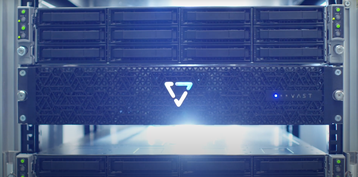
Its meteoric rise has seen it grab billion-dollar deals with the likes of CoreWeave and other leading neoclouds. In conversation with SDxCentral in November, CEO Renen Hallak proudly touted the firm’s first major deal with a hyperscaler, with Google providing it with access to its tensor processing units (TPUs), as well as leveraging Vast’s AI OS.
And just like that, mere days later, a mega deal with Microsoft saw its suite of data services now available in Azure, including its unified storage offering and database capabilities to support complex AI workflows.
Vendors like Vast have certainly come out on top courtesy of the AI boom, and while there may be some bumpy roads ahead, what with the memory frenzy – with an imbalance in hardware availability and price spikes almost certain to hit in 2026 – storage vendors can come out of 2025 with their heads and their stock prices high.
- Ben Wodecki, Senior Editor
LOSER: Open RAN
Open radio access network (RAN) technology was another loser in 2025.
What had been touted as a way for operators to finally follow their cash-rich cloud-based corporate siblings in being able to tap into a larger vendor ecosystem that had been dominated by a dwindling handful of options, open RAN has quickly devolved into a sometimes-easier way for operators to tie together network assets from those same vendors.
Vendor support varies depending on their need to please operator customers, which is also tied to long network investment cycles. There has been some progress this year in terms of those deployments, but the open RAN market continues to be just a fraction of overall network RAN spending.

One of the biggest hurdles this year toward greater open RAN adoption came from the same space impacting just about all of daily life: AI. Operators and vendors spent the past year falling over themselves in touting the AI opportunity, which overshadowed the open RAN reality.
That dynamic does not seem like it’s going to change in the near term, which could mean continued struggles for the open RAN space in 2026.
- Dan Meyer, Executive Editor
Need more? Make sure to check out Pt. 1 and Pt. 2 of our winners and losers.





Comments