

There are many examples in history of a person or business wanting more than the sum of their parts. Like Madonna’s weird British phase, or Elizabeth Holmes’s desperation to be the next Steve Jobs.
In a way it's weird seeing that now in the storage space.
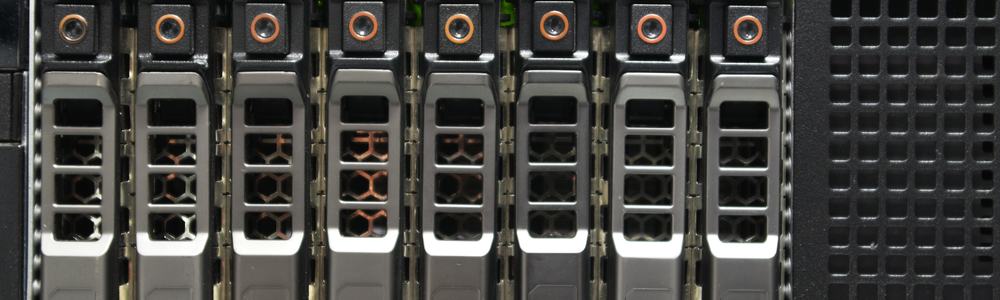
Often overlooked in the trifecta that is compute, networking, and storage, the latter has never quite been as sexy. But this perennial outlier seems to be having its moment in the sun, though not quite how one might expect.
Call it the WeWork mindset: "We want to be X, but in reality, we are Y." Where the chaotic behavior of Adam Neumann led the office-subletting company to think it was a tech company, it was, in fact, a business that sublet office space.
The same thing is happening in storage. The likes of DDN, NetApp, and Vast Data all share the same grandiose vision that, where the lesser of the digital infrastructure trifecta was solely a commoditizing, lower-margin business, the ongoing pivot toward “data management” or “AI data platforms” gets a software-style valuation.
Heck, Pure Storage dropped the storage part of its name for the more grandiose Everpure, with leadership repeated in their explicitness that it didn’t want to be pigeonholed as a storage player. Co-founder John Colgrove, better known as "Coz," cast the vendor's pivot earlier this summer as an evolutionary step on a journey it has “always been on,” and that it was not going to abandon “what got us here.”
AI, though, has undoubtedly muddied the water as to what is and isn’t sexy in the infrastructure space.
Take networking, where in the past it was repeatedly referred to as plumbing by many – much to the annoyance of engineers – it’s quickly ascended to the next big thing, given it's the means to scale hundreds of thousands of GPUs, since becoming a lucrative side-hustle for the richest company in the world (Nvidia, of course).
But renaming things to seem more grandiose in line with AI is far from novel. Software development is suddenly system orchestration. Faster speeds are all of a sudden deemed ultra-low-latency. Data centers are being rebranded as so-called AI factories. And lest we forget, AI is now "superintelligence" ... maybe not that one.
So then why are these once-proud storage vendors now so hurt if you label them as such?
Cost. Like compute and networking before it, storage is now inherently commoditized. And more often than not, commodities get squeezed on price – especially when the underlying oil that keeps the engine running (in this case memory) is beyond scarce.
What’s more viable for costs than hardware? Software. The folks at Salesforce and SAP didn’t get to where they are today by tinkering with server designs. Higher profit margins, better scalability, and that sweet, sweet annually recurring revenue (ARR) model. Where selling capacity was once a race to the bottom, it’s now a race to see who’ll come out on top.
Storage and backup players can’t all do the same thing, and many have built something truly genuine for cataloging, replicating, securing, and feeding data to AI workloads. Vdura’s V12 updates and Everpure’s “primacy” push with data intelligence are among the software standouts. But frankly, the tell is when revenue still overwhelmingly comes from selling boxes and capacity, even if the messaging says otherwise.
As we often like to remind here at SDxCentral, history has a habit of repeating itself, or to use the words of George Lucas: “It's like poetry, they rhyme.”
Years before being snapped up by Dell, EMC came out with its information infrastructure, or EMC2, effectively the precursor to all the AI and data management sweet nothings we’re seeing today. But since there was no AI-type thing to focus on, EMC2 found itself forming the backbone for many a large corporate data center. While software products played a key role, it was array sales that kept the gravy train flowing … and said software sweetness would find its way into the hands of VMware … and we all know what happened there.
Where EMC’s efforts differ from what’s going on today lies in what AI actually is. It’s not something like the metaverse, where companies are building it in the hopes people will come. AI has, begrudgingly to admit, actual tangible uses and applications. And in the sense of storage and access, that data does need to be cataloged. It needs to be searchable. It needs to be clean. Safe to use. Safely stored. And provide actual value to what you’re trying to do. This is where Vdura, Everpure, and all the other names above will fit.
The label hurts because these players are all competing for the same prize while taking on the likes of Snowflake and persistent funding-round player Databricks, who never had to rebrand away from boxes.
It’s set up to be a crowded market, and storage vendors can call themselves whatever they will like, but the lesson is that software has to be the business, not the tagline. Just look at what former EMC subsidiary VMware is doing today. Now that is a heck of a profit margin.


More in The Cloud & Storage Channel
-

-

-

Episode Is data AI’s biggest bottleneck?
Comments