

Elon Musk has been given the green light to acquire an optical transceiver developer founded by former SpaceX engineers.
Mesh Optical Technologies only came out of stealth in February following a Series A round led by Thrive Capital. The firm is looking to break the Chinese stranglehold on the optical transceiver market through systems tailored for both space infrastructure and data centers.
A Federal Trade Commission filing confirmed that Musk’s request for fast-track antitrust approval was granted. It’s important to note that Musk himself is listed as acquiring Mesh Optical, rather than SpaceXAI. The short-lived trillionaire, however, often conflates his various businesses, cross-selling across his disparate holdings.
He now looks set to take control of a company developing a next-generation optical transceiver. Mesh Optical’s initial product, dubbed Alpha C1, translates electrical signals to light at speeds of 1.6 terabits per second (Tb/s) – the burgeoning ecosystem coveted by AI-driven hyperscalers.

Beyond boosting interconnect bandwidth, Mesh Optical said upon emerging from stealth that it was founded to disrupt the optical manufacturing market. It claimed that systems produced in the U.S. are “assembled like laboratory instruments – carefully, manually, expensively, and at low volumes.”
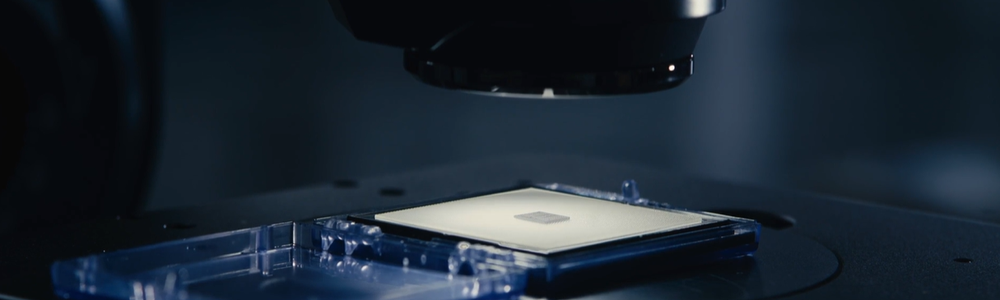
To meet the scale needed to support the millions of optical links in AI clusters, the optical engine powering Alpha C1 is manufactured with “fast and repeatable flip chip die bonding,” the same tech used to package chips in modern processors. In addition to establishing ultra-short, high-speed electrical connections, Mesh Optical contends its die-bonding approach would allow it to more easily mass-produce optical engines.
On the performance side, Model Optical’s Alpha C1 implements eight-lane 224 gigabits per second (Gb/s) PAM4 modulation for high-speed data transmissions. Its design features optimized trace routing to the optical engine, minimizing signal degradation and enhancing power efficiency for AI data centers.
The startup also claims its initial transceivers use one-third the power utilization compared to rival models, as it eliminates retimer digital signal processor (DSP) silicon combined with software-defined link training algorithms running on bare metal.
Alpha C1 supports both Ethernet and InfiniBand and boasts a maximum fiber distance of five kilometers. It can operate at temperatures ranging from 0-85C (32°F to 185°F) and comes in a variety of form factors, including twin-port finned top and single-port finned or flat top.
Musk has not commented on the acquisition publicly at the time of writing, though Mesh Optical’s efforts could boost interconnectivity for clusters powering his Grok workloads or improve data transmission speeds between SpaceX satellites.
The move comes as Chinese firms dominate the optical module market through the likes of Zhongji Innolight, Eoptolink, and Accelink.
Analyst firm LightCounting suggests U.S.-based cloud giants have spent “billions” on optical transceivers, with demand accelerating in 2023-2025.
Those giants, however, rely on Chinese firms. Innolight, for example, is a key optical module supplier for hyperscalers Google and Microsoft and holds a sizable market share for both the 800G and 1.6T segments. Eoptolink, meanwhile, enjoys partnerships with both Amazon and Arista Networks.
In the first four months of 2026, state media suggests China exported 117 billion integrated circuits worth $103.5 billion, up 83.7% year on year, with shipments of optical modules already stretching into 2028 – a potentially worrying trend that tracks closely with lead times in the ongoing memory shortage.






Comments