


Dell's hyperconverged infrastructure platform with VMware, VxRail, is “no longer a thing,” according to CEO Michael Dell, in another damning indictment of the virtualization firm.
Speaking with CRN, CEO Dell said VxRail “was a thing a couple of years ago, and it’s a lot less of a thing now,” with the growth of its own storage offerings usurping the need for a converged offering.
Despite the CEO’s comments, Dell said in a statement to SDxCentral that it had no intention to stop supporting VxRail.
“Customers are seeking greater hypervisor flexibility, so we’re making it easier for partners to transition their customers to other Dell offerings,” a Dell spokesperson said. “At the same time, we will continue to support VxRail and its customers.”
VxRail was unveiled back in 2016 as a replacement for VSPEX Blue. It provides compute, storage, and networking resources via an integrated offering. A hyperconverged iteration was showcased a year later at VMworld 2017, alongside VxRack for software-defined data center rack-scale systems.
The former featured automation and lifecycle management solutions for both vSphere and vSAN for storage. Built to run on Dell EMC PowerEdge servers, it would later receive software additions, including dynamic nodes, which allowed customers to independently scale storage and compute within clusters, as well as support for NSX-T (now part of VMware NSX) and Tanzu.
But following Broadcom’s acquisition of its former subsidiary, Dell would terminate a distribution agreement with VMware in 2024. A short while later and the introduction of Broadcom’s controversial decision to end perpetual VMware licenses meant several changes in the licensing structures and support renewals for VxRail.
All the while, Dell’s own storage and private cloud solutions were on the rise.
Its own PowerFlex software-defined storage solution became increasingly prominent, with Dell making it accessible via platforms like WS Marketplace to further widen its reach.
Earlier this summer, Dell launched a combined offering with one of the key firms snapping up disgruntled VMware customers: Nutanix.
The pair launched a combined offering in April that ties external storage support and integration between Nutanix’s Cloud Platform with its AHV hypervisor and Dell’s PowerFlex storage platform. The tie-up targeted enterprises wanting what was essentially a VxRail-style offering to independently manage and scale compute and storage resources in their hybrid cloud environments.
SDxCentral has reached out to Dell for comment.
Alongside Dell partner Nutanix, a myriad of firms are looking to take advantage of the changes at VMware, including Veeam and OpenNebula. A recent Gartner report, meanwhile, suggested that VMware could lose as much as 35% of customer workloads by 2028, with hyperscalers proving an enticing alternative.
Michael Dell’s comments on VxRail follow IBM's announcement that it will no longer add new VMware environments, instead focusing on its own offerings through Red Hat.
That boon may help Broadcom’s drive for VMware users to jump ship to VCF, a contentious venture that has seen legacy users report migration issues and price increases in the wake of VMware’s acquisition, as well as a “red warning” against Broadcom from the Cloud Infrastructure Services Providers in Europe (CISPE).
But for all the external goings on, things don’t appear that glum at VMware.
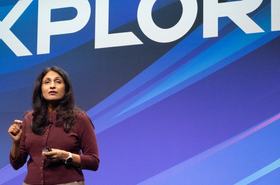
Broadcom CEO Hock Tan proudly touted at its recent Explore event that more than 90% of VMware’s 10,000 largest customers signed up for the vendor’s halo Cloud Foundation (VCF) platform and accompanying subscription licensing plan.
In addition, recent reports suggest VMware offerings might get a little cheaper.
The vendor recently lowered the hardware configurations – or ReadyNodes – for both vSAN storage clusters and vSAN hyper-converged infrastructure (HCI) clusters, while simplifying sizing down to three ReadyNodes per each of the two cluster types.
The price drops meant a 67% decrease in RAM for ReadyNodes certified for vSAN storage clusters, a 33% decrease in CPU cores for those certified for vSAN storage clusters, and a 50% decrease in RAM for hardware certified for vSAN HCI clusters.

Comments