


Forward (formerly Forward Networks) unveiled a digital twin-based tool designed for autonomous network use cases.
Dubbed Forward Predict, the feature works by running each proposed change against a mathematically accurate digital twin of the entire production network. Forward said this approach is designed to prevent costly errors from reaching the production stage, while giving organizations more confidence to accelerate self-driving network efforts without the security pitfalls.
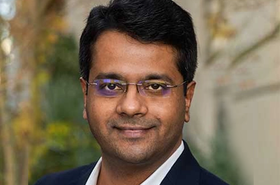
"To predict the future state of a network with confidence you first need a mathematically accurate, fully representative model of the entire network estate as it exists today," Forward Chief AI Officer Nikhil Handigol told SDxCentral. "That means every vendor, every device, every operating system, every layer from L2 [layer-two] to L7 [layer-seven], on-premises, and cloud."
Handigol explained Forward's Network Digital Twin uses header space analysis to "trace every possible path any packet can take across the network." Specifically, it applies proposed changes to the mathematical model of the production network, including distributed protocols like border gateway protocol (BGP) and open shortest path first (OSPF) and their full control and data plane interactions, before running the complete Forward Enterprise analysis suite against the predicted future state.
This process includes routing validation, end-to-end path analysis, firewall and access control list (ACL) verification, segmentation and compliance verification, and automated regression testing.
Model precision is backed by software validation against real network devices during testing and development. Upon customer deployment, the platform cross-references the model against the live network baseline to verify accuracy and continuously refine predictions.
Downtime and agents on the rise
While Forward's network digital twin debuted over a decade ago, the firm has seen an acceleration in demand for the tech, driven by both AI and the specter of network downtime.
Handigol pointed to Gartner estimates that a major unplanned network outage costs more than $500,000 per hour, with total business losses that can exceed $1 million.
"Human error remains the leading cause of those outages, and a network digital twin directly addresses that. One of our banking customers reduced MTTR (mean time to repair) by 80%. That kind of outcome keeps demand strong," Handigol said.
"The second force is agentic AI," Handigol continued. "As organizations move toward autonomous networking, the margin for error becomes orders of magnitude smaller than it has ever been. A mistake made by a human affects one change. A mistake made by an agent propagates at machine scale and speed. That changes the risk calculus entirely, and it changes what teams need underneath their automation."
The exec touted a network digital twin becomes a "prerequisite" rather than an advantage in this case, where increasingly ubiquitous AI agents can get deterministic insight into network behavior and validate the impact of any proposed change before anything touches the production environment.
"Without that foundation, autonomous networking is not really autonomous, it is just fast and risky," Handigol said, echoing similar stances from the likes of Nvidia and Google Cloud.
The solution launch follows a major rebrand for the Santa Clara, California-based firm. Founded in 2013 as Forward Networks, the company is now simply known as Forward.
"Forward was the first word of Forward Networks, and honestly our customers figured it out before we did. They had been calling us Forward for years, so we decided to make it official," Handigol said.
That customer base includes Goldman Sachs, PayPal, IBM, and Dell, as well as government agencies and other Fortune 500 enterprises.
"But the name change reflects something real," Handigol added. "The network digital twin has always been the foundation, and that does not change. What changes is the ambition. We are moving toward a world where every organization that depends on its network can run it autonomously, intelligently, and without fear of change. Forward felt like the only word that captured that direction.
"Less explanation, more momentum. That is what the name means to us."


Comments