


Former Juniper Networks CTO Raj Yavatkar has unveiled his next endeavor: a startup building silicon focused entirely on inference.
Dubbed Ludwig Computing, the upstart is designing “probability-native silicon,” or a parallel processing unit (PPU). Not a new concept in semiconductors, but one that has yet to gain wider traction: hardware that breaks down problems into smaller pieces and combines them to form an answer, capable of handling intense data throughput more efficiently than a CPU.
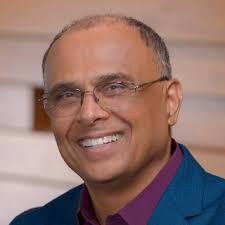
Yavatkar said Ludwig’s version of a PPU is natively paired with “probability encoding algorithms” capable of executing sampling and probability calculations as a native operation, rather than emulating it at an enormous computational cost.
“We built deterministic compute engines, and then spent a decade and untold billions hauling data back and forth to make them behave probabilistically. That's the memory wall,” the ex-Juniper exec outlined in a LinkedIn post. “We're doing something different … One foundation that supports every model class, cloud to edge. Focused on inferencing.”
If CPUs have become the poster boy silicon for inference and agentic workloads, then Ludwig’s PPUs are almost like super CPUs, featuring an n-die co-processor to accelerate simultaneous parallel tasks while reducing latency and synchronization overhead of traditional architectures. PPUs don’t constantly shuffle parameter weights back and forth, thereby impacting data movement. As Yavatkar described them: “Not a faster chip, but a different substrate. Inference, the way it was meant to run.”
Yavatkar embarks on a silicon adventure having spent more than six years at Juniper. He took over from Bikash Koley in 2019 and would go on to spearhead enterprise-wide AI initiatives at the now Hewlett Packard Enterprise-owned firm.
Following the acquisition’s closure, he departed to “take a big pause” before going on to advise companies including cybersecurity firm Operant AI, asset optimization platform Asato, and Nokia.
He co-founded his latest endeavor alongside three others: Ram Sunder, a fellow Juniper alum who later served as a corporate VP at RISC-V designer SiFive; long-serving GlobalFoundries engineer Behtash Behin-Aein; and Purdue University graduate Lakshmi Anirudh Ghantasala.
Yavatkar will serve as the startup's chief AI officer, while Behin-Aein takes the reins as CEO. The startup likely borrows its name from Ludwig Boltzmann, the Austrian mathematician known as one of the fathers of statistical mechanics alongside James Clerk Maxwell.
Yavatkar’s post confirmed that Ludwig is looking to hire across roles including architects, silicon, compiler, and ML systems engineers who “find this problem as interesting as we do.”
Ludwig isn’t the only firm looking to expand the idea of PPUs. Flow Computing spun out from the VTT Technical Research Center in Finland and claims its hardware provides significant performance improvements compared to conventional multi-core CPUs. T-Head, the custom chip arm of Chinese giant Alibaba, is also looking at PPUs.




Comments