


Nvidia deals in a lot of things: its software stack and interconnects, AI factories, 6G, the metaverse. Up until now, chips were perhaps the one thing that caused some controversy due to a certain nation whose name starts with C. But now telecom, one of its more niche areas, is the latest area to stir a little trouble for Jensen Huang and company.
Last week Nvidia found itself debunking reports it was in talks with China’s Shenzhen Jiaxian Communications to develop 6G base stations that meet overseas market requirements. A Chinese publication claimed an Nvidia technical team visited Jiaxian in March 2026 to discuss AI radio access network (AI-RAN) technology, ultimately recommending that Jiaxian use the vendor's Aerial CUDA-Accelerated RAN platform for compute purposes. A Jiaxian representative claimed it subsequently began AI-native 5G/6G base-station R&D through a technical working group formed with Nvidia personnel from mainland China, Hong Kong, and Singapore.
Nvidia described the report as “completely baseless, and its description of our activities in the region is also inaccurate." And so the world continued to turn with Nvidia holding onto its American halo, much as it did when Supermicro personnel were investigated over smuggling Nvidia graphic processing unit (GPU) servers in both the U.S. and Taiwan.
That Taiwan probe occurred not long after I attended this year’s Computex event in Taipei. While I was there, China was a sort of unspoken elephant in the room, to the extent that Supermicro didn’t have a keynote this year despite Computex tradition.
When I returned from Taipei, the Chinese elephant was harder to miss as suddenly 6G news lit up my inbox at a rate harder and faster than before. For a nascent technology, there sure have been a lot of announcements lately from Japan’s KDDI, Qualcomm, Viavi Solutions, Europe, and the good ol’ USA.
America's 6G call to action
The American push came via the National Telecommunications and Information Administration (NTIA), which in July both made a "call to action" seeking partner nations to align on standards for 6G networks, and granted a $53 billion boost for AI-RAN technologies.
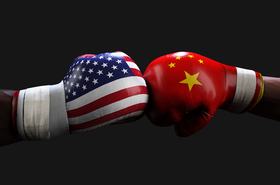
Both were arguably in response to China’s advancements in 6G that seemingly put it in the lead over the U.S., first with the launch of a pre-6G test network in the city of Nanjing, and later with the approval of the 6 GHz band for large-scale 6G field trials and technical standardization.
With such progress, it may be natural for some to put 2 and 2 together and get 5 with reports of Nvidia getting into China’s 6G market as early as possible to sell the compute spoils which underpin AI-RAN and 6G. After all, the company sells to both the U.S. and China, and has seen itself in a geopolitical pickle at times due to chip export sanctions, with its golden halo intact.
Nvidia would likely want to avoid such compromise again, casting further doubt on the veracity of the Jiaxian report. But as 6G continues to ramp up, it may find itself returning to what is turning into the most geopolitical spectrum development in many a year. While 5G ultimately saw a messy end in many parts of the world due to the ordered removal of Huawei and ZTE kit, what we are currently witnessing is the politicized treatment of a technology that is in its early development stages and nowhere near the operational stage as 5G was during the China equipment crackdown.
What makes 6G particularly prickly is its overlap with the new space race that is hard to ignore. As this title has explored, the 6G era will see non-terrestrial networks (NTNs) deeper integrated with terrestrial mobile systems. Europe has already tried to one-up China with a 6G lab in space courtesy of Britain’s Open Cosmos. This 6GStarLab will support testing of 6G frequencies with multiband devices and feature an optical terminal for improved satellite-to-ground links.
China currently leads the way on 6G testing in NTN environments, while U.S. research in the area has been more ground-based. The exception may be Elon Musk’s Starlink service, which reportedly commissioned Samsung Electronics last year to design an AI-driven modem chip for the company’s 6G NTN venture.

Galileo vs. GPS
So what if anything can history teach us about what we may expect down the road as 6G further develops? The closest analogy is an obscure one.
In the final years of the Clinton presidency, the European Union (EU) decided to affirm its digital sovereignty by building its own satellite-navigation system, Galileo, to avoid reliance on America’s Global Positioning System (GPS). Designed and controlled by the U.S. military, Europe was privy to GPS, but in a serious conflict the U.S. could theoretically degrade or deny parts of the satellite-based service.
Galileo was to use a new secure government-only signal designed by Europe under the name of the Public Regulated Service (PRS). But the U.S. was simultaneously modernizing GPS with a new encrypted military signal called M-code. One proposed Galileo L1/E1 PRS signal around 1575.42 MHz would have placed substantial signal energy over spectrum used by GPS L1 M-code.
The U.S. took umbrage, as both it and NATO wanted to be able to jam Galileo in a war zone if an enemy was using it, while still allowing their own forces to use M-code. If Galileo PRS sat too closely on top of M-code in spectrum, jamming Galileo could also interfere with America’s own military GPS signal.
After several years of negotiation, the two sides reached an agreement in 2004 when Galileo changed aspects of its PRS signal design to provide sufficient spectral separation from M-code to preserve U.S. and NATO navigation-warfare capabilities. By the same stroke, the agreement deliberately made civilian GPS and Galileo highly interoperable, so ordinary receivers could eventually use both systems together.
History rhymes
As they say, history doesn't repeat itself, but it often rhymes. Looking back now, this incident ,which straddled both the Clinton and “Dubya” Bush eras, is relevant in one aspect when we consider the strained relationship today between Trump and the EU.
On the 6G relationship between China and the West, it bears remembering that European contractors like Alcatel Space and Alenia Spazio joined Boeing’s GPS III bid while the political agreement was still being finalized. After the settlement, U.S. GPS-chip specialist SiRF – now part of the Qualcomm fabric – bid to participate in Galileo, showing that vendors continued to position themselves across both ecosystems after the U.S./EU spectrum resolution.
Today, the U.S. is wary of harmonized spectrum due to national security fears over China. Nations will likely implement broadly compatible 6G, but with different preferred bands, suppliers, security controls, and a more sovereign vendor ecosystem than that of 5G. Indeed, where the U.S. frames 6G as a security concern, Europe is viewing it as a chance to reclaim at least part of its technological sovereignty.
This may hamper the plans of Nvidia and others, who would understandably like to ensure the largest possible global market. But the world of the 2020s is vastly different from the 2000s, and the off-world realm is just that little bit closer. The U.S. doesn't want Chinese trunks to reach from the stars into its spectral networks, nor does it want American network and compute players getting into the elephant's pen.
In other words, 6G will make this particular pachyderm rather hard to ignore.





Comments