


Every era of computing has its CPU Godzilla. For the longest time, it was Intel: an enormous, unchallenged monster that every other chipmaker learned to tiptoe around. But like the various eras of the beloved Toho kaiju, the original king now finds itself languishing as Anguirus, the perennial punching bag that can’t seem to stop taking hits.
The CPU Godzilla standing tall and ruling the shoreline today is AMD. Like the Godzillas of old, it mutated form after form, from a small, underestimated kaiju into something the old king simply could not match. This week, it formally unveils its latest evolution, Venice.
No king’s crown is safe, of course, but where AMD was previously largely threatened by its own x86 kind, now something strange has landed in Tokyo Bay from beyond the atmosphere.
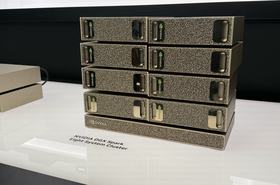
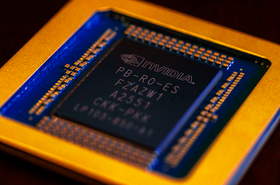
That monster menace from beyond the stars, King Ghidorah himself, is none other than Nvidia. Unlike Godzilla before it, it didn’t evolve, but instead landed to usurp the throne. And in terms of power scaling, it’s a fierce competitor, with multiple heads, each with its own distinct personality, along with wings representing the GPU empire stretching across the AI market. That’s a lot of reach for a Godzilla to fight.
AMD won’t admit it’s a fight. Unlike its big green competitor, the Lisa Su-led kaiju is far more stoic in how it presents itself. But that doesn’t mean it’s not gearing up for battle. During its In-Depth event for press and analysts in Las Vegas, subtlety was not lost in the Verano stickers handed out. No, likely sick of hearing claims of its rival developing the “first purpose-built CPU for agentic AI,” the folks at AMD aren’t taking this encroachment into their turf lying down.

Now each Godzilla has its signature move. And Venice looks every bit the modern-day kaiju’s atomic breath, it seems. Impressive core-count numbers, a wide-ranging portfolio ranging from chiplets to high-end servers, and a spruce software addition in the form of Mext to aid memory performance provide strong weapons in its monster arsenal. It’ll never admit there’s a battle on the horizon, of course, but the snarky stickers and two days of touting performance stats say otherwise.
When you step to the king of the monsters, you best not miss. And in the case of AMD’s CPU empire, it stands proud atop a moat built around openness, programmability, and decades of iterations and evolutions.
But Nvid-orah is a formidable kaiju in its own right, and each of its heads is a force to be reckoned with for any prospective Vera user. The BlueField head provides the offloading and added agentic-infused security. NVLink Fusion represents a head that lets hardware outside Nvidia’s own wheelhouse augment its stacks. And the forthcoming Groq language processing unit (LPU) brings low-latency acceleration to enhance inference deployments.
Heads aside, Nvidia made its name with GPUs and tightly coupled so-called factory platforms. Convincing long-time x86 users to jump ship is a tall order. Grace laid the groundwork and opened up industry hearts to low-power double data rate 5X (LPDDR5X) memory. But the CPU space is a different beast to conquer.
By entering into the fray, though, Nvidia risks upsetting another kaiju altogether. Having relied on Arm designs for years, even tapping the Armv9.2 instruction set for Vera, Arm now wants a piece of the action with its AGI CPUs. The apt casting for the SoftBank-owned company would be Biollante, the plant-based kaiju created by splicing DNA, except in this instance, it would be mixing Arm’s design nous with co-development efforts from Meta. With its long-time partner pushing the CPU “purpose-built for the AGI era” while relying on the same architectural ingenuity that helped power part of Nvidia’s rise, it could work well in Godzilla’s favor should the monsters start bickering.
And there are other monsters in this fight that want a piece of the king, like RISC-V, but in terms of scaling, it's more akin to Minilla – son of Godzilla – than to an actual rival like, say, a Rodan, at least at the time of writing. Not to say the hardware is the offspring of x86 CPUs, no. More that it’s an emerging challenger, one not yet fully grown. But given enough time to mutate, we could well have a true monster royal rumble on our hands.
It’s fair to say then that AMD will face an onslaught for the soul of the CPU space, but let’s not make this just a list of which developer is which kaiju, as fun as that might be. Nvidia leadership might have their priorities slightly skewed at present due to alleged off-the-field antics, so to speak. But make no mistake, it’s not pushing into the CPU space to make friends; it wants to challenge the top dog.
In the movies, the monsters only really stop fighting one another either when something bigger shows up, or one is defeated. AMD and Intel have their Mothra in the x86 Advisory Group, two old rivals working together for once. But then the invader is backing the old king turned now Anguirus to the tune of $5 billion. So whoever wins this fight, nobody’s sure whose side the invader is on.
But what you can be sure of is AMD won’t be backing down. The vendor’s two-day showcase in Vegas showing off Venice was a tour de force in confidence. It had all the benchmark claims you’d come to expect, but a frank assurance that its portfolio of chips – not just one – can meet customer processor needs, and not solely agentic AI.





Comments