

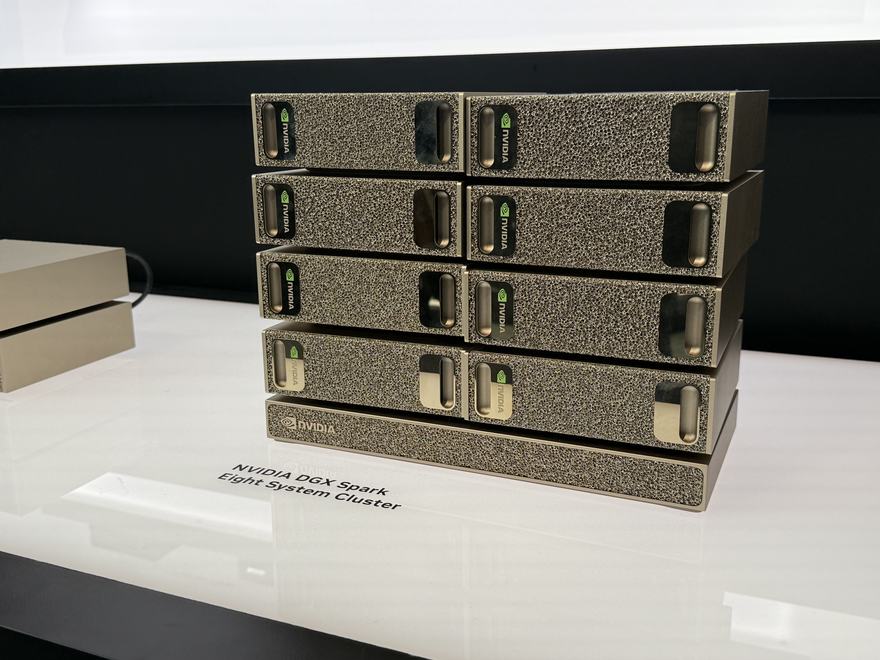
BERLIN – Nvidia may have inadvertently revealed the future means to interconnect its DGX Spark desktop AI supercomputers.
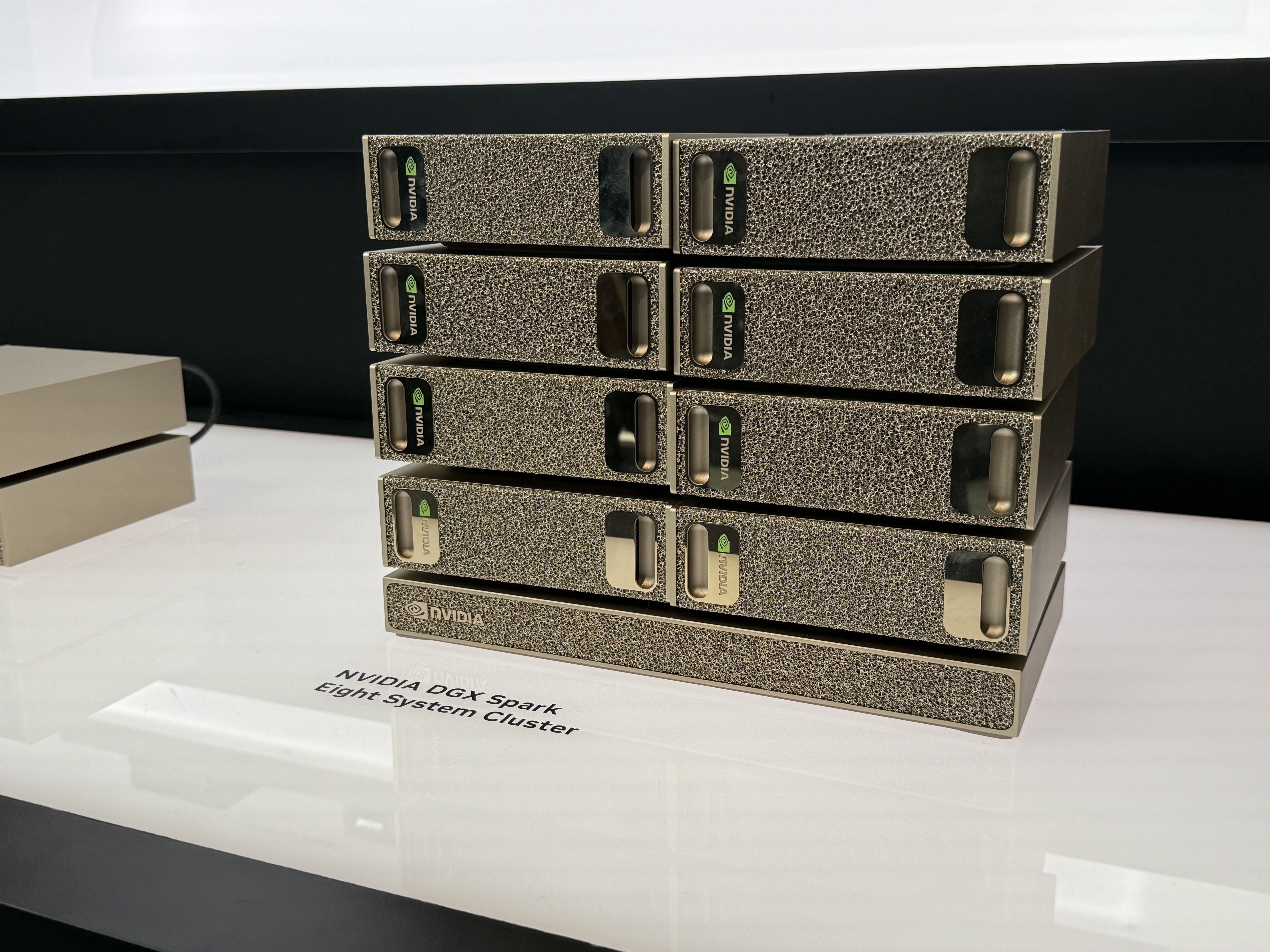
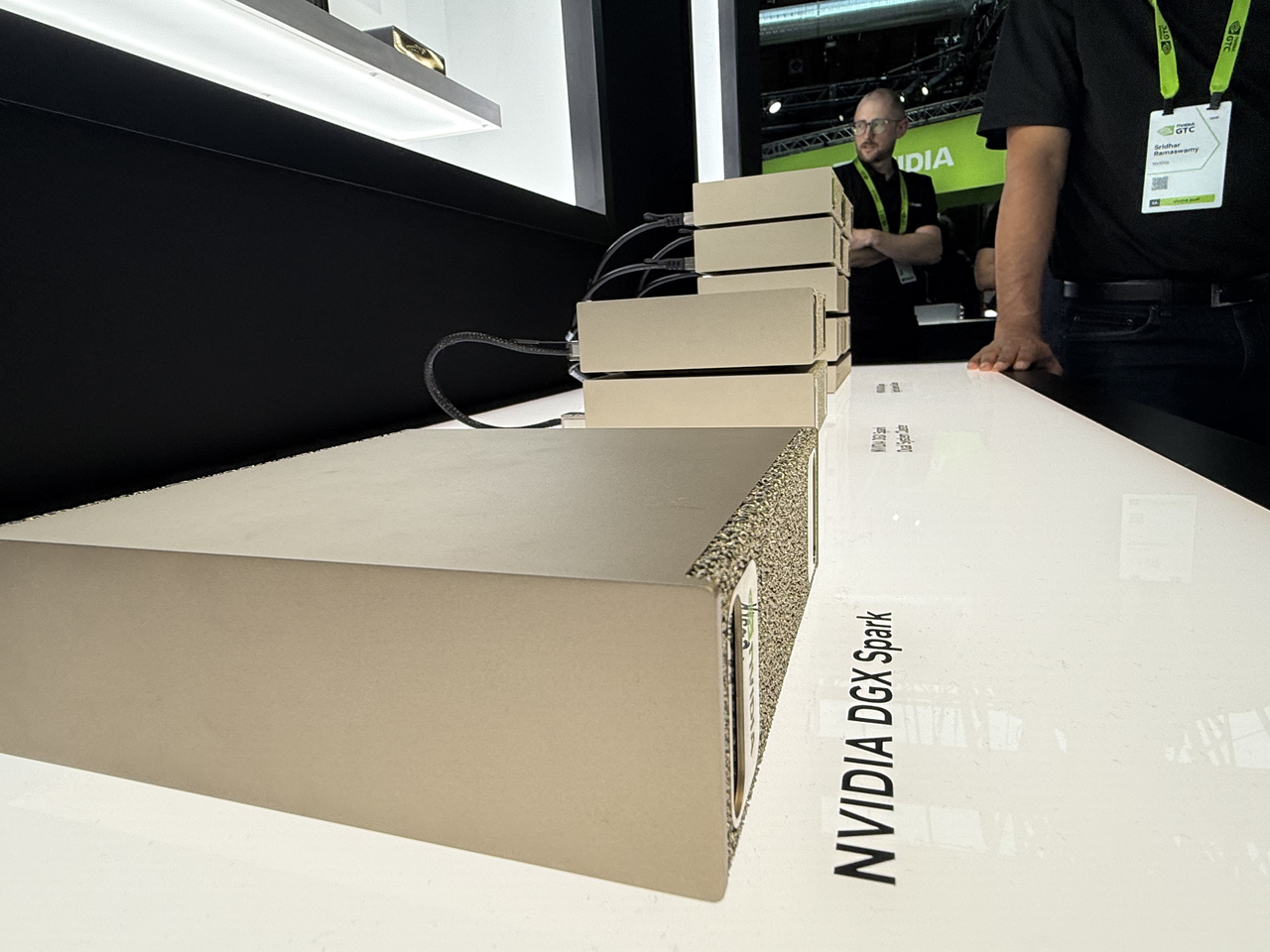
On display at GTC in Germany were Sparks showcased as a single device but also in interconnected configurations of two and eight. The latter of these were sat atop their own Nvidia-branded switch, which SDxCentral can reveal is a system never seen before.
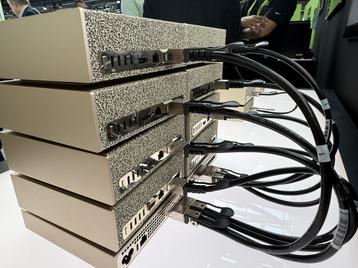
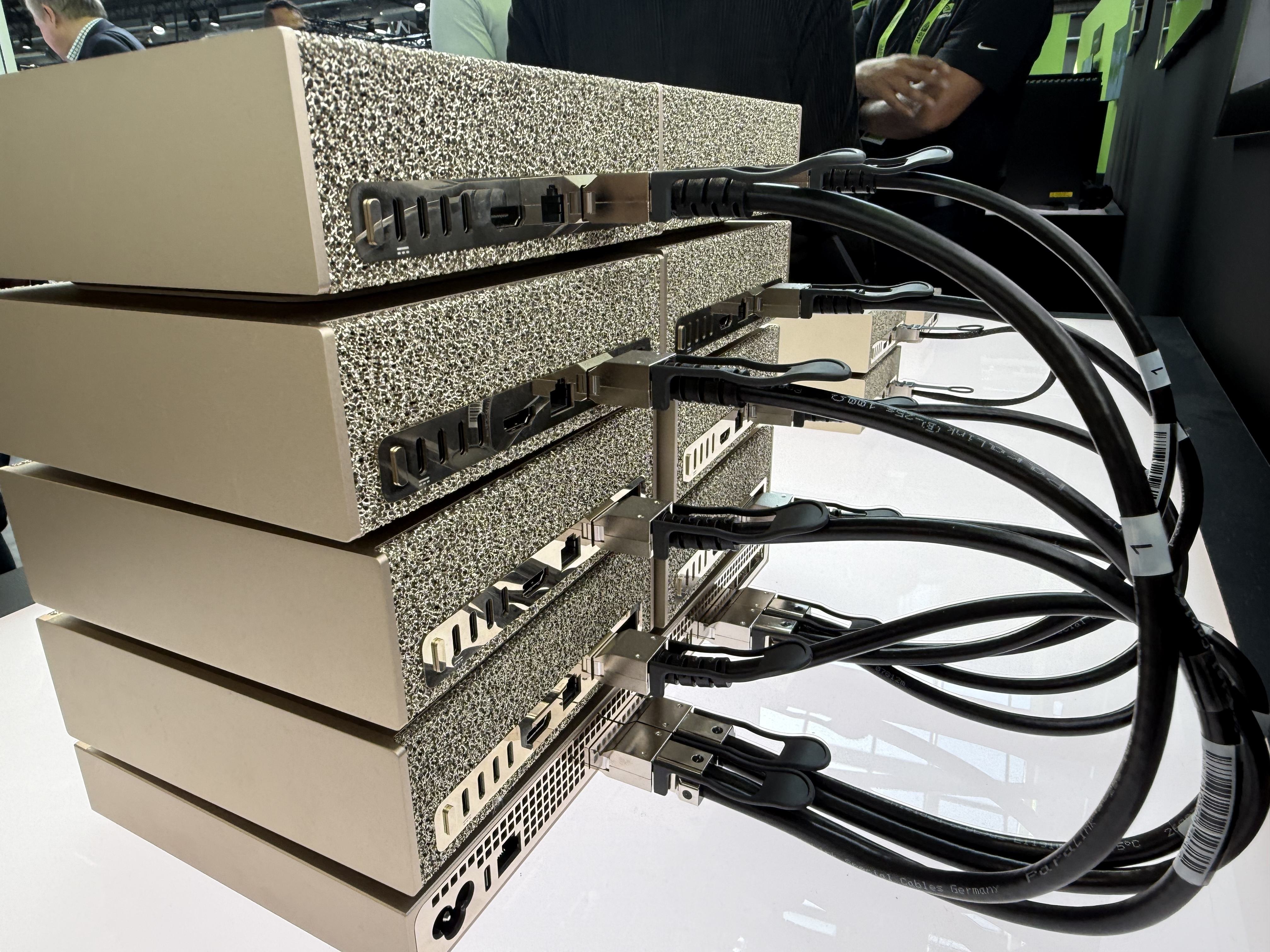
According to multiple on-site staff who spoke to this title, it’s built on the ConnectX-7 silicon architecture and can support 400G connections on a single plane. There’s no fancy connection to keep Sparks sat on it in place; they’re literally stacked like Jenga blocks. Each device connects to the switch via a cable. Staff on site did not disclose whether these cables were direct access or active opticle, saying they haven’t committed to one particular configuration.
The device is not in active development, and there is no official Nvidia product at the time of writing; it is just a prototype. But according to staff SDxCentral spoke to on site, buzz about it from attendees was more than apparent.
Interconnecting Sparks is a concept that the networking community has already played around with. A community post on Hugging Face, for example, outlines that by interconnecting multiple units (in this instance, four Sparks), “alleviates its biggest issue, lower memory bandwidth.”
Nvidia staff at GTC, however, said the biggest win with the switch concept was its ability to improve inference, with workloads parralleized over devices to get faster results. The tradeoff though was the same with traditional networking: latency, waiting for multiple devices to correlate packets.
MikroTik’s CRS804 half-rack switch has proven to be one of the means engineers and developers have sought to interconnect multiple Sparks, but that only features four 400G ports. Nvidia’s mysterious Spark switch features eight ports, with each device joining up via direct attach cables. It’s also quite expensive for home-brew engineers, costing a little over $1,000.
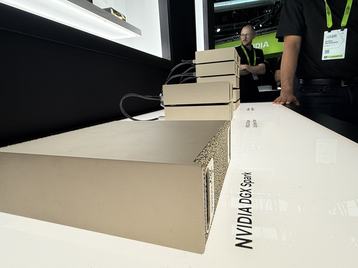
While slightly skewed in how each unit sat atop the switch, the prototype enabled a much cleaner eight-device setup than YouTuber Alex Ziskind was able to pull off using MikroTik switches. Though his experiment saw him admit the benefit of having eight Sparks connected together was “not that great as four.”
While Nvidia continues to generate immense profits off its data center networking portfolio, in the months since the release of Spark, it’s sought to push its networking prowess into the local AI space.
In September, it unveiled Personal AI Router, or PAIR, a software tool that allows developers to interconnect disparate devices running on MacOS, Windows, or Linux systems on the same local network.
Gilad Shainer, Nvidia’s networking chief, told SDxCentral in a later press briefing that more networking innovations for personal AI computing are coming, adding that there was theoretically no ceiling for how many Spark devices could be interconnected.
“In the four-box domain, we have Connect-X …, one of the secret sauces inside. It's very effective in a sense that it does not waste CPU cycles to move data. Okay, you can move data directly to the CPU memory; the CPU doesn't need to be involved. It's really effective from that perspective,” Shainer explained.
“Once you combine four, I can just do [a] mesh between those NICs (network interface cards). That's it. When you go beyond that, then it's much more effective to bring a switch into that. With a limit to the numbers? The answer is no. Not really.”





Comments