


TAIPEI – In Taipei's Beitou-Shilin Technology Park, Nvidia's Taiwanese HQ is slowly forming. From what SDxCentral understood on the ground at this year's Computex, the location lacks the travel infrastructure one can find in the rest of the city. There are also question marks over whether Nvidia will find the promised 4,000 new employees to add to its local headcount once the HQ is completed in 2030. CEO Jensen Huang announced this week that Nvidia plans to invest around $150 billion a year in Taiwan, though a breakdown of how those funds will actually be allocated has not yet been detailed.
But attending various events held by the Taiwanese Stock Exchange (TWSE) in conjunction with Computex, one wonders how essential Nvidia is to Taiwan’s dream of turning from a “Ghost Island” (鬼島) devoid of opportunities for young jobseekers, to the abundant “AI Island” vision espoused by its government.
For starters, Nvidia will never displace Taiwan Semiconductor Manufacturing Company (TSMC). The TSMC ecosystem continues to underpin what TWSE chairman and CEO Sherman Lin described as the “hyper growth portfolio” of Taiwan’s next big AI and semiconductor design leaders.
According to data presented by Lin, 90% of AI servers are assembled and manufactured in Taiwan by companies like Asia Vital Components (AVC), Delta Electronics, and Wistron Corporation.
Brenda Hu, senior vice president of TWSE, added to the Computex crowd that Taiwan's market is “much broader than semiconductors and AI.” And of those companies that do play in those areas, there are some very healthy players, some of which are attracting American attention of a different sort to Huang and the chip brigade.
Take Nanya Technology Corporation. The dynamic random access memory (DRAM) chip company claimed overall operating profit reached about $64 billion in their most recent quarter, which senior vice president Joseph Wu said was almost equal to the profit of the entire year 2025.
Wu added Nanya had completed a $2.5 billion private placement in Taiwan, with shares issued not only to chip players Sandisk, Solidigm, and Kioxia, but also Cisco, which he described as “a top global networking company” at the TWSE forum.
Wistron Corporation, meanwhile, is branching further into networking due to AI-driven integration needs. Dealing in original design manufacturer (ODM) services, chief technology officer David Shen explained the Zhubei City-headquartered firm was moving more and more into switches, becoming a Taiwanese parallel to Cisco or Broadcom.
“We have been making the compute portion for many, many years. Now, because of integration, we need to take care of networking and also storage,” said Shen. “So for the integration to the downstream, we have to handle a lot of the devices we never touched before.”

Marvell-ous Computex
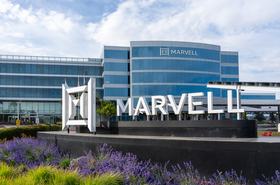
It’s no coincidence that Marvell gave a keynote address this year at a trade event more known for computing than classic networking. CEO Matt Murphy put the firm's connectivity business front and center on the Computex stage, claiming data center connectivity represented the "vast majority" of Marvell’s revenue, from "high speed optical interconnect inside the data center to long reach optics between data centers, high speed switching infrastructure."
“Our DSPs (digital signal processors) have to work not just in a lab, but in the world's largest data centers at very high volume and very reliably for years, so that requires investing ahead in the manufacturing ecosystem. We’ve got to build the capacity and the supply chain infrastructure before the market arrives; that's why the ecosystem matters so much, and it matters a lot here in Taiwan, by the way,” said Murphy.
The CEO also made mention of “the wall”, referring to the physical limit of copper cables for data transmission, adding: “You see in Taiwan the supply chain and the ramp up that's happening. The ramifications of this are actually enormous, because each time the wall moves one step to the right, the number of connections that you have goes up by at least an order of magnitude, so it's creating this explosion in demand, as I mentioned, and the optical supply chain needs to scale up massively and be ready."
Very cleverly, Murphy brought out Taiwanese darling Huang to drive home the message to Taiwan that AI has made networking sexy again.
While backing up Murphy, Huang echoed prior viewpoints, saying that while "we should use copper as much as we can for as long as we can," the tech still has its limits with both bandwidth and distance.
"Ultimately, the right strategy is to scale up with copper as long as you can. After that, you scale up further with optics, and you scale out with optics, and you scale across with optics, and so you use optics wherever you must, you use copper wherever you can, and so I think that that intersection is going to continue for a long time. Here's the bottom line: in the next 5-10 years, we're gonna use a ton of copper, or we're going to use tons and tons of optics."
By the five-year point, Nvidia will just start to have its Taiwan HQ up and running. Whatever happens after that may be up in the air, but one thing is for sure: it's unlikely Taiwan needs Nvidia to survive, and networking may provide yet another abundant stream of revenue for the world's chip powerhouse.






Comments