


Ciena's biggest problem is that too many people want what it makes. The optical giant is routinely posting record revenues with intense customer demands, but its biggest challenge is an industry-level one: supply.
CEO Gary Smith sat down with SDxCentral to mark 25 years at the helm and was bullish, stressing Ciena’s number one strategic and operational imperative is to “scale supply in all its forms.”
“We built out enormous amounts of capacity starting about two years ago, so to try and get out ahead of this,” Smith said. “But frankly, it's such high demand that, you know, we're still kind of behind in terms of where we want to be, even though our capacity's increased dramatically.”
The chief executive harked back to the early years of his tenure, where the most dramatic market dynamics were the “telecom nuclear winter” and the dot-com bubble bursting around the turn of the century. Ciena at that time doubled down on its technology, knowing it would be both viable and profitable in the future, with Smith stating: “We don't want to cut down to the size where we'll never be relevant again to anybody. We continued to invest for two or three years with basically massively declining sales.”
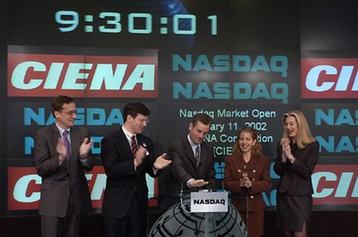
The picture couldn’t be more different today. Ciena’s most recent earnings saw it post record revenue of $1.43 billion, up 33% year over year. That figure is buoyed by what CFO Mark Graff described as a “meaningfully higher backlog” swollen by $2 billion in a single quarter to $7 billion, with nearly all new orders now queued for 2027 delivery.
The CEO told SDxCentral that he expects a supply-demand equilibrium by 2028 – a similar timeframe seen in the ongoing memory shortage.
“I'd like to give a different answer to that, but in my honest opinion everybody's working very hard throughout the whole ecosystem to scale up components, manufacturing, the whole thing. But the reality is that demand is continuing to outstrip supply," Smith said. "I do think that at some point, you've got to get to sort of a balance that those things meet, and my best feeling about that is toward the end of '28.”
Scaling at all costs
To bolster its own production capacity, Ciena has expanded its capital expenditure, hitting $74 million during the first quarter (Q1), roughly three-times its historical quarterly average.
But while building out its own capacity, Smith expressed confidence after several of its suppliers received significant investment to build out their capacity from Nvidia. Coherent Corp, Lumentum, and Corning each received lucrative injections from the tech giant to secure its own supply chain, but Smith said those deals were “a validation” for its next big play: inside the data center.
“All of Ciena's revenue is outside the data center. It's all about the wide-area networking and taking that out and away from the data center. The other dynamic is a massive opportunity for us. We believe optical is going to appear inside the data center,” Smith said. “All of the communications inside the data center right now are all electrical. And that has scaled up very well for the data centers that we have today. Because of the processing power of GPUs are getting incredibly stronger, power issues, [and] distances are getting longer, the physics of just pure electrical is being challenged.”
Smith said Ciena’s optics-based inside-the-data-center play is “really the only technology” capable of enabling distances and volumes needed for the immense AI buildout.
“You saw it on the outside of the data center over the last 20, 30 years. It's moved from electrical to optical," Smith added. "Ciena's been a massive beneficiary of that. We see the same dynamic happening inside the data center over time now. And so these investments that people like Nvidia have made in the optical ecosystem, frankly, validate that hypothesis.”
To power its push inside data centers, Ciena acquired Nubis Communications, a New Jersey-based firm developing high-performance optical and electrical interconnects aimed at breaking the I/O wall in data centers. Ciena has since launched pluggable optical engines designed to reduce the power consumption of AI workloads inside the data center by up to 70%.
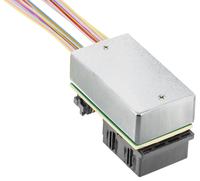
Smith knows mergers and acquisition all too well, having overseen roughly 20 deals during his quarter-century at Ciena. But beyond that, the company's data center strategy involves a significant push into data center out-of-band management (DCOM) solutions. These aim to reduce management network footprints by replacing legacy Ethernet aggregation with a purpose-built, scalable alternative based on passive optical network (PON) technology.
Smith noted that the DCOM offering was co-developed with Meta, which has allowed the company to capture more attention from hyperscalers.
“[On DCOM] we're taking revenue from the first hyperscaler that we co-developed with, and we're in trials with two other hyperscalers already, so active trials,” Smith said. “We're basically broadening out the application base, and that's before you start with all of the neoscalers and those kinds of players coming along, who are also leaning into networking as well.”
The competitive landscape is also shifting. Nvidia's $1 billion investment in Nokia raised industry eyebrows, particularly given Nokia's absorption of Infinera, which puts it in more direct competition with Ciena on optical networking.
Smith referred to Nokia as one of the “legacy generalists” when he took over at Ciena, but appeared unfazed following recent developments, framing it as part of a broader industry evolution away from the salad days of generalist telecoms players toward focused specialists.
“The industry evolved from being one of generalists – Lucent, Alcatel, Nokia, Siemens – which generally provided everything from handsets and mobile all the way through to IP,” Smith said. “I passionately believe you've got to be the best in the world at what you do. We wake up every day and worry about one thing: high-speed connectivity.”
“I think that's enabled us to navigate over the last quarter of a century to be the No. 1 player in the world at what we do," Smith added. "And I think it's about focus, velocity, and the scale of investment required to be successful in a single space, and if you've got multiple things competing for that investment, it’s a real challenge.”
The long game
The concept of what Smith and Ciena refer to as "neoscalers," more often referred to as neoclouds, is another area Ciena has been pushing just as heavily.
Explaining the company parlance, Smith said this new class isn’t necessarily a new entrant into the cloud space but can apply “all the way from very well-established players, such as Oracle, to folks that rent out GPU space. It's a very wide umbrella of players.”
Ciena’s most recent earnings saw Smith tell investors that such players were looking at building out their own networks, with the company already taking revenue from several. But the CEO expressed caution around such players based on their financials.
Smith said Ciena was already taking revenue from several, but reiterated caution, adding that he was selective about who he partners with, wary that not everyone in the AI race will survive.
“You've got some very big, well-financed players in there, but I always get a little bit nervous when companies are investing in each other and trading,” Smith told SDxCentral. “Not everybody's gonna be a winner in the whole AI race. You have to be careful around who you choose.”
Smith's watchword for the next few years is clear: “supply, supply, supply.”
But the CEO, who has steered Ciena through dot-com crashes, telecom winters, and multiple reinventions, is equally focused on where the company needs to be in 2028 and beyond.
“You've constantly got to reinvent yourself. It's about curiosity, being agile,” Smith said. “Technology gets built by people, getting the right team, the right culture, the right focus. That's been the foundation for Ciena's success. And we play for the long term.”
UPDATED: Story updated to clarify the number of deals Ciena has conducted under CEO Gary Smith.





Comments