


Many organizations have, to some extent, joined the race to create value with AI. Many are also ready to move past the point of experimentation or pilots to scale results to the business. In fact, in a recent survey, Deloitte found that 34% of companies are beginning to use AI to deeply transform the business and 30% are redesigning key processes around AI.
However, scaling AI to the enterprise can be more difficult than anticipated. Our survey data backs that up: 37% of respondents are still applying AI at a surface level, with little to no change in processes.
Why scaling AI is difficult
Moving AI into production requires more than access to models. It requires the ability to manage costs, compliance, security, performance, and integration at enterprise scale. What’s needed to move from AI experimentation to implementation that provides business value is a production process that is repeatable, governed, and economically viable at the enterprise level.
Scaling AI presents several critical challenges. The cost of running proof-of-concepts in a closed, cloud-based environment is manageable, but it can become expensive as operations scale. Data locality and compliance are also challenging because data is often the enterprise value differentiator, and many organizations store regulated data exclusively on premises or regionally. Data gravity can be a problem as well, as data volume and velocity can make mass migration to the cloud problematic.
Security and control are also made more important, especially regarding security, compliance, and auditability requirements necessary for deploying AI agents. Finally, performance can be an issue, because larger, closed models are often inefficient for many smaller enterprise use cases resulting in reduced performance. What’s the answer? Going private with a factory for AI.
What is an AI factory?
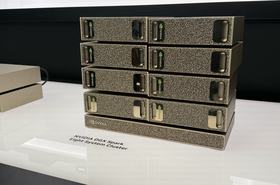
An AI factory consists of the hardware and software infrastructure necessary to run AI workloads at scale, as well as the ability to train and refine the models. AI factories combine extensive computing power to support large inferencing query volumes and effectively coordinate the data, models, and agents used in business processes. In short, they enable organizations to turn data into operational insights and automated actions, at an enterprise pace and scale.
The key advantage of an AI factory is that it can provide cost-effective, resilient, and scalable AI operations on private infrastructure, with cloud-like usability. It can enable organizations to use the standardized controls, processes, and feedback loops necessary to effectively move AI from pilots to enterprise production.
Operationalizing the factory: From architecture to outcomes
A successful AI factory deployment starts with a well-defined strategy that aligns business, IT, data, security, and operations leaders around targeted outcomes and clear use cases. Skills, facilities, and budgets should then inform decisions about architecture, ownership, and investment choices, including token economics and infrastructure.
Robust data pipelines and close collaboration between technical and business teams turn AI into production capability by refining use cases and optimizing workloads for performance, cost, and usability. Scalable technology, change management, monitoring, FinOps, MLOps, training, and governance help organizations deploy AI safely and sustain value over time. A successful AI factory approach will typically include the following elements:
- Strategy, vision, and token economics: Define the business vision, target use cases, and cost model for AI, including token economics and total cost of ownership.
- AI infrastructure strategy development: Assess AI demand, cost, and technical requirements such as graphic processing unit (GPU) sizing to shape a cost-optimized infrastructure plan.
- Architecture, blueprint design, and ownership model: Design the target environment across compute, storage, networking, scalability, and security, while addressing locality and ownership decisions.
- Hardware procurement and infrastructure build-out: Source hardware and integrate the full stack needed for production-ready AI.
- Deployment of the AI software stack: Activate the environment by deploying infrastructure software, data pipelines, AI frameworks, and security tooling.
- Data-to-AI pipelines, frameworks, and workload optimization: Build end-to-end pipelines, implement AI frameworks and libraries, and optimize clusters so use cases can run reliably and at scale.
- Managed operations: Sustain performance through monitoring, infrastructure management, cost control, and model governance.
Potential business outcomes of an effective AI factory
An effective AI factory can help deliver measurable, compounding outcomes such as:
- Cost reduction and predictability: Dedicated assets with fixed cost and proprietary models.
- Improved performance: Reduced latency, tuned platform to workloads and use cases, and reduced data transfer time.
- Enhanced security: Complete control of the environment ensures adherence to corporate security and governance standards.
- IP Protection: Eliminates risk of proprietary data and model weights being used to enhance third-party models.
- Embedded business impact: AI can be more-effectively integrated into workflows and decisions.
- Accelerated solution delivery: Multiple AI initiatives can progress in parallel.
- Continuous value creation: Each deployment can improve data, models, and delivery speed.
The future: AI as a system of production
AI factories are the future: In our survey, 73% of respondents said they plan to deploy an AI factory by 2028. AI winners will be the ones that can turn successful experiments into secure, governed, and repeatable production capabilities. That’s what an AI factory does. It closes the loop between pilot and enterprise scale and gives organizations the control, consistency, and delivery capacity to turn AI into a source of lasting value.


Comments