


Verizon CEO Dan Schulman has teased both a potential increased appetite for fiber and AI-traffic related revenue opportunities, but the self-admitted long-time mixed-martial artist hinted during an investor conference this week that one of those has a limit.
Schulman told an audience at this week’s MoffettNathanson Media, Internet & Communications Conference 2026 that Verizon’s desire to hit between 40 million and 50 million “fiber passings” is tied to Schulman’s view on the profitability of such a reach.
“That's why we came up with 40 to 50 million passings on this, … past that, it doesn't pencil out for me, because then you start to get to more rural, and there it doesn't pencil out,” Schulman said, adding that this paperwork is based on Verizon’s own internal numbers. “In terms of the supply, we do most of it in house. We just came to an agreement with our unions as well. So I know what that cost structure is going to look like, and that's how we came up with our number.”
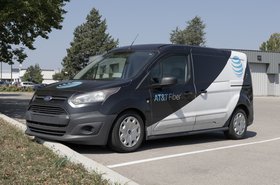
Schulman told analysts during Verizon’s latest earnings call that the carrier was still on track to hit 32 million fiber passings by the end of the year, with opportunities for inorganic expansion. That fiber trajectory does trail that of rival AT&T, which projects its fiber network to reach 40 million locations by the end of this year on its way to 60 million by the end of the decade.
Bullish on AI-related revenues
While Schulman sees a limit to Verizon’s fiber expansion, the executive is more bullish on AI-related revenue opportunities.
“I feel we might be best positioned to capitalize on AI infrastructure,” Schulman said. “Obviously, the hyperscalers, alternative cloud providers, large enterprises that are moving rapidly into the AI age, are keen to leverage our assets.”
Schulman has previously stated that Verizon was in “deep discussions right now with hyperscalers, with alternative cloud providers, large enterprises to integrate our fiber, both dark and lit, and our 5G assets to support their AI infrastructure efforts.
“And that can include data center connectivity, ability to help them with their training and inference, and that is the potential for multibillions in revenue,” Schulman added, hinting, “we'll have more specifics on that in the next three to six months.”
Schulman noted these opportunities were tied to the world “moving toward edge computing, toward data connectivity, and we are in a real good place to play inside that AI infrastructure revolution that’s going on.”
Verizon “real good” positioning in that place could be attributed to former CEO Hans Vestberg, who tilted Verizon toward that edge computing axis early on the deployment of its 5G network, a process that Vestberg repeatedly said was ahead of its time and an investment that might have ultimately helped lead to his unceremonious departure.
That departure resulted in Schulman strolling from his board seat – and well-loved ranch – to take over as Verizon CEO, where one of Schulman’s first moves was to implement a cost-cutting program that included slashing 13,000 jobs. Those cuts, which came with a $2 billion bill, were completed as of the end of Verizon’s first fiscal quarter of this year but have since been followed up with another round of cuts.
The latest cuts were not directly mentioned during the analyst conference, though Schulman did note the carrier “had committed to $5 billion of opex cuts … that’s the smallest number that I want to see.”




Comments