


Starlink at this week’s Mobile World Congress (MWC) 2026 event touted sky-high plans to expand the capabilities of its satellite-based “Mobile” service, but U.S.-based telecom executives that might be on the other end of that competitive expansion told audiences at a Morgan Stanley investor conference that such satellite ambitions could be limited.
Michael Nicolls, SVP of SpaceX’s Starlink operations, told MWC attendees that the company’s Mobile service, which launched in 2024, recently surpassed 10 million subscribers. More significantly, the executive said the company was planning a second-generation constellation that would move service beyond simple text messaging and video calls to deliver “broadband capabilities to unmodified cell phones, reaching hundreds of millions, potentially more devices as we scale the constellation.”
Nicolls added that the company plans to begin launching the higher-performing second-generation Starlink satellites beginning next year, aiming to provide “terrestrial-like connectivity,” which he likened to looking and feeling like users are connected to a high-performing 5G terrestrial network.
Those bold plans have caused some consternation across the traditional mobile telecommunication space, worries bolstered by quasi-legitimate claims from SpaceX head Elon Musk that Starlink could be a rival to those traditional terrestrial providers. However, many have poked holes in Starlink’s ambitions, particularity when it comes to the ability of low-Earth orbit (LEO)-based constellations to meet common coverage needs.
“The idea of D2C (direct-to-cellphone)-capable satellite networks making terrestrial cellular networks obsolete is ambitious but fraught with practical limitations,” Strand Consult noted in a recent report. “While LEO satellites offer unparalleled reach in remote and underserved areas, they struggle to match terrestrial networks’ capacity, reliability, and low latency in urban and suburban environments. The high density of base stations in terrestrial networks enables them to handle far greater traffic volumes, especially for data-intensive applications.”
Carrier execs chime in
Despite those challenges, each telecom executive at this week’s Morgan Stanley Technology, Media & Telecom Conference 2026 event was asked about the possibility, highlighting high-level investor interest.
Verizon CEO Dan Schulman told attendees that while satellite-based communications could provide some “real value add,” challenges remain.

“But there's a lot that needs to be get done, like the handset. Folks need to work with us. We need to really figure out, you know, how easily that switches back and forth. We need to make sure that the quality of that service is where we want it,” Schulman said. “Right now, terrestrial … that is the best connectivity and speed and everything … far and away. And I think as I look at industry structure, personally, I think we understand it really well. I think we're very thoughtful about it. And we know the ecosystem that we think is best for Verizon, and we'll be very disciplined around it.”
Schulman’s terrestrial performance take might have some resonance as the exec also admitted to the audience that he was “very happily retired” prior to taking over as CEO of Verizon late last year, and was “on a ranch with my wife in Montana, trying to live up to a cowboy work ethic, which, by the way, puts all of our work ethic to shame.”
AT&T COO Jeff McElfresh added a similar sentiment, telling the conference audience that the carrier wants “to connect people, and to do so in a very seamless manner. So it's our job to remove the complexity. You just want to be connected to the internet.”
This does leave a place for satellite, something AT&T has shown through its ongoing work with AST SpaceMobile and more recent enterprise-focused deal with Amazon’s Leo service, a place that McElfresh said could be significant, if limited.
“It'll have its place where it is uniquely positioned to perform miracles, actually, and fantastic things, but the amount of traffic growth that we see in the terrestrial networks right now is not slowing down,” McElfresh said, adding that “it's not just download traffic. It's these AI applications and robotics and autonomous vehicles. The uplink needs that they are bringing forward are massive, and you really need dense, very robust terrestrial networks on the ground to carry that traffic.”
T-Mobile US CEO Srini Gopalan joined that chorus, reiterating to the investor conference audience the operational challenge of satellite connectivity.
“You look at the physics and economics of this, and the amount of spectrum versus the number of towers and the actual capacity that it will have, even with all the satellites, it's a great complementary character,” Gopalan said, adding that this complementary character is limited and outside the scope of T-Mobile US’ current mobile virtual network operator (MVNO)-based arrangements.

“Our philosophy on MVNOs is really clear: we get into an MVNO when we think there's an incremental TAM (total addressable market) to go after, and that could be because of a specific target population, like … an ethnic group, or it could be because of a specific channel play and distribution, which is why we did the MVNO with the cable players,” Gopalan said, referencing the recent enterprise-focused MVNO deal the carrier struck with Comcast and Cox. “It's not clear to me how a partnership with Starlink, from an MVNO perspective, would fit into those criteria.”
What’s the big deal?
Omdia this week released a report that forecasts satellite-based direct-to-device (D2D) services will reach 411 million monthly active users and generate nearly $12 billion in revenues by 2030. That represents an 80% mean annual growth rate for users and more than 49% growth rate for revenues through the end of this decade.
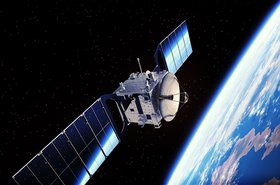
SpaceX does have a number of deals through its Starlink subsidiary with telecom operators to provide satellite-based services – including T-Mobile US – though most are limited to basic messaging services. The provider has more than 600 LEO satellites to support its service and more than 8,000 satellites in orbit for its broadband offering, not to mention its recent request to put up to one million more satellites into space embedded with data center infrastructure.
A recent Analysys Mason report noted that Starlink’s current constellation could provide maximum downlink capacity per beam of 18.3 Mb/s using five megahertz of spectrum “under optimal conditions,” but added that, “this capacity needs to be shared between all the users under the same beam, which typically is fairly geographically spread (~50 km diameter).”
That performance could be improved by the upcoming second-generation constellation launch and the bevy of new spectrum SpaceX purchased from EchoStar.




Comments