


Telstra has completed a trial with Silicon Quantum Computing (SQC) that sought to apply quantum machine learning to boost network automation.
The 12-month trial saw the pair leverage Watermelon, SQC’s quantum-enhanced machine learning system, to monitor and reconfigure network resources.
The quantum reservoir system was able to identify changes in network patterns by analyzing metrics like latency and bandwidth to predict potential variances.
“Working with SQC allows us to research the real-world potential of quantum systems in a uniquely Australian context,” said Shailin Sehgal, Telstra's group executive of global networks and technology. “This trial shows how quantum capabilities could complement our existing systems and technology to deliver faster insights and better outcomes for our customers.”
SQC is based in Sydney, Australia, and was founded in 2017 by renowned physicist Michelle Simmons. Former Arm CEO Simon Segars serves as the company’s chair.
In its deployments with the Australian carrier, the pair used a quantum reservoir system. These effectively use the natural properties of quantum systems to process data, offering a faster alternative to traditional deep learning for pattern recognition tasks like network forecasting.
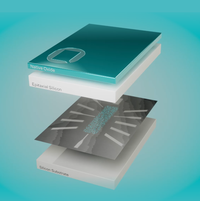
Unlike traditional deep learning systems, a quantum reservoir requires minimal training – with Telstra and SQC claiming they were able to train and fine-tune Watermelon in mere days.
“The collaboration with Telstra allowed us to test our quantum reservoir system, Watermelon, in a real-world telecommunications context - something few quantum companies have achieved,” Simmons said. “Watermelon’s quantum feature generation helps to reveal complex relationships within classical data, while dramatically reducing training time.”
“The collaboration, and Telstra’s relationship with SQC, shows how Australian industries and homegrown innovation can work together to shape the nation’s digital future,” Sehgal added.
Telstra’s SQC tests come as the carrier is making strides to augment its network operations with new technologies.
The company recently teamed up with Ericsson on an autonomous network initiative that will see the pair work together on replacing current rule-based automation with AI-driven operations with minimal human intervention.



Comments