


SoftBank just took a big stride toward using AI to boost 5G performance, applying Transformer models – the same class of neural networks used to power apps like ChatGPT – to improve Radio Access Networks (RAN).
Testing the transformer model in a live wireless environment, the Japanese carrier achieved a 30% throughput improvement compared to traditional methods.
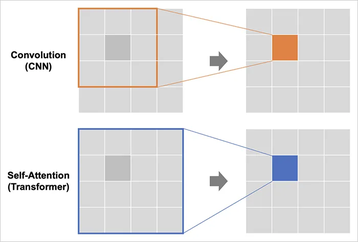
Carriers have been exploring AI-augmented RAN for some time, but tests have largely focused on applying convolutional neural networks (CNNs), a type of AI model that is suited to identifying patterns. In the realm of telecoms, CNNs are best suited to identifying frequency bands that have similar characteristics.
But while CNNs are good for channel interpolation, they tend to be slower at processing data – with the goal of applying AI to RAN all about speeding up data processing.
SoftBank instead sought to apply a transformer-based model, which delivered 8% better throughput performance than CNNs while also processing data 26% faster – a rare combination since more powerful AI models tend to run slower.
The carrier said the decision to shift AI RAN tests from CNNs to transformers shows that “the continuous evolution of AI models leads to enhanced communication quality in real-world environments.”
“While real-time 5G communication requires processing in under one millisecond, this demonstration with the transformer achieved an average processing time of approximately 338 microseconds, an ultra-low latency that is about 26% faster than the CNN-based approach,” the carrier said in a statement.
SoftBank has been working to employ AI to improve its RAN offerings, notably teaming up with Ericsson to jointly build prototypes aimed at boosting network efficiency and performance. It’s undertaking a similar research endeavor with Nokia, focusing on AI RAN and 6G technologies.
Long-time technology partner Nvidia is also working with SoftBank on AI RAN, with the carrier using its AI Aerial accelerated computing platform to apply AI to 5G networks. Earlier this year, the pair field-tested an AI RAN solution dubbed AITRAS at Nvidia's headquarters in Santa Clara, California.
SoftBank’s latest attempts to infuse AI to RAN saw the carrier conduct simulations of what it described as a “Sounding Reference Signal (SRS) prediction” – a process required for base stations to assign optimal radio waves to terminals.
Prior SRS tests that focused on a simpler multilayer perceptron (MLP) AI model saw maximum downlink throughput improvements of around 13% for a terminal moving at 80 km/h.
Simulations of its new transformer-based architecture saw downlink throughput for terminals moving at 80 km/h improved by up to approximately 29%, a figure that rose to around 31% for a terminal moving at 40 km/h.
“This confirms that enhancing the AI model more than doubled the throughput improvement rate,” the carrier said in a statement. “This is a crucial achievement that will lead to a dramatic improvement in communication speeds, directly impacting the user experience.”
Technical breakthrough tackles real-time constraints
The biggest hurdle for practical AI RAN deployment has been delivering high-performance AI processing within the strict sub-millisecond timeframes that 5G demands. SoftBank tackled this by developing what it described as a "lightweight and highly efficient" transformer architecture that strips away non-essential processes while maximizing AI performance.
The carrier’s novel architecture incorporated a handful of key technical innovations.
The “self-attention” mechanism defines transformers to capture correlations across wireless signals in both frequency and time – handling complex patterns caused by radio wave reflection and interference that traditional convolution methods might miss.
Unlike typical AI models that normalize input data to stabilize learning, SoftBank's architecture used raw signal amplitude without normalization, preserving physical information that indicates communication quality, significantly boosting performance for tasks like channel estimation.
The carrier’s transformer-based architecture also featured a unified design capable of handling multiple tasks, from channel interpolation to signal demodulation, with only minor changes to its output layer – which it claimed reduced development time and costs compared to building separate AI models for each function.
SoftBank said the results demonstrate that high-performance AI models and the GPUs that run them will be “indispensable” for 5G-Advanced and 6G networks.
The carrier added that its transformer-based AI RAN also enables continuous performance upgrades through software updates as more advanced AI models emerge, even after hardware deployment – potentially helping carriers improve capital expenditure efficiency while maximizing network value.
SoftBank isn't just looking at applying AI to improve RAN performance. The carrier turned to quantum computing in tests this year to optimize base station settings.
Through an Ising machine, which combines a mixture of quantum and classical computing, SoftBank sought to calculate optimal settings on base stations supporting a 5G network – which resulted in a 10% boost in downlink speeds while transmission capacity increased by up to 50%.



Comments