

SoftBank has turned to quantum computing in a bid to improve radio access network (RAN) performance by optimizing its base station settings.
During tests in Tokyo, the Japanese giant employed an Ising machine, which is a special type of computing system that employs a mixture of quantum and classical computing to solve combinatorial optimization problems.
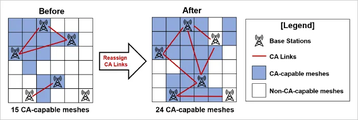
SoftBank’s Ising machine helped calculate optimal settings on base stations supporting a 5G network with carrier aggregation (CA), which allows networks to combine multiple frequency bands simultaneously and boost both speed and capacity.
The integration resulted in a 10% boost in downlink speeds while transmission capacity increased up to 50% compared to traditionally employed settings.
SoftBank's quantum ambitions
SoftBank ran the test in an attempt to solve the problem of applying CA to large-scale networks. It's traditionally been difficult to determine the optimal CA link configuration in large-scale RAN deployments.
SoftBank explained that working out the potential use of CA across 10 base stations yields 45 possible pairings. And since an operator can decide the on/off state for every link pair simultaneously, the total number of possible CA link patterns reaches a whopping 35 trillion.
Using an Ising machine, SoftBank’s engineers were able to generate a CA link configuration, which was then simulated to confirm its validity, before being applied to live 5G base stations in Tokyo.
“These results demonstrate that optimizing base station settings using an Ising machine enables more efficient utilization of the radio spectrum and leads to improved communication performance,” the company said in a statement.
After yielding positive results, SoftBank said it would consider applying the quantum-based approach not only to network architecture optimization but also operational enhancements “across a broader range of services and deliver even more seamless and high-quality services.”
Using quantum computers to improve network optimization is an emerging concept, with early applications from the likes of Vodafone and British quantum computing firm Orca Computing using the technology to design optimal network layouts.
SoftBank’s use of quantum for network improvements comes as the investment giant has backed several startups innovating in the nascent space.
In February, the firm’s Vision Fund 2 was among the investors backing fault-tolerant quantum computer developers QuEra. Meanwhile, last year, its researchers joined up with counterparts from Quantinuum and Riken to develop software tools capable of integrating quantum tech with existing supercomputers.



Comments