


SoftBank and Ericsson continued their joint 5G network ramp-up by showcasing an AI-augmented base station system capable of dynamically optimizing coverage.
Having showcased the system in action at Expo 2025 in Osaka, Japan, last year, the pair continued their long-standing partnership by bringing the concept to massive multiple-input, multiple-output (MIMO) 5G radios deployed at more large-scale event venues across the country.
The concept sees a specially developed AI system capable of operating external base station controls, allowing on-site equipment to react to changes in user demands based on factors ranging from alterations in the weather to schedule changes.
An external control device, in this instance, a server, is fed with user distribution data collected from base stations at one-minute intervals in order to automatically determine what’s going on at the event it's deployed at. The system then optimizes both horizontal and vertical coverage patterns of on-site base stations to scale up or scale down connectivity as needed.
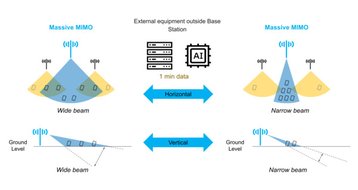
The telecom giants contend that at sites like event venues and theme parks, user distribution can vary significantly on a whim, requiring on-site base stations to be able to respond intuitively to coverage pattern changes.
Their AI system could, for example, raise downlink throughput during periods of rapid traffic fluctuation. At Expo 2025, when installed in outdoor areas, the AI system was said to have instinctively elevated downlink throughput by 24% during peak periods of rapid traffic fluctuation.
Following its Osaka debut, the AI-infused base station system has since been deployed at larger event venues where “user distribution varies significantly by time of day.”
The now expanded deployments are all part of SoftBank’s efforts to develop AI-powered connectivity technologies to augment network operations.
The firm signed up with Ericsson to work on AI solutions for radio access networks (RAN) last March, with the pair working to ready AI-RAN solutions for commercial deployments in line with 6G development efforts.
The Swedish giant has been plying SoftBank with RAN Compute boards to support its AI-augmented network efforts. Featuring Intel 4 process technologies, offerings like the 6672 and 6372 RAN processors are designed to boost network capacity while using considerably less power.





Comments