


Palo Alto Networks and Deutsche Telekom (DT) launched Sovereign Cortex with T Security to help Europe's strictly regulated industries adopt cloud-delivered AI security while meeting growing sovereignty requirements.
T-Security refers to the dedicated, sovereign cybersecurity and data protection solutions offered by DT's T-Systems enterprise IT division.
This solution will bring Palo Alto Networks' Cortex AI-driven SecOps platform to European industries, including health care, financial services, critical national infrastructure, and the public sector, with data sovereignty controls independently governed by DT.
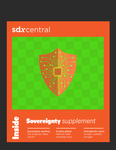
The Sovereignty Supplement
Who really controls your data?
Europe's General Data Protection Regulation (GDPR), NIS2 Directive, Digital Operational Resilience Act (DORA), and equivalent European frameworks demand demonstrable controls over who can access data, how it is encrypted, how provider access is audited, and how it is handled in support operations.
The duo promises that the Sovereign Cortex with T Security addresses these requirements and enables Europe's most regulated organizations to adopt cloud-delivered security without sovereignty compromise.
The partners highlighted that the new development provides additional sovereign controls for every layer of the environment, including customer and telemetry data, encryption keys, and independently audited access logs.
"Our joint offering is currently unique in Europe at this level of quality. We meet the compliance requirements of NIS2, DORA, and KRITIS with respect to data sovereignty – without asking our customers to compromise on the effectiveness of their cyber defense," Thomas Tschersich, CEO of Deutsche Telekom Security and CSO of DT, noted.
Helmut Reisinger, CEO for Europe, the Middle East, and Africa (EMEA) at Palo Alto Networks, wrote in a recent blog post that the DT partnership “is our direct response to these demands and the next step in our long-standing commitment to Europe."
“It is not a marketing position – it is a framework that provides customers actual controls," Reisinger explained. "It is built on the five elements that reflect how we fundamentally think about sovereignty. One that will set the standard across every solution we build for the region."
Reisinger also emphasized that these requirements are not universal, as the needs of these demanding sectors vary greatly, adding, “what we are describing here is what we hear from the most demanding end of the spectrum: public sector and critical national infrastructure. And that is where we focus, because getting it right there matters most.”
The platform is set for its initial release during the third quarter of this year.


Comments