


LONDON – The AI boom has unleashed a torrent of investment, but it's also brought back familiar challenges that harken back to the early, untamed days of the IT industry.
“This feels like the 90s again, where there were no degree programs in network engineering, people were just figuring it out. It was an awesome time of growth, and people were comfortable with being uncomfortable,” Solutional CEO Scott Robohn said on a panel at the DCD Compute event.
But while the nostalgia of the 90s was in full swing, Robohn warned that prior attempts to manage that uncertainty could result in a “cowboy mentality” – where, as the years go by, those engineers fail to document, share information, and “want to be the hero.”
With enterprises rushing to deploy AI infrastructure, industry veterans like Robohn turned to the past for lessons on how to build teams and better manage that uncertainty.
One key parallel between the wild west days of the 90s and now that the panel highlighted was talent acquisition.
Ash Patel, SVP of business operations at Nscale, said the current shortage of talent was in fact the primary challenge facing organizations trying to scale AI infrastructure. According to Patel, the fundamental problem is that the technology is so new that experienced practitioners simply don't exist in meaningful numbers.
This overwhelming improvement in technology was also touched upon by QTS Data Centers’ David McCall, who recalled that in the early days of IT, there was such a shortage of people that engineers even struggled to get Hewlett Packard (HP) printer queues working.
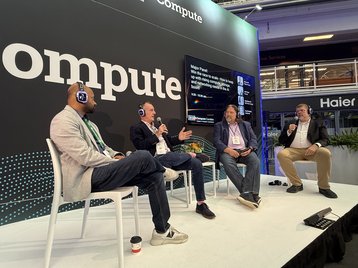
Today, however, the talent shortage almost feels quaint, with McCall opining that enterprise IT environments today feel like “operational Death Stars” containing billions of dollars of equipment running 24/7.
McCall suggested a potential solution to the problem was to find folks from more unorthodox backgrounds.
He recalled how QTS picked up an engineer who developed impressive AI-enabled infrastructure solutions from the footwear industry, adding: “At the end of the day, we want to have this entrepreneurial mindset … and we’re picking talent who have this in their DNA.”
McCall advocated for what he called a “chaos mindset” – hiring people who are willing to “break an egg” and be comfortable with experimentation.
He drew parallels to Formula One racing, comparing early race cars that barely functioned to today's sophisticated supercomputers on wheels, suggesting that current AI infrastructure is still in its experimental phase.
Bryan Hill, director of digital media and AI at Digital Realty, emphasized the importance of finding people who are “comfortable with uncertainty” and possess the curiosity to tackle unknown challenges – mirroring the collaborative spirit that drove early internet adoption, when technical professionals had to figure out protocols and systems without established playbooks.
That emphasis on collaboration over individual cowboy heroics was echoed by Patel, who noted that successful teams combine individuals with broad knowledge across multiple disciplines, rather than deep specialists in single domains.
This collaborative approach extends beyond technical skills, with McCall highlighting the need for teams that can work together effectively, noting that innovation happens much faster when “cowboys and cowgirls” give way to coordinated team efforts.




Comments