


TAOYUAN, TAIWAN – To witness the 7-Eleven Taiwan experience of the future, I had to travel through the past. My taxi driver took the scenic route as I trailed through country roads on a hot June afternoon, past the rice fields and rustic-looking houses of rural Taoyuan to reach 7-Eleven’s convenience store of the future: X-Store 9, to use its official name. Well, “x” does mark the spot after all.
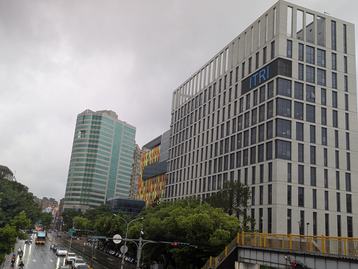
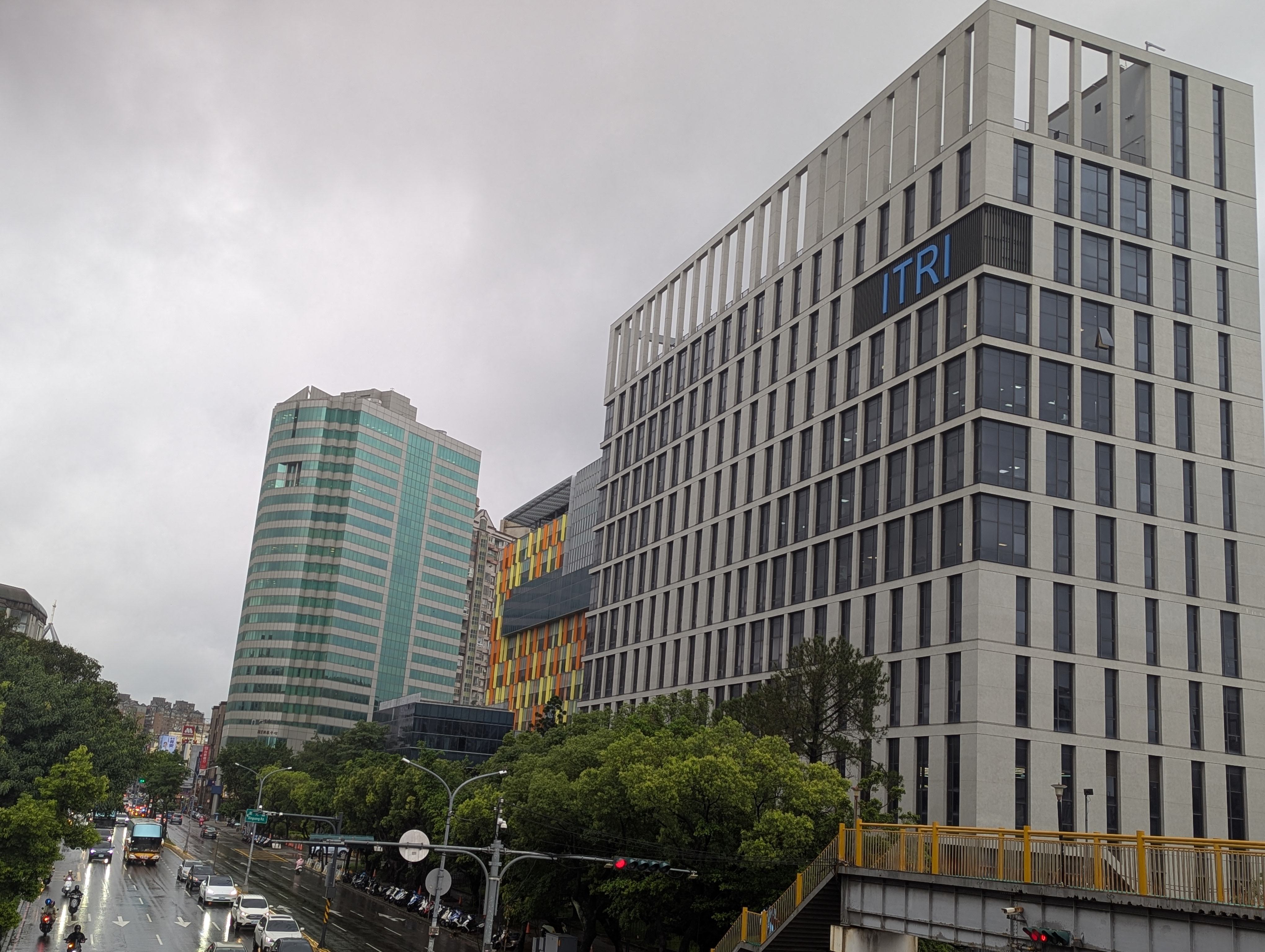
In front of me during the journey was a backseat TV displaying commercials, reminding me of my flight to Taiwan, where I watched a documentary on another backseat screen on the silicon history of the nation. That show highlighted the foundational work of the Industrial Technology Research Institute (ITRI) in that history, and it would be ITRI I’d soon be meeting at the end destination.
In a way, the past, present, and future of 7-Eleven Taiwan provide an encapsulation of the nation’s technology players, along with a tech flexibility that may be overlooked when solely looking at Taiwanese silicon prowess as exemplified by famous tech events in Taipei such as Computex. While the country’s localized version of 7-Eleven may not be an ecosystem linchpin akin to Taiwan Semiconductor Manufacturing Co. (TSMC), it is an integral part of the nation’s backbone that relies on networking and fleet-footed innovation to an extent that’s almost unrecognizable from the American original.
7-Eleven Taiwan also places edge AI in the public eye, providing a rare opportunity to see the much-bandied tech in action.
Not-so-‘Little 7’
Affectionately known as “Little 7” by locals, 7-Eleven’s presence is anything but little in Taiwan. With more than 7,300 stores, the country has the highest density of 7-Elevens in the world, coming out ahead of more sprawling neighbors in the region – Thailand and Japan – as well as North America, where 7-Eleven originated almost a hundred years ago.
Since 1987, 7-Eleven Taiwan has been owned by local food conglomerate President Chain Store Corporation (PCSC), part of the Uni-President group. The first store opened in 1980, as licensed through 7-Eleven’s U.S. owner The Southland Corporation, which would ultimately be bought by the Japanese franchise earlier this century.
Japan was the first Asian country to license the chain from America and launched 7-Eleven in 1974. Some time after, future PCSC president Chung-jen Hsu would be struck by these “very strange” stores while studying business in Japan. With their airy and bright environments and organized aisles of items, they were a world away from the “kám-á-tiàm” of his homeland. These small and dimly lit shops are essentially the Taiwanese equivalent of America’s mom-and-pop stores. The story goes that when 7-Eleven first came to Taiwan, shoppers thought they should take off their shoes when entering to keep the floor clean.
Hsu was inspired by what he saw in Japan, and Uni-President Enterprise soon launched 14 shops under his guidance. But with the concept so alien to locals, it took the launch of the hundredth store in 1986 for 7-Eleven to finally become profitable in Taiwan.
From hot grub to wartime hubs
Today, 7-Eleven operates 24 hours a day, seven days a week and is woven through virtually every strand of Taiwanese life, as explained by long-term Taiwan resident and marketing executive Daniel Cunningham.
“Convenience stores like 7-Eleven and FamilyMart are everywhere in Taiwan,” said Cunningham, who currently resides in Taipei. “You don’t just go there to buy drinks, microwave meals, or ice cream, you go there to pay your bills, print concert tickets, collect online purchases, send packages, and access a surprising range of everyday services. They’re more than convenience stores; they’re an essential part of Taiwan’s civic infrastructure and daily life.”
There’s also their sheer ubiquity. Taiwan boasts more than 14,000 convenience stores across the island, averaging 1 store every 2.57 square kilometers. With this coverage, the government has suggested stores like 7-Eleven and main rival FamilyMart could be used as wartime hubs providing rations and medical supplies should China ever attack. These would be delivered by the chains’ dependable logistical transport systems; in 7-Eleven’s case, it handled 330 million parcel transactions in 2021 during the wartime-analog that was the pandemic. That works out to roughly 904,000 deliveries and pickups per day.
“In the event of a major disaster, convenience stores continue to play a role in supporting community stability, demonstrating operational resilience,” a 7-Eleven Taiwan spokesperson told this title.
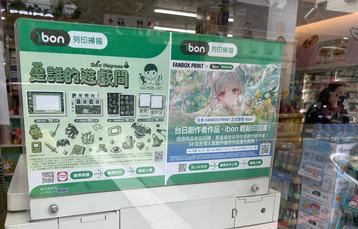
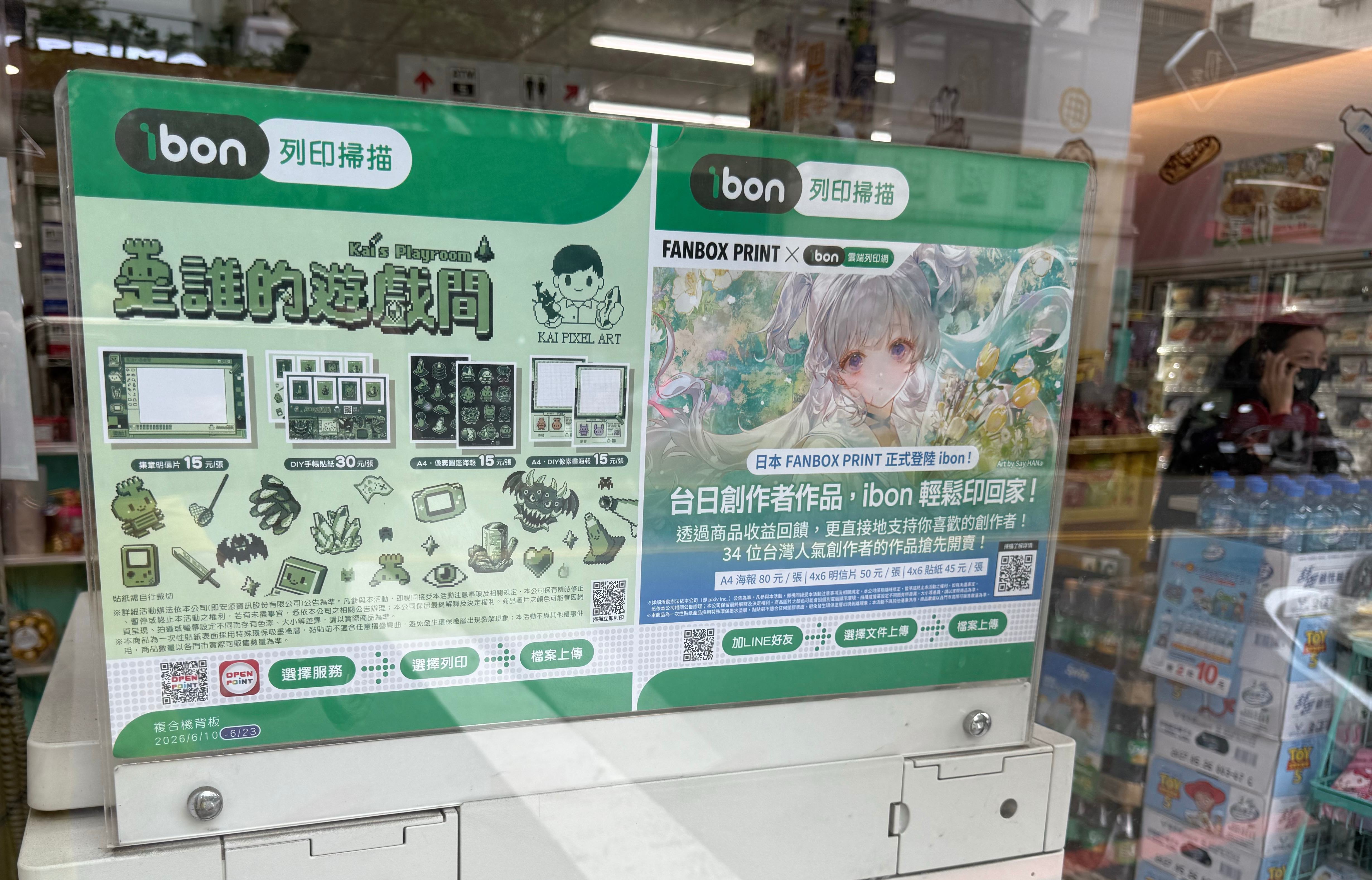
Arguably the jewel in 7-Eleven’s crown is its Ibon service. Introduced two decades ago, these are the digital kiosks that provide the front end for external systems belonging to the likes of government departments, banks, utilities, and telecom providers. More than 400 partners and 800 services are networked in Ibon’s integration and transaction gateway, with 250 million instances of use per year.
Ibon – a name that is an Apple homage mixed with the onomatopoeic word for an explosion – is unique to Taiwan. While South Korea has the highest concentration of convenience stores in the world, just ahead of Taiwan, its flagship CU chain doesn’t offer the same socially integrated and unified experience. Nor do other major chains and 7-Eleven franchises in China, Thailand, the Philippines, and Japan. They come close, but differences remain in reach, ease, and reliance.
Ibon is powered by a centrally operated, API-connected platform run by PCSC subsidiary An-Yuan, using data center infrastructure, monitored network connections, and some cloud services. 7-Eleven’s representative added that its stores operate an edge-based AI ordering system that promptly predicts product sales and meets ordering and replenishment needs.
X-perimental
Outside of the PCSC stable, research giant ITRI plays a crucial role in supporting 7-Eleven Taiwan’s tech evolution.
ITRI was established by the Taiwanese government in 1973, and is perhaps best known as the incubator for TSMC. The research institute was responsible for building Taiwan’s first three-inch wafer fab in 1975, before spinning out TSMC as a commercial venture in the 1980s.
Fast forward to 2026, and I’m meeting ITRI at 7-Eleven’s ninth iteration of its X-Store chain-within-a-chain. As you can guess by the name, these stores are where 7-Eleven experiments with the latest technologies. The first X-Store opened in 2018 as part of PCSC’s headquarters in Taipei. While a few can be found in metropolitan locations, most operate in controlled environments: mainly university campuses and one can be found in ITRI’s Hsinchu headquarters.
Across Asia and beyond, 7-Eleven stores dabble with new retail technologies, but the Taiwan franchise is the only one to be systematic in its approach by rolling out one to two labs every year. Successfully validated technologies – for example, the aforementioned AI-based ordering system – are later rolled out into conventional stores.
Its latest X-Store opened last year in Taoyuan, the Taipei satellite city perhaps best known for hosting the country’s national airport.
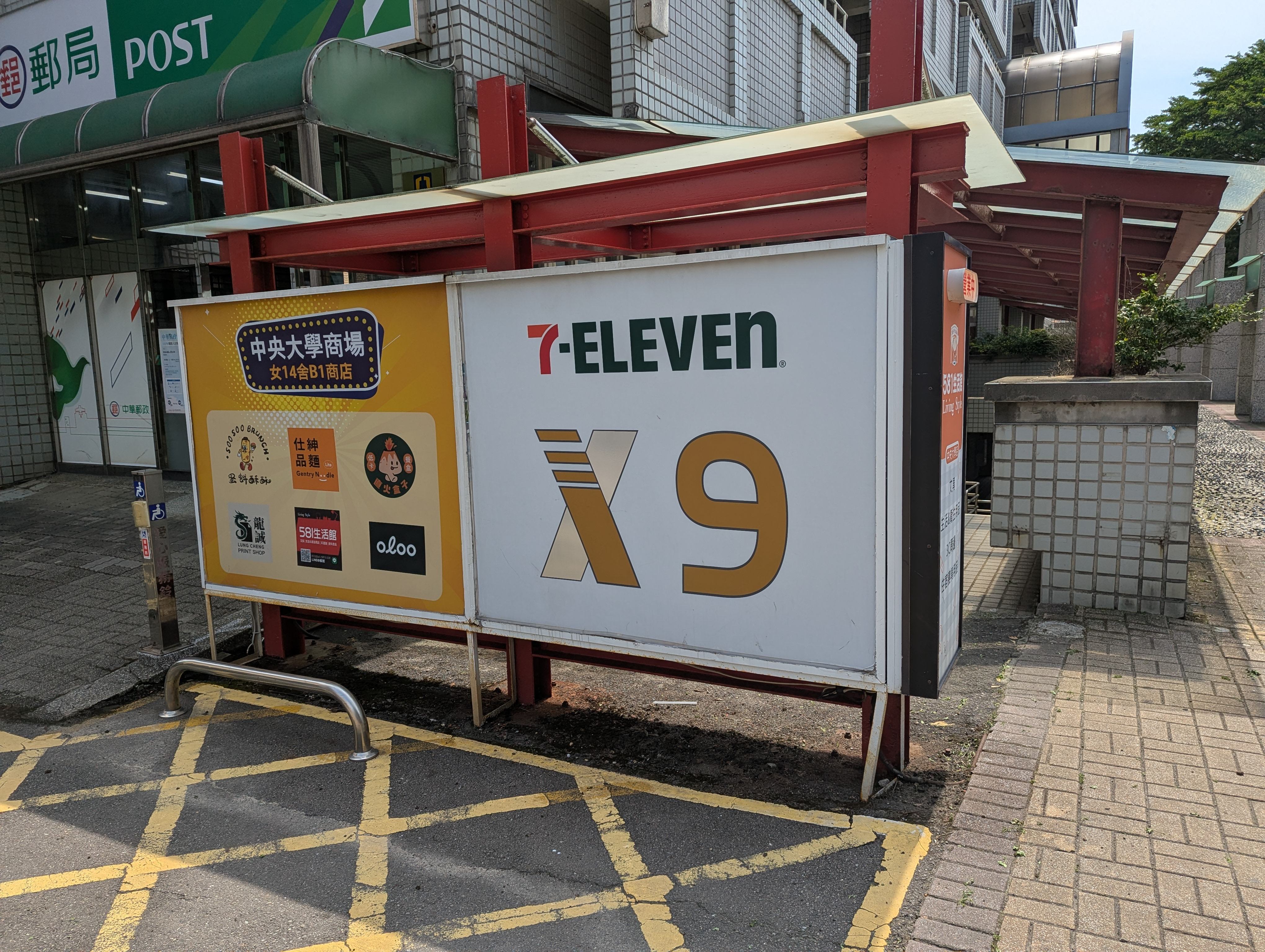
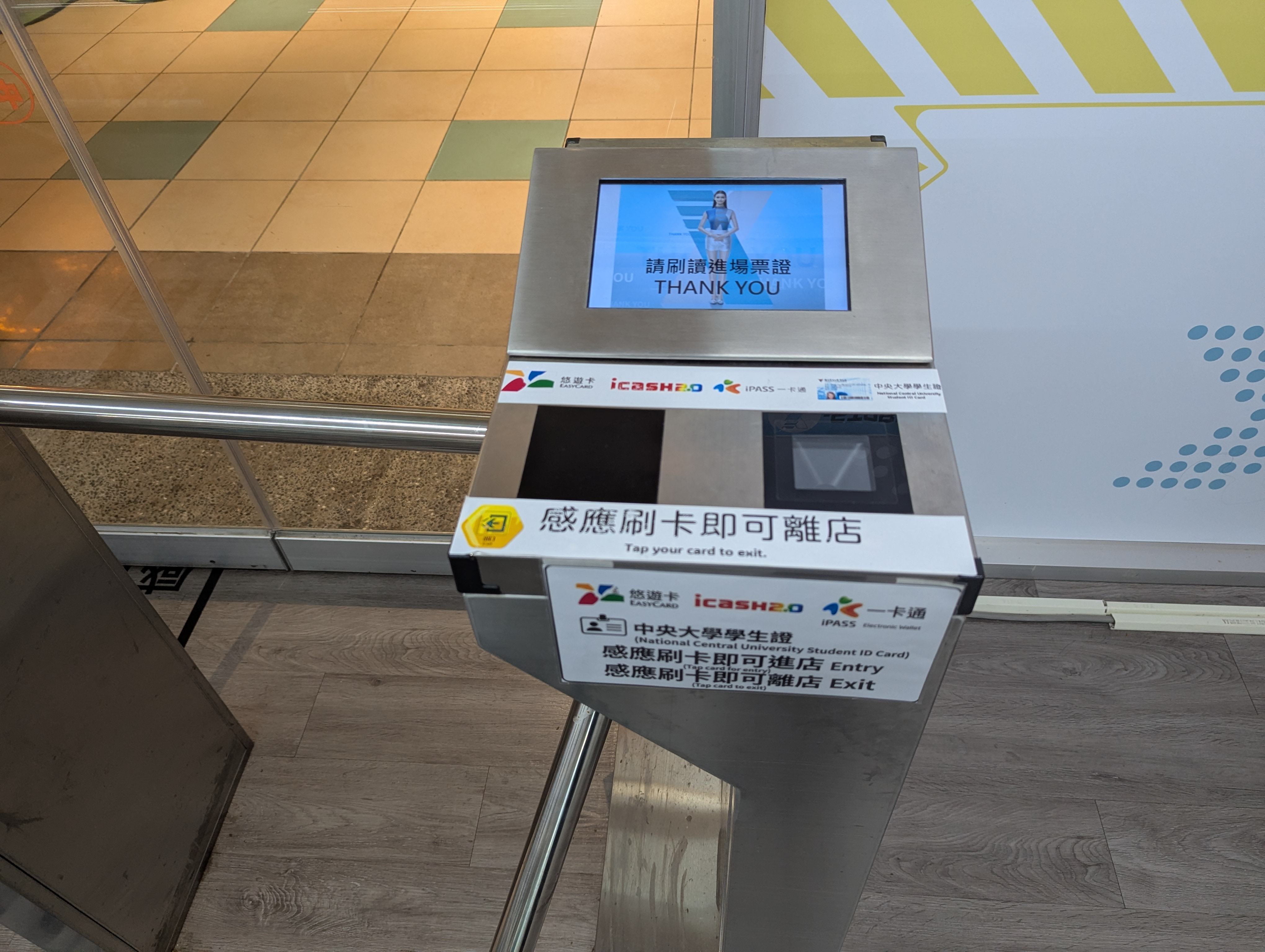
X-Store 9 can be found at National Central University (NCU), a public research university in Taoyuan’s Zhongli district. Coming out of my taxi, I was greeted at the store by En Tzu Wang, a lab director for data engineering at ITRI. The shop itself resides in a student dormitory building, sharing floor space with a few vending machines and a restroom. To enter, one walks through an automated turnstile with the tap of a membership card; unlike China’s QR code hegemony, Taiwan mostly prefers NFC card-based tangibility.
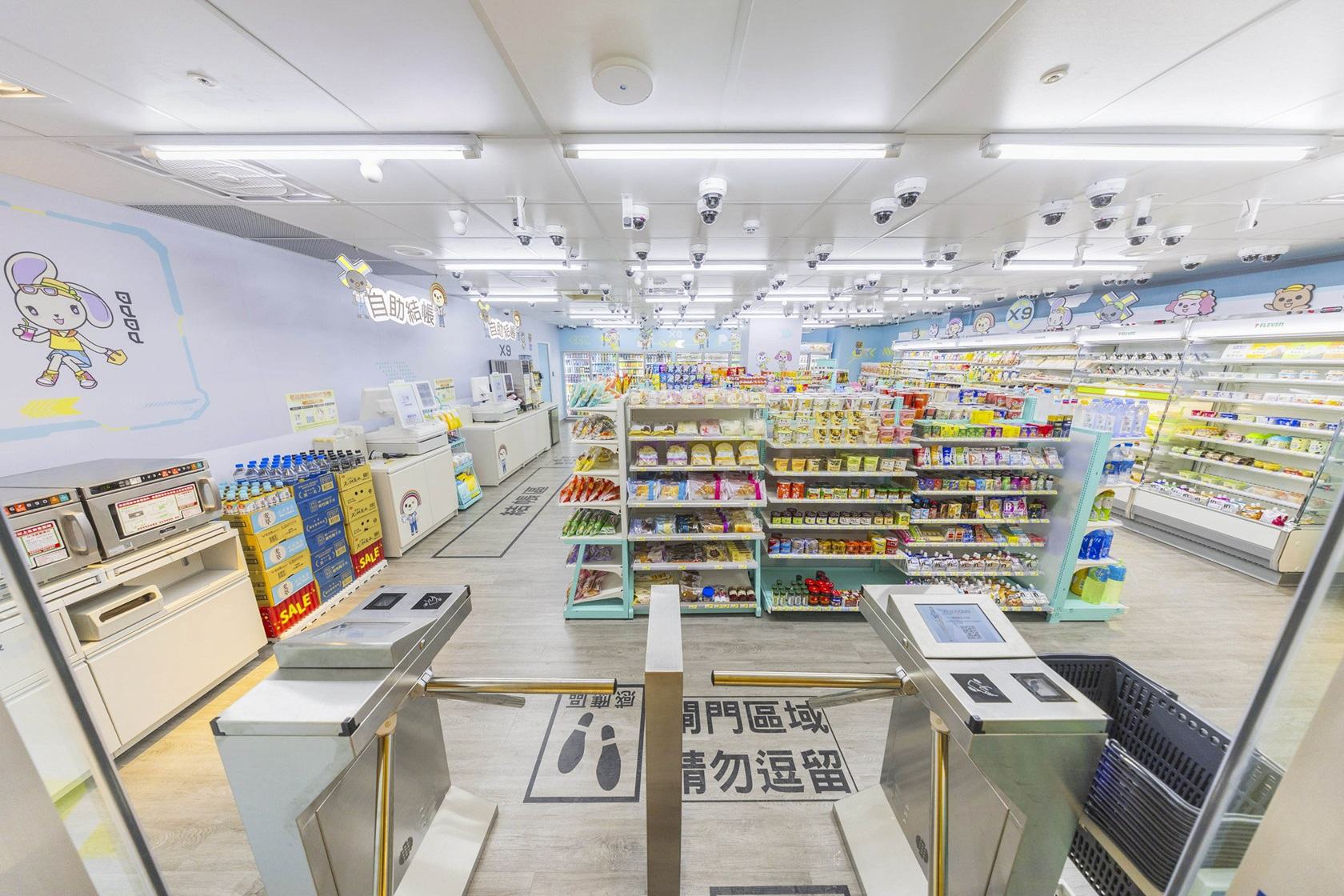
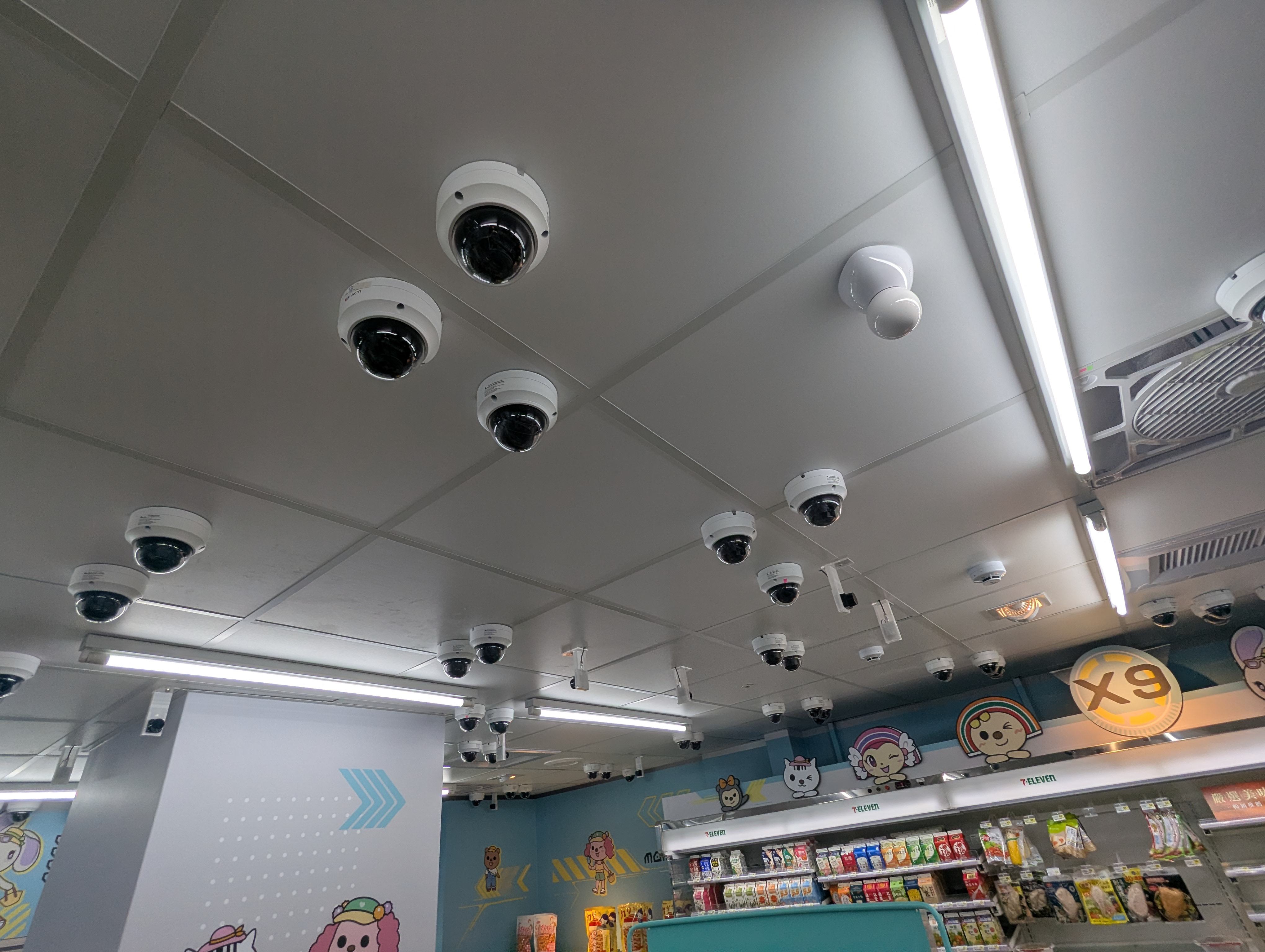
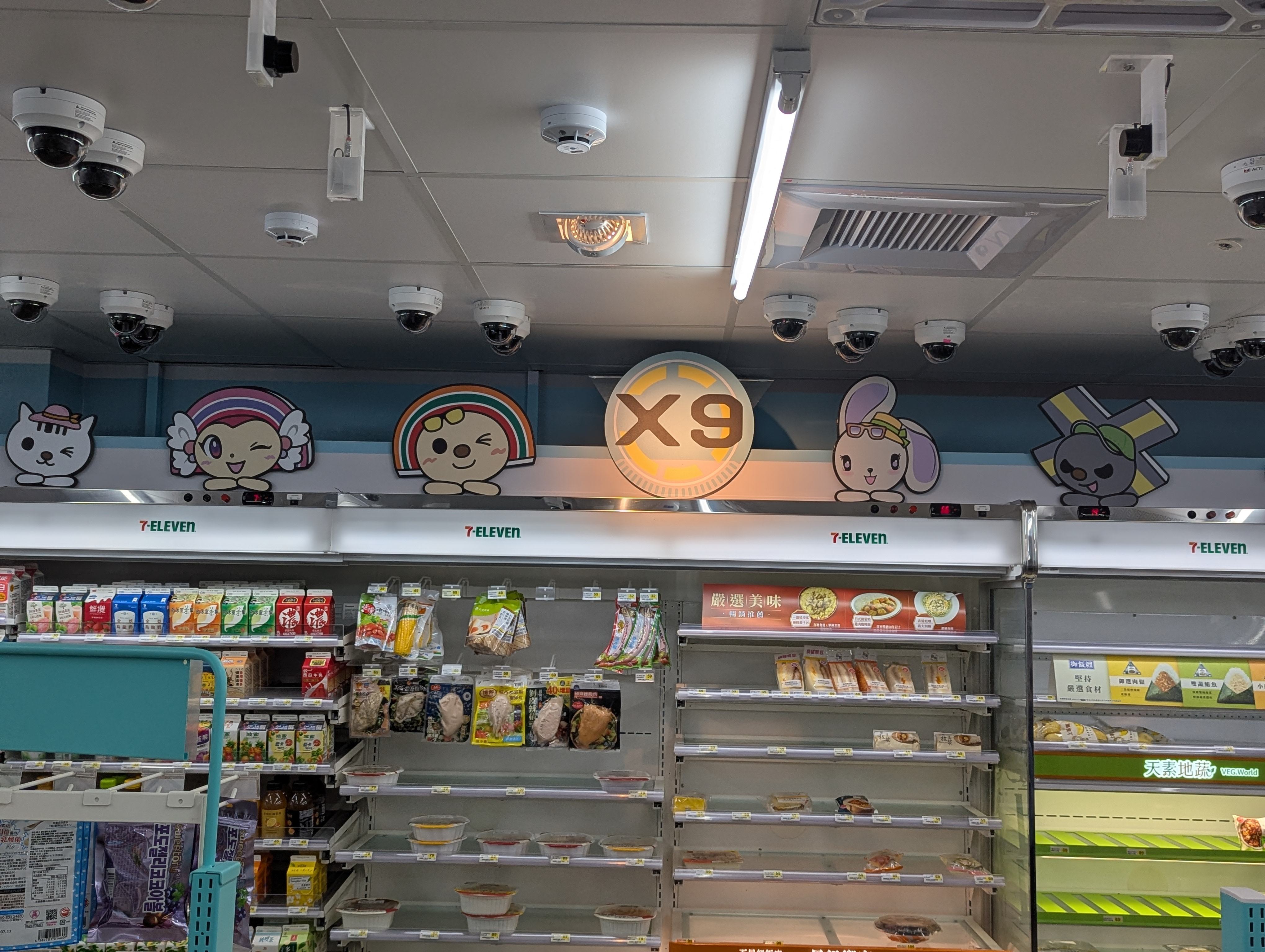
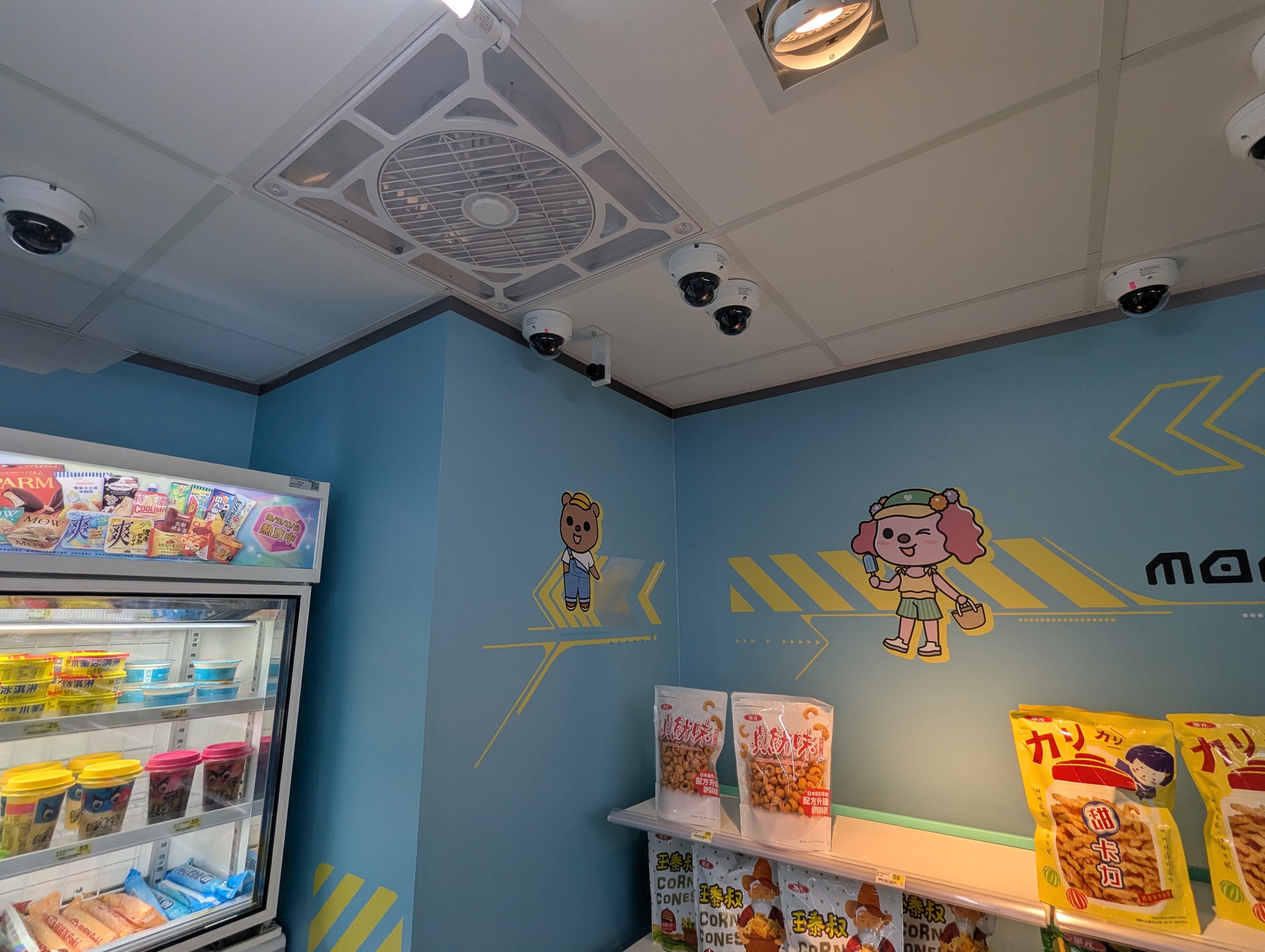
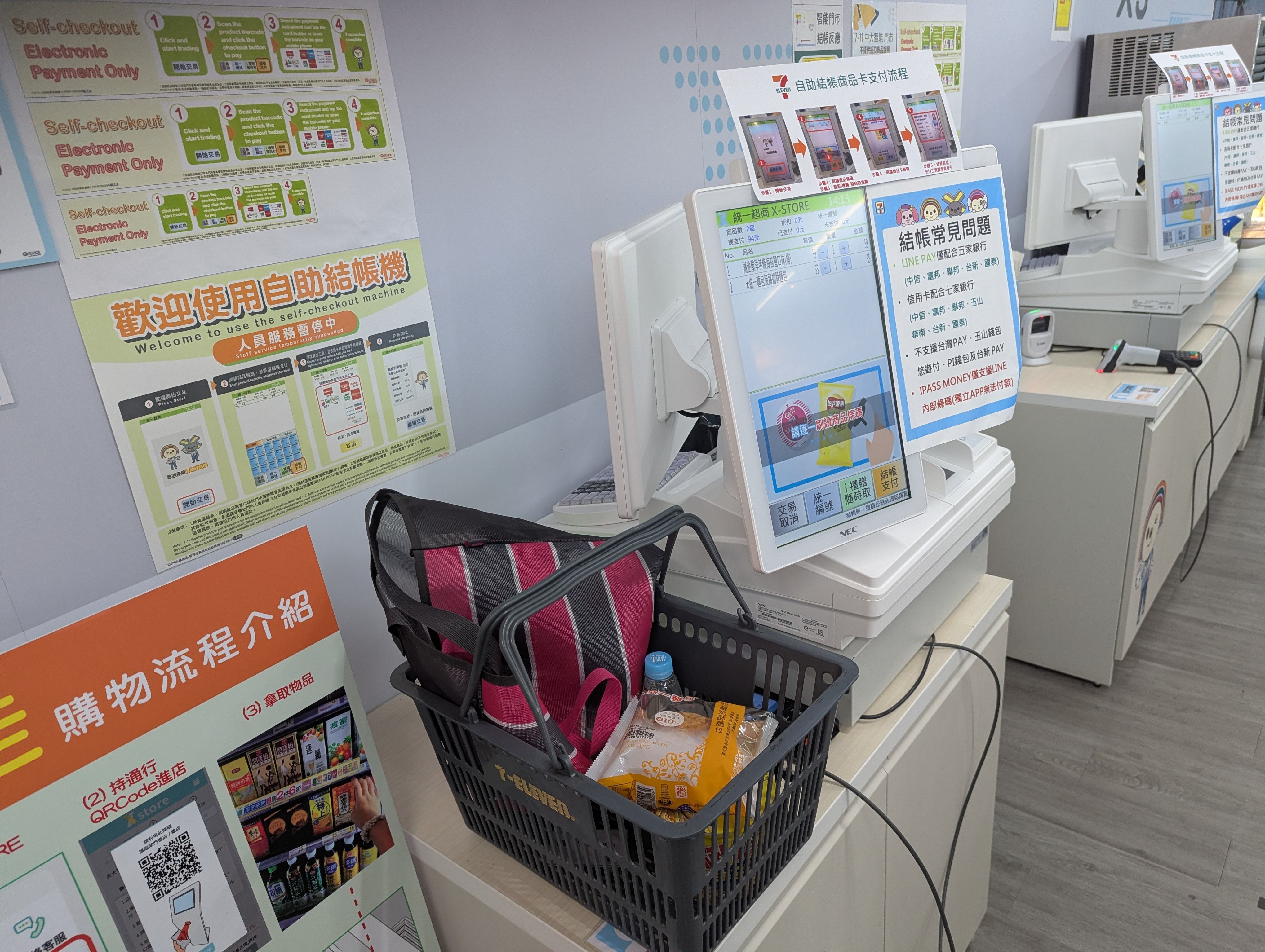
Inside, the shop is identical to any local 7-Eleven store, stocked with everything you’d expect, bar its popular hot eats. The chain’s extraterrestrial dog mascot “Open-Cha” adorns various walls, alongside other “kawaii” mascots in the 7-Eleven family.
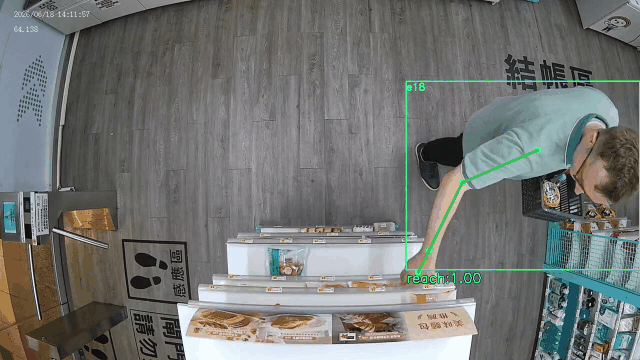
The biggest visual difference is the presence of 140 cameras fixed to the ceiling that watch me as I pick out various items to test out the system. Wang explained that the store’s closed-circuit TV (CCTV) uses lidar-based skeletal recognition to determine whether I’ve picked something up; I was shown instant playback on a laptop of my arm monitored by a tracking line that picked out the joints across my wrist, elbow, and shoulder.
Also watching me is an anonymous tracking system that follows customers via double-camera geometry. Other cameras count and recognize products as they come off the shelves.
The other big difference: a row of self-checkouts stands where you’d expect cashiers, a counter, hot tea eggs, and oden. X-Store 9’s sole worker comes in as and when needed for restocking shelves and perhaps some troubleshooting.
When I got to the checkout, all the items in my basket were logged and ready to be paid for. Throughout this whole process, AI followed me every step of the way.
While most recent X-Stores relied heavily on lidar, X-Store 9 is very much of the current AI era. Wang explained a micro data center in the back of the store runs open-source AI models and handles all the visual data for inferencing. In other words, everything relies on an edge-based network, unlike the failed Amazon Go/Fresh stores, whichran off Amazon Web Services (AWS) with a little help from around 1,000 remote human contractors in India.
To put everything into context, the ITRI director explained that typical events on a customer journey – grabbing stock, perusing something, then returning it to the shelf – last between half to one second per instance.
“We use edge and not cloud because of the latency,” Wang said. “When you try to transmit these kinds of videos or images into a cloud for inference, it will have some latency, so you will [invariably] lose some events.”
An open-source and edge-based framework also works out cheaper for retail companies who are often “very limited on their budget,” with the X-Store 9 concept also cutting down on the profit pressure of human labor. Wang argued that X-Store locations require the sort of 24‑hour convenience that entails around-the-clock staffing. I was told that the next great experiment – X-Store 10 – will rely heavily on robotics, opening up a new dimension of edge-operated AI and network connectivity for 7-Eleven.
The question remains whether X-Stores mainly exist to improve the customer experience or to automate 7-Eleven away from human labor. 7-Eleven’s representative confirmed that while it plans to open a new X-Store every year “to further explore the possibilities of future convenience stores,” it is primarily interested in serving students who are more welcoming of the “grab-and-go” shopping experience than your traditional retail consumer.

SDxCentral Magazine - Issue 2
7-Eleven networks in Taiwan, Verizon’s CTO, OpenAI's networking, and AMD's head of networking tech
Chunghwa connectivity
It’s easy to see X-Store as an extension of the convenience and automation the Taiwanese have become accustomed to in their daily transactions by way of Ibon. But it’s worth appreciating that such network interdependence is something of a miracle for the country.
First up, not only is Taiwan an island dependent on subsea cabling, but its habitable and industrial areas are compressed into a relatively narrow western corridor due to the formation of its mountains. Taiwan’s eastern side is rugged and seismically active, and its submarine cable landings are vulnerable to earthquakes, submarine landslides, and geopolitical risks.
Despite these networking pressures, Taiwan ranks No. 10 in the Global Connectivity Index with a baseline download speed of 185.6 Mb/s and 92.4 Mb/s in upload speeds. As a point of comparison, Indonesia and the Philippines, which have similarly tricky terrain for networking due to their archipelagic nature, sit at No. 109 and No. 113, respectively.
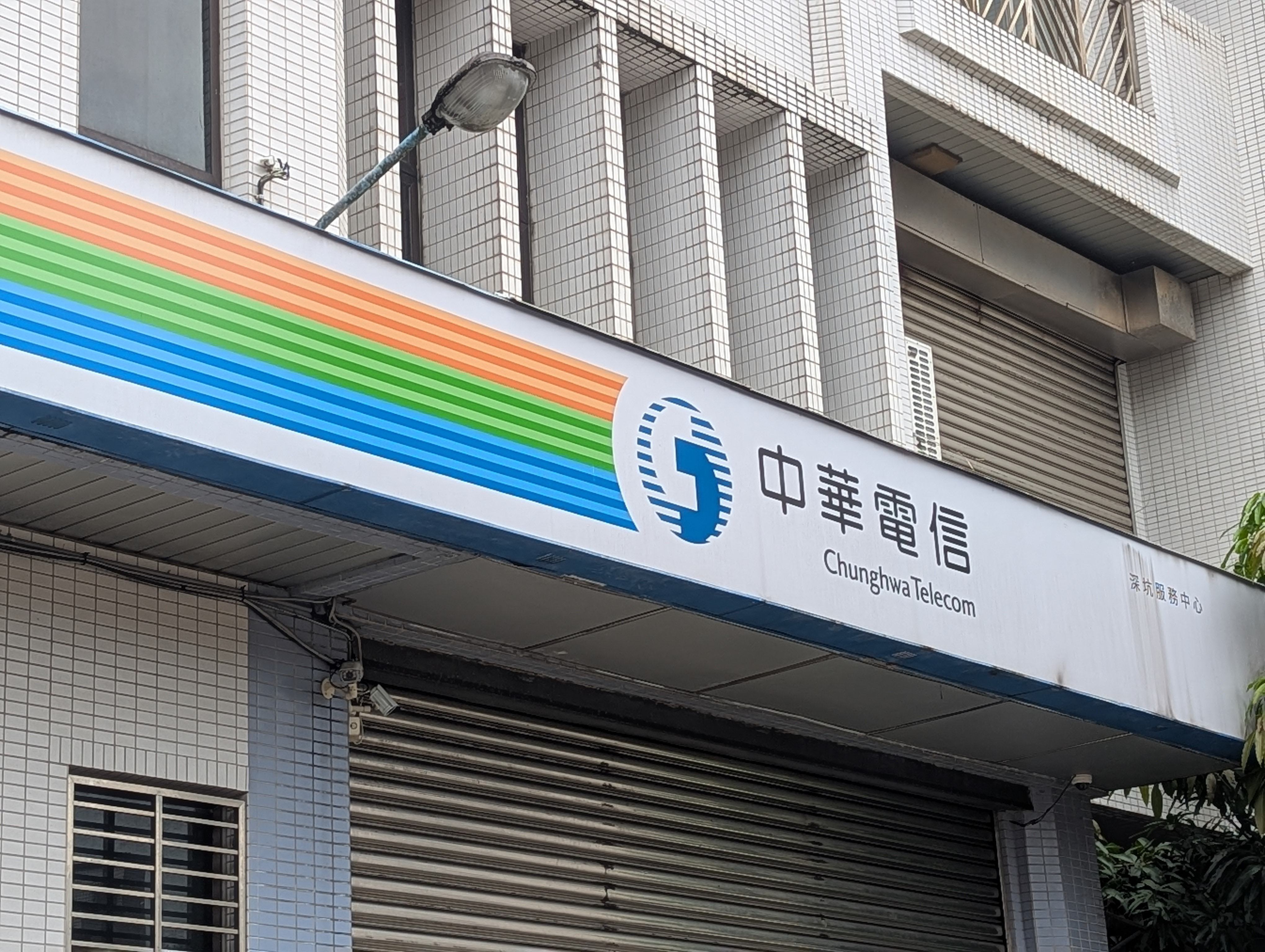
All of 7-Eleven’s broadband connectivity is serviced by Chunghwa Telecom. The relationship dates back to 2002, when Chunghwa installed ADSL-based broadband for the chain to speed up payment processing and ATM functions in its stores. This foundational work ultimately prepped 7-Eleven to launch its Ibon kiosks nationwide in 2006.
Today, all 7,300-plus 7-Eleven stores are connected on the same network. Its representative said the retailer worked with Chunghwa Telecom to “ensure the most stable connection for store operations and create a high-quality shopping experience for consumers, ensuring uninterrupted transmission, and enhancing digital resilience.”
7-Eleven’s system resembles an example of Chunghwa’s HiLink VPN architecture in which two fixed circuits operate simultaneously and are provisioned over different physical routes or network equipment. This is in addition to active-standby configurations in which traffic automatically switches to a secondary circuit when the primary connection fails. This service can also combine a fixed broadband or leased-line connection with 4G backup, giving the primary and standby links different transmission media and physical paths.
7-Eleven added that during an outage, the network switches to mobile networks or microwave communications for outlying islands and remote areas. Chunghwa’s microwave-based arrangements for Taiwan’s outlying islands were put into action in 2023 when both submarine cables serving the China-adjacent Matsu Islands were severed by Chinese vessels. Traffic initially failed over between the cable routes and was subsequently transferred to Chunghwa’s microwave system as a second layer of backup, helping to preserve voice communications and priority connections. Overall connectivity in the archipelago saw an extra boost in September when Chunghwa launched a new subsea cable in the region.
7-Eleven has a presence in Matsu; other remote stores include its Alishan National Forest branch, which sits at an elevation of approximately 2,200 meters above sea level, while one on Lanyu Island is roughly 80 kilometers off the coast of mainland Taiwan. It’s worth noting that despite being far-flung, these stores all operate 24/7.
According to a story told by PCSC’s Chung-jen Hsu, the 24-hour nature of 7-Eleven was a happy accident. One night, when a store was about to call it a day, its metal shutter got stuck while closing. With the door open, they kept operating, and business was so good during the night that it eventually convinced the higher-ups to keep 7-Eleven open nonstop.
This anecdote sums up the Taiwanese franchise’s fleet-footedness and willingness to experiment. The same spirit of innovation arguably explains 7-Eleven Taiwan’s success and its mode of operations, and why even if it has a “little” workforce in the future, Little 7 will likely stand as tall as ever.”
This article first appeared in SDxCentral Magazine Issue #2
Comments