

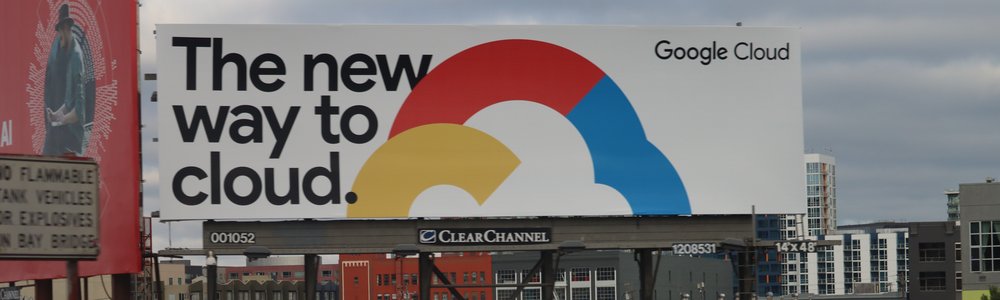
Google Cloud late last week released a VMware “reminder” tied to Broadcom’s impending license portability changes that are set to impact the use of VMware’s Cloud Foundation (VCF) platform running in hyperscale environments.
Google Cloud’s “VMware Engine Product Management Team” released a blog post explaining that Broadcom’s VMware licensing changes for hyperscalers are set to take effect November 1. Those changes will see VMware “moving to an exclusive ‘bring-your-own’ subscription model” for VCF.
“This means that in the future, Google Cloud VMware Engine (GCVE) customers will need to purchase portable VCF subscriptions directly from Broadcom to use with Google Cloud VMware Engine instead of buying VCF-included subscriptions of GCVE,” the Google team noted, adding that any new “committed use discounts” (CUDs) purchased after October 15 will need to be purchased directly from Broadcom and the bring-your-own-licenses option of the GCVE service from Google Cloud.
The changes are tied to Broadcom’s decision in late August to move its VCF licenses running on hyperscale environments to a “license portability-only operating model.”
Abhay Kumar, global head of managed services for Broadcom’s VCF division, explained that this move provides, “customers the freedom to use it where it makes the most sense for their business. It allows them to move their licenses and workloads between on-premises data centers and supported endpoints, including hyperscale clouds. This isn’t just a feature; it’s a fundamental shift that puts customer in control of their private cloud deployment preference.”
That last point is of most importance to Broadcom, which is banking heavily on private cloud. CEO Hock Tan during the recent VMware Explore event touted VCF performance benefits from running in those environments, noting that “private cloud now outperforms public cloud.”
Google Cloud quickly jumped on Broadcom’s VMware license changes, being the first domestic hyperscaler to offer and host the reconfigured VMware services. Others have since aligned their offerings to various degrees.
Broadcom touts change success
Despite the challenges, Tan highlighted VMware's conversion process during the vendor’s most recent earnings call, noting more than 90% of VMware’s 10,000 largest customers have signed up for the VCF platform and accompanying subscription licensing plan since those controversial changes were put in place shortly after the acquisition closed in late 2023.
Tan told investors that “pretty much, virtually way over 90% have bought VCF,” which was a subtle increase over the 87% Tan said were converted during Broadcom’s previous earnings call.
However, many continue to question VMware’s long-term loyalty efforts. Gartner just recently stated VMware will lose 35% of its workloads to hyperscalers by 2028.
Despite churn forecasts, some analysts note VMware has built up a considerable base of loyal users, which could insulate the vendor from drastic upheaval.
Sid Nag, president and chief research officer at industry advisory firm Tekonyx, explained to SDxCentral that VMware has a deep history within major IT departments, and that level of audience familiarity should not be underestimated as Broadcom continues to integrate VMware.
“These guys know VMware,” Nag said of that IT audience. “You can't just go into an IT department and say, ‘oh, guess what? We're going to go with a different virtualization technology because VMware is charging us, blah, blah, blah,’ because the amount of money you have to spend to train your new people, I mean, get real, right? I think that's a position that VMware is in, and I think they have to continue to monetize that and use that as a bully pulpit.”
That notion was echoed by Forrester Research, which, in a recent report headed by principal analyst Naveen Chhabra, noted that embedded loyalty.
“VMware love runs deep among the sysadmins who built their career around these products, and the proposed ‘all-in’ model only increases their remit in the organization,” the report stated. “If you opt out, they might opt in at a company that also opted in.”
A lot of changes are coming
The latest Google Cloud reminder also comes just weeks after Broadcom blogged its own reminder targeted at upcoming changes to the VMware’s Cloud Service Provider (VCSP) program. Those changes, which are set to take effect November 1, will vet VCSP partners for their commitment to the new program.
The VCSP program includes third-party organizations that partner with VMware and act as a go-between in offering VMware’s virtualization and cloud services to organizations. These VCSPs provide software-defined data centers to run the VMware services; multicloud support to run those services in different cloud environments, including on-premises and in public cloud environments; and additional functions like disaster recovery services, cybersecurity, and storage.
Broadcom instituted changes to the VCSP program shortly after it closed on the VMware acquisition. The changes included adding Broadcom’s Advantage Partner Program that allows qualified partners to now offer VCF and any accompanying cloud or managed services.

Comments