

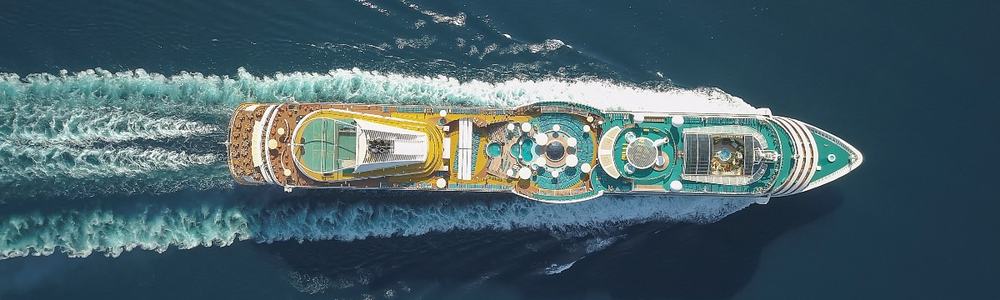
Cisco and Hewlett Packard Enterprise (HPE) this week bundled their collective strength in consort to support regulatory efforts that would allow cruise ships to tap low-power indoor (LPI) rules currently governing the 6 GHz spectrum band.
The networking duo filed a joint comment with the Federal Communications Commission (FCC) in support of a rule that would add cruise ships to the already established list of entities able to tap the 6 GHz spectrum band for “unlicensed indoor use.” “Boats” were specifically excluded from the original usage rule.
The two firms argue that cruise ship travel “is at an all-time high and continues to climb,” driving the need for ships to have access to more unlicensed spectrum for connecting on-board Wi-Fi devices.
“Particularly in large, indoor, congested areas of these ships, such demand impacts Wi-Fi performance,” the combined filing noted. “Access to 6 GHz spectrum will dramatically improve the Wi-Fi experience for American passengers and crew, as well as ship safety and operations.”
The FCC in 2020 approved opening up 1,200 megahertz of spectrum in the 6 GHz band available to Wi-Fi for unlicensed use. However, that spectrum included incumbent users that limited the amount of spectrum devices could tap into, depending on shared usage requirements.
Cisco and HPE in their filing noted that the FCC’s initial report specifically prohibited ships and moving vehicles from tapping into the 6 GHz band due to “what it perceived to be insufficient building attenuation.”
“However, signals within cruise ships experience high building entry loss (BEL) due to the vessels’ thick metal walls and thermally efficient glass windows,” the firms countered. “A ship hull, for example, is typically made of steel that can be up to [40-millimeters] thick. As a result, the signals transmitted by LPI access points will be significantly attenuated when passing through a cruise ship’s walls. Cruise ships are likely to have far higher BEL than traditional land-based hotels, which do not have walls made of metal.”
This initial ship concern was tied to potential interference with satellite-based remote sensing measurements taken over the ocean, a concern that has since been remediated by migrating those devices to different spectrum bands.
Cisco and HPE also pointed to recent efforts by the FCC in approving frequency coordination platforms that allow Wi-Fi 6e and Wi-Fi 7 devices to take advantage of both the deeper 6 GHz spectrum pool and the ability to beam those signals at further distances. This coverage and capacity boost is expected to be most relevant to outdoor Wi-Fi deployments.
“Cisco and HPE applaud the commission’s proposal to amend its existing 6 GHz rules to permit 6 GHz LPI access points to operate on cruise ships,” the firms concluded. “The legacy rules unnecessarily constrain network performance on cruise ships, and updating them would usher in faster, more reliable Wi-Fi at sea. A minor modification to exempt cruise ships would therefore advance the commission’s connectivity and spectrum-efficiency goals. It would also drive innovation and significantly improve Wi-Fi service for the fast-growing cruise ship industry and the over 21 million Americans who embark on cruises each year.”






Comments