

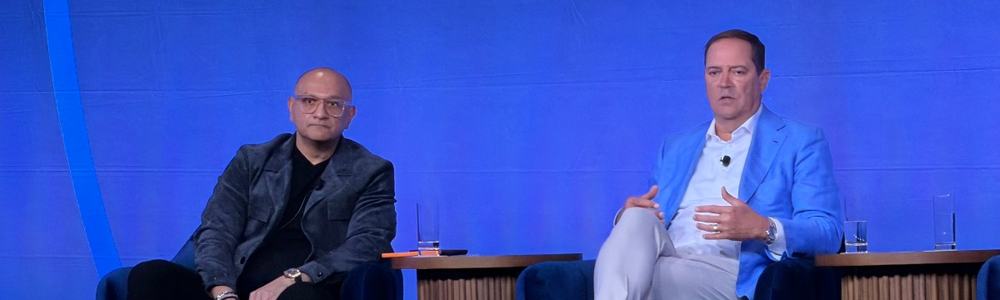
LAS VEGAS – Cisco CEO Chuck Robbins has overseen a dramatic overhaul of the networking giant’s operations that has resulted in new areas of focus, an operational pivot that the executive told an audience of analysts and press at this week’s Cisco Live 2026 event “were very simple decisions.”
That candor was prompted by questions over any concerns Robbins might have in shifting so much of Cisco’s focus toward AI, a segment that has seen a rapid surge in valuations reminding some of past market “bubbles.”
“I don't know what the bubble bursting would look like, but you know it's like I said with the. dot-com era. There was a lot of discussion about bubbles bursting, all that stuff, but eventually the winners emerged and we built on a 25-, 28-year technology tear that was built on the companies that survived that bit of a massacre back in the day,” Robbins said. “I think we went from $80 a share to [$6], so I have the scars.”
As such, Robbins explained that the vendor’s more recent shift was not a tough choice.
“I think it's … for me and our business, this is a very simple decision: The risk of not doing it is much greater, and that's all I need to know if we're moving forward. And we'll adapt as needed, we'll adjust our strategy as needed,” Robbins said.
Cisco’s directional changes have been a constant over the past several years, with the most recent “path forward” based around what Robbins called “strategic investments” in operational areas and a resulting slash of thousands of jobs.
“The companies that will win in the AI era will be those with focus, urgency, and the discipline to continuously shift investment toward the areas where demand and long-term value creation are strongest,” Robbins wrote in a recent blog post on those moves. “I’m confident Cisco will be one of those winners. This means making hard decisions – about where we invest, how we’re organized, and how our cost structure reflects the opportunity in front of us.”
Robbins added that those investment areas would be focused in silicon, optics, security, and in employees increasing their use of AI.
“These investments are building from a position of strength – and focusing on the technologies and businesses that will accelerate our growth, deliver unmatched innovation to customers and partners, and define our future,” Robbins explained.
CEO FOMO is real
Those moves continued what had been a years-long tilt toward AI, but the latest decision was against the backdrop of Cisco posting outsized earnings, a stilted optic that Robbins further leaned into during this week’s Cisco Live event in describing some of the accelerated reasoning behind those moves.
“I think in general you're going to find that most CEOs are going to feel exactly that way, even though they may not know how to operationalize that yet,” Robbins told the Cisco Live audience on the need to adapt and adjust strategies. “FOMO (fear of mission out) is real and the fear of my competitors moving faster than me because they're willing to embrace something and take a little more risk than I am is absolutely at the heart of the discussions we're having right now.”
Robbins further noted that AI is a new dynamic that has upended operational norms.
“You have a group of CEOs in seats today that have built their entire executive career during times of crisis. There is no normal. … I don't know when I've experienced anything normal since I've been CEO,” Robbins said. “I talk about the prior generation of CEOs, there have been a lot of times in my career as CEO where I think they would have said, ‘we're going to slow spending for a while, while we see what happens and just wait for things to get a little more normal.’ You don't see that happening anymore. It never happens because the CEOs believe if they do that they run the risk of becoming extinct.”
Cisco Chief Product Officer (CPO) Jeetu Patel also countered the “bubble” concern by noting that the market can hold “two truths at the same time.” One is that companies can have “frothy valuations and you could actually have a secular shift happening.”
“The second thing is, if you look at most of the demand signals on infrastructure right now, we are supply constrained, but this infrastructure is actually being consumed,” Patel said. “It's not like we're going out and building out infrastructure like in the previous eras where we are waiting for it to be consumed. It is actually being consumed.”



Comments