

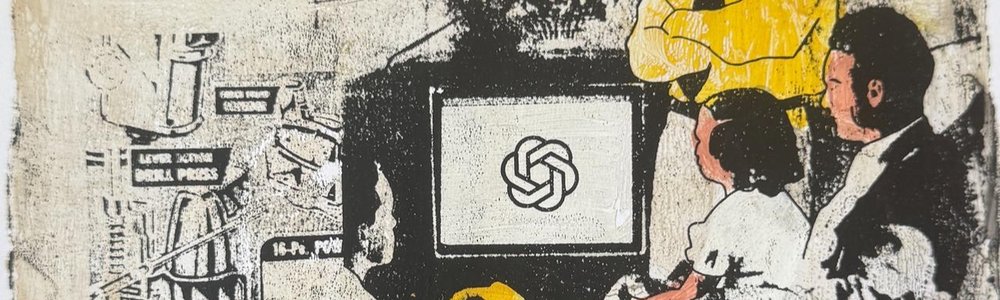
The cybersecurity arms race between OpenAI and Anthropic saw further twists and turns this week. Whilst the Sam Altman outfit nabbed more network security prestige to help its cybersecurity-centric AI system toward the same gravitas held by Anthropic’s Claude Mythos, CEO Dario Amodei and company saw their model get a blessing from Trump while continuing to be banned from export.
From a networking perspective, Monday’s announcement that Cato Networks joined OpenAI’s Daybreak program is of interest. Following membership from Cisco, Palo Alto Networks, and Fortinet, the secure access service edge (SASE) player gives the ChatGPT giant a bigger hook in the network safety ecosystem.
It also bumps up the Daybreak partner count, and with IBM also joining this week, OpenAI may be feeling flusher than usual, especially with Anthropic’s recent ups and downs.
The AI security status quo
As a reminder, OpenAI’s current large language model (LLM) is GPT-5.5, on top of which are the more exclusive layers of GPT-5.5 with Trusted Access for Cyber (TAC) plus GPT-5.5-Cyber, the former being the guardrail access tier and the latter a less-restricted model.
These two cyber modes form the base layer for Daybreak, which operates as the product and branding umbrella, allowing clients to choose the right access level for the security workflow. The company is marketing the offering through Codex Security, which was partly borne out of its Aardvark acquisition late last year.
The 5.5 cyber duo followed GPT‑5.4‑Cyber, OpenAI’s swift response to Anthropic’s AI security two-punch of Claude Mythos and Project Glasswing. The latter is a task force including Cisco, Nvidia, Cloudflare, Broadcom, and Palo Alto Networks that has exclusive access to Claude Mythos Preview, Anthropic’s LLM, which is claimed to far surpass currently available models to identify and prioritize remediation of security vulnerabilities.
Similarly, OpenAI scaled its TAC cybersecurity program with its two security offerings, with the guardrailed access tier of the eponymous GPT-5.5 TAC being its answer to Mythos.
Arguably, OpenAI's fanfare around these releases did not quell public discussion on Claude Mythos. As this title explored at the time, the Anthropic discourse saw governments and financial regulators issue warnings of what would happen if the all-powerful Mythos fell into the wrong hands.
OpenAI responded by framing Daybreak as a shift-left security proposition; this week, it updated the Codex Security plugin and launched a full version of GPT‑5.5‑Cyber, claiming state-of-the-art performance on CyberGym valuations.
Anthropic, for its part, has expanded its Glasswing roster with AT&T, Verizon, and more. Interestingly, both Cato and IBM are members; Cato’s CEO seemingly let slip its participation in a media interview shortly after Glasswing was launched, in contrast to Monday’s formal announcement regarding its Daybreak association.
That Anthropic-related disclosure arguably belied the excitement at the time about all things Glasswing. The prestige also saw one member reach out to this title to correct another member’s claimed assertion that it was the first of its industry vertical to join the project.
Equal eyeballs on Daybreak and Glasswing?
The contrast with Daybreak is noticeable, and may be defining OpenAI’s ongoing Daybreak news mill. Laura Wilber, senior analyst, office of the CTO at security specialist Enea, gave a personal analogy on the matter with SDxCentral, with a reminder that OpenAI also echoed Anthropic in establishing red lines in its dealings with the U.S. military (more on that later).
“One day, when my sisters and I were little, my father complimented one of my sisters on how pretty her blue eyes were. One of my other brown-eyed sisters tugged on his sleeve and said meekly, 'I have eyeballs too.' It became a family catchphrase, and it came to mind when watching Sam Altman say 'I’ll do it' in response to Amodei’s refusal to waive restrictions on the U.S. military’s use of Anthropic models: same 'I have eyeballs too' energy.”

But Wilber believes the Daybreak saga is a reminder that competition is good for any market, and the type of product concerned is a win for all on the security front.
“Is Daybreak Sam’s attempt to get some attention à la Mythos/Glasswing? I don’t know, and don’t care. It’s a good initiative,” Wilber said. “There really is a critical bottleneck in the patching cycle given the avalanche of vulnerabilities AI is discovering … As a recent benchmark – ExploitGym – has shown, the latest frontier models are not just crazy good at finding critical vulnerabilities, but exploiting them – with Mythos Preview and GPT-5-5 and 5.4 topping the charts."
Wilber described making GPT-5.4-Cyber and 5.5-Cyber available to trusted partners, with specific support and funding for open source maintainers, as “a plus for all.”
“The same goes for this week's Codex Security update. That’s part of a number of security functions that Anthropic and ChatGPT have introduced in their coding tools that make a meaningful contribution to defense-in-depth security, which, along with zero trust frameworks, is needed now more than ever.”
Breaking glass-wings?
But whether access to these advantages should be universal saw a political element come into play this month, when Anthropic released its latest LLM Fable 5, alongside a gated version in Mythos 5, which removed filters on high-risk topics such as advanced cybersecurity, biology, and chemistry.
Both models landed in the second week of June. By June 12th, they were banned by the U.S. government due to a possible way of “jailbreaking” Fable 5, with potential repercussions for national security.
It’s worth remembering that Anthropic was already on shaky ground in its relations with U.S. authorities after the AI giant declined to change its terms of service to allow mass domestic surveillance and support fully autonomous weapons.
In response, President Donald Trump ordered every U.S. government agency to blacklist all of Anthropic’s AI systems, prompting OpenAI to fill the vacuum. The February ban was in effect when Mythos launched in April, and remains in place at the time of writing.
In a possible response to this admonishment, Anthropic CEO Amodei noticeably commented in Project Glasswing’s launch video that the firm had spoken to officials across the U.S. government about Mythos's offensive and defensive capabilities, while “offering to work with them and collaborate to assess the risks of these models and to help defend against the risks of these models.”
This added to comments in Anthropic’s press release for Project Glasswing, which called out AI-driven cybersecurity attacks that may “empower adversaries of the U.S. and its allies,” adding “the emergence of these cyber capabilities is another reason why the U.S. and its allies must maintain a decisive lead in AI technology.”
With the June ban, Anthropic saw another blow to its operations, this time beyond defense contracts to affect everyday users - the sort of problem OpenAI has yet to encounter, it should be noted. But like the break of day following a dark night, President Trump told one media outlet this week that he no longer considered Anthropic to be a security risk.
In response to these remarks, Anthropic said it was “grateful to the administration for their ongoing partnership in working to get this matter resolved as quickly as possible.”

Out of the dark?
But as cybersecurity author and principal analyst at Forrester Allie Mellen told this title, Anthropic is not yet out of the dark.
“There is no indication that [Trump’s] change in stance has affected the government’s approach. Access to Fable 5 and Mythos 5 remains suspended globally at this time,” Mellen said.
The analyst argued that the situation showed a need for “comprehensive, consistent, and future-proof AI regulation” to prevent sudden withdrawals of AI model access.
“These disruptions affect individuals and organizations, but they also affect the speed of innovation for the model provider itself. At such a competitive time geopolitically and technologically, U.S. companies need consistency, reliability, and an understanding of what government actions will affect business decisions as early as possible,” Mellen said.
Enea’s Wilber added that the saga was having a significant impact on the European security ecosystem.
“It has spooked developers who have gotten comfortable with model-dependent development, and no doubt more customers will be asking whether commercial solutions are model agnostic.
“It has also added yet more fuel to the digital sovereignty fire in Europe, which will no doubt mean more funding flowing to the EU’s leading homegrown commercial LLM, Mistral.”
In other words, while OpenAI may have won at least one battle on U.S. ground, there may be no winners on the global stage, no matter how powerful or well-publicised the model.





Comments