


Anthropic released Fable 5, an AI model with the same double-edged, hyper-potent powers of Mythos, though apparently it’s “been safe for general use.”
In a lengthy company post, Anthropic, which recently overtook its bitter rival OpenAI as the world's most valuable AI startup, positioned Fable 5 above the company's’ top-tier "Opus" class model in terms of capabilities. But, it features safeguards that have been fine-tuned “conservatively” – with claims it can catch harmless, though potentially triggering requests in less than 5% of sessions.
The model hasn’t launched alone; Anthropic also released Mythos 5, the same underlying model as Fable 5, though with some of its safeguards turned off.
Mythos is described as having “the strongest cybersecurity capabilities of any model in the world,” and only organizations with access to Anthropic’s recently expanded Glasswing project will have access, with the AI lab likening it to an “upgrade” on the existing efforts of Mythos Preview.
Plans to expand access through what Anthropic referred to as a “broader trusted access program” are in the works, though with initial access being prioritized to biomedical researchers and cybersecurity organizations.
“The capabilities of models like Fable 5 and Mythos 5 have the potential to do profound good for the world,” Anthropic said in a statement. “We’ve seen the beginnings of this in Project Glasswing, where the models have helped cyber defenders secure critically important software. We’ve also seen it in life sciences research, where the models are positing novel hypotheses and speeding up the development of new therapeutics.
“Today’s joint launch is another step towards our goal of bringing advanced AI capabilities to as many users as possible, as quickly and as safely as we can," the firm added.
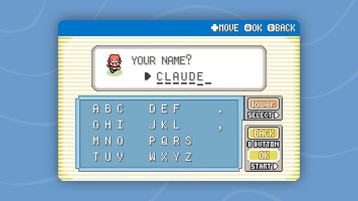
Gotta patch 'em all
Anthropic’s Mythos Preview debut in early April sent alarm bells instantly ringing across the industry, with cybersecurity leads fearful of the model’s ability to unearth vulnerabilities at levels apparently far superior to the abilities of humans.
Glasswing followed, with the AI lab keen to ensure cybersecurity firms had initial access to test its abilities and prevent Mythos Preview from being launched straight into the arms of threat actors.
Cisco, Nvidia, and Verizon were among the initial cohort given early access, with Rubrik among those gaining access in the latest update. In total, some 200 organizations now have access, with Anthropic detailing early users have made use of Mythos Preview “at large scale.”
These latest launches, however, see Anthropic publish models that have impressive cybersecurity capabilities, extensive knowledge work, memory, and long-contexts – with Fable 5 shown to have played "Pokémon FireRed" from start to finish in 50 hours (a standard time for such a title) using just its vision capabilities alone.
But just as Pokémon games have anti-cheat measures, so too do Anthropic’s Mythos-class models.
Fable 5 comes packed with so-called “classifiers” – separate AI systems used to detect potential misuse, including jailbreak attempts. These kick in and stop the model from responding.
If a request pertaining to cybersecurity, biology, chemistry, or distillation is detected, the platform transfers responses to Claude Opus 4.8. Anthropic contends falling back to its flagship model provides a “far better experience than an outright refusal from Fable,” with early data revealing more than 95% of Fable sessions involve no fallback at all for such sessions.
Among the specific classifiers Fable 5’s AI-assistants look for are requests about exploitation and offensive cybersecurity tasks; bioweapons-related queries such as designing adeno-associated viruses (AAVs), which are used to deliver gene therapies; and general distillation.
Fable 5 has also been baked with extensive tests and red-teaming against jailbreaks, with Anthropic claiming an external bug bounty resulted in no universal jailbreaks in more than 1,000 hours of testing.
Costs and data-retention caveats
For those wanting to use Anthropic’s new models to shore up defenses or even to catch ‘em all, the caveat is the cost: Fable 5 and Mythos 5 are being offered at $10 per million input tokens and $50 per million output tokens – less than half the price of Claude Mythos Preview, but still a premium price. For comparison, Anthropic’s Claude Opus line generally sits around the $5 to $10 mark per million input tokens, depending on the specific variant and mode.
Despite a higher cost point, Fable 5 will be made available on Pro, Max, Team, and seat-based Enterprise plans at no extra cost through June 22. From June 23 onwards, it’ll require usage credits, though Anthropic said it plans to restore Fable 5 access as a standard part of subscription plans “as quickly as we can.”
The model updates also come with a new and noteworthy update to Anthropic’s data retention policy, with the AI lab now requiring 30-day retention for all traffic on Mythos-class models across both first- and third-party environments.
Anthropic said the change won’t see it use data to train new Claude models, with it instead using the data to “help us defend against complex and novel attacks (including new jailbreaks and attacks that operate across many requests) as well as help us identify and reduce false positives.”
Commenting on the launch, Roman Stanek, founder and CEO at GoodData, said: “The thing with AI and cybersecurity is that the vulnerabilities we're worried about AI exploiting, well, we've known about most of them for 20 years. We just never fixed them. Not because we couldn't, but because nobody wanted to pay for them. Open source security, legacy code debt, [and] infrastructure hygiene, they are all solvable problems, but all chronically underfunded. Now we have Mythos, this new shinier, more expensive model that can theoretically find and fix them.
“Great," Stanek continued. "Except the incentive structure hasn't changed. Nobody wanted to pay a human engineer to fix it. They're not going to pay an AI to fix it either. The issue has never been capability; people are just unwilling to invest, and until that changes, the vulnerabilities will stay as the threat evolves. We will continue to have the same conversation around better and better tools that nobody will use.”
Network Solutions CEO Sachin Puri added that conversations around Mythos-esque systems “cannot stop at capability,” stressing the need to include governance, accountability, and considerations for when guardrails fail.
“Most discussions about AI safety happen among researchers, regulators, and large enterprises,” Puri said. “Yet the impact of a failure often lands hardest on small businesses. A company with five employees doesn’t have a CISO, a security operations center, or a dedicated incident response team. They have an owner juggling customers, employees, inventory, and payroll.
“As AI lowers the barriers to both defense and attack, the industry has a responsibility to ensure that trust, security, and protection become easier to access, not harder," Puri added. "The future of AI cybersecurity will be defined not just by intelligence, but also by the governance frameworks, safeguards, and trust infrastructure that surround it.”





Comments