

As if the spiralling loss of lives weren’t enough, South Korean lawmakers have warned that war in the Middle East could disrupt semiconductor production.
Reuters reported Kim Young-bae of the ruling Democratic Party of Korea saying suppliers could face production issues if key materials vital to chip production that originate from the region can’t be sourced.
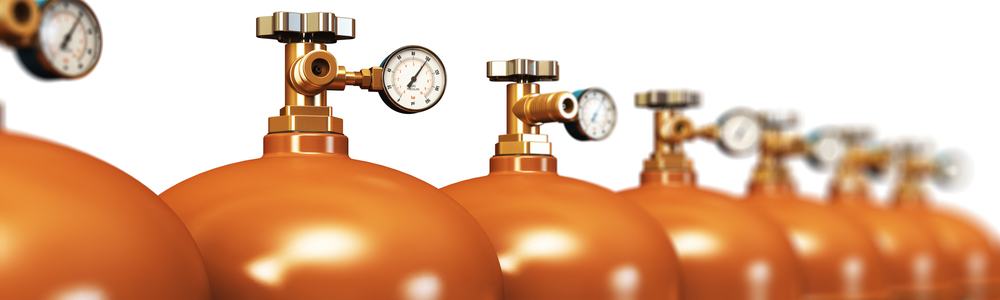
One such material cited by Kim was helium. The noble gas is used in the lithography process to create stable vacuum environments. During the high-temperature etching part of production, where patterns in a wafer are created to define features like transistors and interconnect on the chip, the gas’ low boiling point is used to keep the equipment cool and prevent overheating.
The problem? Qatar – which has been subject to retaliatory bombardments from Iran along with Saudi Arabia, Oman, and Kuwait following the U.S. and Israel's coordinated offensive – is one of the world’s leading suppliers of helium.
A U.S. Geological Survey mineral commodity summary states that Qatar was responsible for 40% of the helium imported into the U.S.
But, according to South Korean import data from Volza, liquid helium – the more efficient way to transport it over long distances, becoming vaporized into gas upon arrival – Qatar was responsible for an 11% share of imports, third only to the U.S. and Russia. The United Arab Emirates (UAE), which has also been hit by attacks from Iran, was No. 4.
South Korean lawmakers are worried that one of their biggest exports could be severely impacted at a time when chipmakers are already having to navigate a growing number of constraints, including memory components and lasers.
SK Hynix told Reuters that it has “long secured diverse supply chains and sufficient inventory” of helium and that “there is almost no chance that the company will be affected.”
Taiwan Semiconductor Manufacturing Company (TSMC), Nvidia’s lead chip manufacturer, said it did not anticipate potential impacts, but it was monitoring the situation.
Despite Kim’s fears, Volza data suggests that between April 2024 and March 2025, South Korean buyers of liquid helium were facilitated by some 15 exporters. That marked a 59% increase compared to the previous 12 months and came from a variety of sources not currently impacted by the war, such as China, Belgium, and Singapore.
Yet another overlooked component cog in the wheel of chip production
If you’re fearful of the memory shortage or haven’t realized that Nvidia is buying up laser components left and right, then be wary of yet more supply chain sensationalism to come.
However, like many elements within the intricate world of semiconductor manufacturing, helium is a frequently overlooked cog in the giant wheel.
According to a Future Markets report, the semiconductor industry accounts for around 24% of global helium demand, equating to some 7.3 billion cubic feet.
Demand from the chip space doesn’t look to be waning anytime soon. That same report suggests semiconductor manufacturing, along with quantum computing applications, could help drive demand for helium by a 6% compound annual rate through 2035, with production expansions in Asia alone expected to increase its share of global consumption to more than 30% by 2030.
Helium is, of course, used in a plethora of industries and applications beyond chipmaking, including in rockets, deep-sea diving breathing mixes, and weather forecasting. It’s widely used in the medical sector, with MRI units requiring some 2,000 liters of liquid helium just to keep the magnet cool enough to operate.
But the gas is also a finite resource. And with IDTechEx projecting the global demand for helium will double to ~322 million cubic meters by 2035, there could well be a time when a serious shortage arises that hits the chip market.
It also wouldn’t be the first time the global helium market has seen disruption since the mid-2000s.
For example, the U.S. Bureau of Land Management’s Crude Helium Enrichment Unit (CHEU) went offline for a planned maintenance outage in July 2021 of around four months. That alone slashed around 10% of the world’s production capacity, causing prices to soar.
Kim’s claims of a potential helium shortage adds to the chorus of alarm bells already ringing about supplies of materials like copper, which is projected reach a supply deficit of some 10 million metric tons by 2040.




Comments