

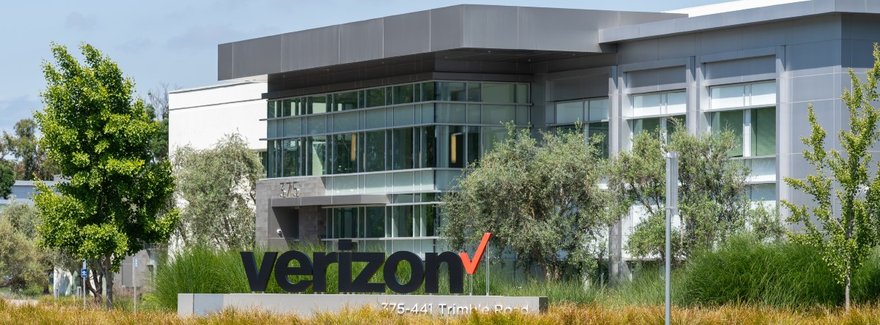
Verizon’s pending $20 billion purchase of Frontier Communications is getting a once-over by the California Public Utility Commission (CPUC) in part due to changes Verizon made to its diversity, equity, and inclusion (DEI) program to gain Federal Communications Commission (FCC) approval of the deal.
The CPUC recently opened up public comment on the proposed transaction, which would see Verizon acquire one of California’s larger telecom network providers for $20 billion. The CPUC noted that it was looking into Verizon’s commitment in fulfilling legacy Frontier obligations around operating as a carrier of last resort, to provide Lifeline services, and obligations from Frontier’s bankruptcy settlement from 2021.
The state regulatory body also explained it was looking into Verizon’s letter to FCC Chairman Brendan Carr that stated the carrier was eliminating its DEI policies following an evaluation of the practices.
“In doing so, Verizon recognizes that some DEI policies and practices could be associated with discrimination,” Vandana Venkatesh, Verizon EVP and chief legal officer, noted in the letter to Carr. “For that reason, Verizon reaffirms its commitment to equal employment opportunity and nondiscrimination and is modifying its practices and ending its DEI-related policies.”
Carr quickly approved the deal after receiving the letter and commitment from Verizon.
“We will also be looking at Verizon's statements and a letter to the Federal Communications Commission regarding changes it will be making to end its diversity, equity, and inclusion programs, such as in hiring, training, and in leadership and career development,” CPUC Commissioner John Reynolds said during a public hearing. “We are curious to see whether such changes would be compliant with California laws and orders in maintaining diversity in the utility workforce and supply chain and in the public interest for Californians.”
Is DEI a challenge?
Verizon’s DEI move followed on the heels of T-Mobile US making similar concessions to close its acquisition of fiber-provider Lumos.
James McQuivey, VP and research director at Forrester Research, told SDxCentral in an interview that these moves highlight different DEI challenges. McQuivey explained that the first issue is that these types of initiatives have proven difficult to implement and manage.
“The biggest challenge is that it's a difficult to measure question: how diverse are we?” McQuivey said, noting that many instances were based on a percentage of a quota. “It's a very correct question to ask whether that is, in fact, the right metric. Are we indeed measuring diversity, or are we measuring tokenism?”
McQuivey said that in conversations with diversity leaders and executives, “the sincere ones feel this way.”
“We were using quotas as a blunt instrument to tell everyone that we thought this mattered, but we all knew that that really isn't the right way to do it, and that it sometimes leads to ineffective decision making, and then it makes you vulnerable to external activists who want to criticize your DEI efforts,” McQuivey said of these discussions.
Those recent moves by Verizon and T-Mobile US also show those external pressures.
“We never figured out how to do it in the first place, and now we're being told to remove certain types of approaches to diversity, in some cases under social pressure, and in some cases under legal pressure,” McQuivey said of how executives are attempting to navigate well-meaning diversity efforts. “They're genuinely left struggling with we want to help our customers, which is one part of this because you have a diverse customer base, and we want to help our employees because you're going to have a diverse employee base. How do we serve those two audiences, respecting their diversity without running afoul of the legitimate complaints against some of these programs, as well as the unfounded or politically motivated complaints against these programs. The result is we're clear about what we wish diversity meant, but we don't know what steps to take in the meantime so that we can eventually get to that meaning.”
McQuivey added that the legal question is the “one ghost that sort of haunts them all.”
“It’s the legal question of would the Department of Justice try to make an example of them if they keep any kind of DEI terminology,” McQuivey said, adding that this also bleeds into broader ties to government contracts. “The percentage of the American economy that provides some kind of goods and services to the federal government, for example, in the role of a contractor, is really, really high. And if federal contracts suddenly start stipulating that you cannot in your hiring policies have anything that’s preferential to any group that's been historically disadvantaged or discriminated against, now that's a new kind of violation because you're discriminating against a majority group.”
Further DEI fights ahead?
This legal angle could spill over into Hewlett Packard Enterprises’ (HPE) pending acquisition of Juniper Networks. The Department of Justice (DOJ) filed a lawsuit earlier this year to block that deal based on competitive concerns, with the court case set to begin in front of a judge next month.
The DOJ filing did not point to any DEI concerns, however, HPE CEO Antonio Neri has been vocal in touting that vendor’s DEI stance. Neri recently talked extensively with CNBC on his view that DEI efforts are often a struggle due to what he called a “frozen mindset.”
“Ultimately, it is not because they don’t want to help,” Neri said of how managers are dealing with DEI initiatives. “It’s just they don’t know how to do it. And sometimes we as human beings, we have a hard time asking for help.”
HPE continues to host extensive DEI pages on its website, and added further support to those initiatives in answering investor questions as part of its most recent annual report.
“HPE remains steadfast in our commitment to foster an inclusive culture,” the firm wrote. “We believe that when all team members feel they are able to contribute their unique experiences, opinions, and perspectives, it leads to better innovation, better debate, and better decision making. This benefits customers, shareholders, and our business.”
Juniper Networks, on the other hand, appears to have removed previously available DEI content from its website, with a previously viewable page now directing to a general media page.




Comments