


Verizon received the final regulatory approval for its long-standing attempt to acquire Frontier Communications for $20 billion, with expectations that the deal will now close by January 20.
The five-person California Public Utility Commission (CPUC) this week voted unanimously in favor of the deal. That approval, which was the last remaining regulatory hurdle toward the deal being approved, included service, workforce, and reporting conditions, and provisions that Verizon adhere to state requests tempering concerns over Verizon’s decision to ditch corporate-wide diversity, equity, and inclusion (DEI) policies at the behest of Federal Communications Commission (FCC) Chairman Brendan Carr.
That last condition was the most contentious, with the CPUC having previously slammed Verizon and Frontier for “replying evasively and deficiently” to a question put forth by the CPUC that asked for clarity in responses the telecom operators provided to the FCC about their respective DEI policies.
“Verizon eventually agreed giving up its workforce and supplier diversity programs in order to secure the federal approval that Chairman Carr was willing to hold hostage in order to force these companies to change,” CPUC Commissioner John Reynolds said during a public hearing and vote this week. “These events created a real problem for this commission.”
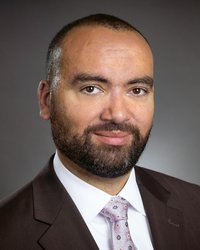
Reynolds explained that the CPUC moved forward with a “public interest balancing test,” where “the company's programs supporting our state's diversity goals sits on one side of the scale, and when there's harm on one side, the law requires more weight on the other side to justify approval.”
The result of that “balancing test” were conditions that Verizon enter into a $10 million partnership with the California State University system for workforce development and develop “recruiting pipelines” with the university system and other educational institutions serving “underrepresented California communities.”
“While the FCC tries to remake society by withholding regulatory approvals to tear down programs meant to support our communities, we will respond by investing in our communities, building skills and employment opportunities to pay long-term dividends for Californians,” Reynolds claimed.
Deployment, service, workforce conditions
Verizon also agreed to a number of deployment, service, and workforce conditions.
These include Verizon agreeing to deploy fiber to 75,000 new locations within five years with a focus on lower-income households; deploying 250 new cell sites with 5G and fixed-wireless access (FWA) broadband capabilities in areas eligible for state grants and high fire-threat districts; a $150 million bond to back those commitments; to provide a $20 per month broadband program for low-income households over the next 10 years; $80 million toward expanding broadband services to help close “digital divide” concerns; and a commitment to spend $500 million over the next five years with California small businesses as part of Verizon’s small business accelerator program.
The broadband deployment commitments require services that provide downlink speeds of at least 100 Mb/s and uplink speeds of at least 20 Mb/s to 88 wire centers serving rural and lower income areas. This commitment must be completed within seven years, with Verizon able to help fund these programs through state grants.
Verizon also agreed to hire at least 600 new Communications Workers of America union employees over the next six years, and that existing union employees will receive 48 months of layoff protection.
CPUC approval conditions also require Verizon to provide dedicated contacts for the state’s Native American tribal communities; provide tribes with maps of infrastructure in and around their ancestral territories; send welcome letters to tribal leadership explaining available services; communicate annually with tribes to review these obligations; and the right of first offer from the Frontier bankruptcy proceeding, giving tribes priority when Frontier disposes of real property in their ancestral territory.
The CPUC will also hire a compliance monitor paid for by Verizon that will oversee an annual commitment report to be filed by Verizon on the imposed conditions and report to the CPUC on commitment progress.
“We're not simply trusting that Verizon will do what promised,” Reynolds said. “We're building the compliance infrastructure to hold them accountable. We have infrastructure commitments, affordability protections, workforce guarantees, and enforcement mechanisms to back them up.”
Verizon for its part seemed good with the conditions.
“The path to closing the Frontier acquisition marks a significant milestone in Verizon's evolution and is a bold step forward in Verizon's transformation to regain market leadership,” Verizon CEO Dan Schulman noted in a statement. “Upon closing, we will be uniquely positioned to offer our customers the best combined mobility and fiber experience for mobile, home internet, and other essential services across a significantly expanded footprint. Verizon is wholly focused on serving and delighting our customers and earning their trust and loyalty. After the transaction closes next week, our greatly expanded footprint will enable us to provide more value to more households and businesses in more regions, driving our growth and benefitting our customers and our shareholders.”
Verizon’s broadband boost
The approval is a significant step for Verizon, which recently overhauled its executive and operating structure in an attempt to spur growth by taking advantage of its broadband assets.

The Frontier deal was initially announced in mid-2024, and includes a fiber networking business with 7.2 million fiber locations that serve 2.2 million subscribers across 25 states. Those assets are set to bolster Verizon’s approximately 7.4 million fiber connections across nine states and Washington, D.C., with a combined entity counting approximately 10 million fiber customers across 31 states and Washington D.C., and fiber networks passing more than 25 million premises.
Verizon has since said it plans to extend its fiber footprint to more than 30 million premises by 2028, on its way to 40 million passings longer term. Those numbers are important as rivals AT&T and T-Mobile US have also bolstered their own respective fiber footprints.
Those plans gained steam last October when Verizon abruptly replaced long-time CEO Hans Vestberg – who spearheaded the Frontier deal – with board member Schulman. The new CEO in his first statements laid out a bold initiative for the carrier.
“We are going to take bold and fiscally responsible action to redefine Verizon’s trajectory at this critical inflection point for our company,” Schulman noted in a statement tied to Verizon’s third-quarter earnings release. “We will rapidly shift to a customer-first culture, one that thrives on delighting our customers. These will not be incremental changes. We will aggressively transform our culture, our cost structure, and the financial profile of Verizon in order to put our customers first, compete effectively, and deliver sustainable returns for our shareholders.”
That shift does include an increased focus on Verizon’s broadband efforts, which included quick agreements with Tillman affiliate Eaton Fiber to expand fiber services outside of Verizon’s core markets and plans to acquire fixed-wireless broadband provider Starry in a move to expand the carrier’s multidwelling unit (MDU) aspirations.
Schulman has also targeted Verizon’s operations, bringing on a former PayPal colleague to head the carrier’s new transformation office, which has so far moved to slash 13,000 jobs in an attempt to cut operating costs. Schulman last month also overhauled the carrier’s leadership team with a handful of job priorities being shifted under new titles.





Comments