

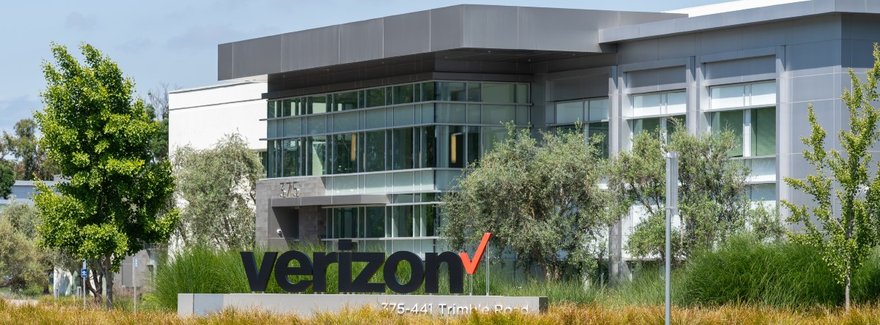
Verizon management remains confident the telecom giant will close its pending $20 billion acquisition of fiber provider Frontier Communications early next year, a deal that has run into some recent state regulatory hurdles.
Verizon CEO Hans Vestberg told investors during the carrier’s most recent earnings call that “the regulatory approval process for our pending acquisition is progressing as planned.” Verizon CFO Tony Skiadas added that the Frontier deal has gained approval from eight states, the Department of Justice (DOJ), and Federal Communications Commission (FCC), and remains on track for an early 2026 close.
The Frontier deal was initially announced in mid-2024, and includes a fiber networking business with 7.2 million fiber locations that serve 2.2 million subscribers across 25 states. Those assets are set to bolster Verizon’s approximately 7.4 million fiber connections across nine states and Washington, D.C., with a combined entity counting approximately 10 million fiber customers across 31 states and Washington D.C., and fiber networks passing more than 25 million premises.
The FCC approved the deal in May, which came shortly after Verizon filed a letter with the government regulator that stated the carrier was eliminating its diversity, equity, and inclusion (DEI) policies following an evaluation of the practices.
“In doing so, Verizon recognizes that some DEI policies and practices could be associated with discrimination,” Vandana Venkatesh, Verizon EVP and chief legal officer, noted in the letter to FCC Chairman Brendan Carr. “For that reason, Verizon reaffirms its commitment to equal employment opportunity and nondiscrimination and is modifying its practices and ending its DEI-related policies.”
However, the California Public Utilities Commission (CPUC) recently opened up public comment on the proposed transaction, which would see Verizon acquire one of California’s larger telecom network providers. The CPUC noted that it was looking into Verizon’s commitment in fulfilling legacy Frontier obligations around operating as a carrier of last resort, to provide Lifeline services, and obligations from Frontier’s bankruptcy settlement from 2021.
The state regulatory body also said it was looking into Verizon’s letter to Carr concerning its DEI-related move.
“We will also be looking at Verizon's statements and a letter to the Federal Communications Commission regarding changes it will be making to end its diversity, equity, and inclusion programs, such as in hiring, training, and in leadership and career development,” CPUC Commissioner John Reynolds said during a public hearing. “We are curious to see whether such changes would be compliant with California laws and orders in maintaining diversity in the utility workforce and supply chain and in the public interest for Californians.”
Investors pressed Verizon’s management for any insight into possible delays on the deal closing, with Skiadas only noting that Verizon is “productively engaged with the remaining state regulatory agencies.”
Verizon’s DEI move followed on the heels of T-Mobile US making similar concessions to close its acquisition of fiber-provider Lumos.
Verizon MDU plans progressing
Verizon is also continuing to scale its multidwelling unit (MDU) service, which Vestberg said is “going to start scaling even more in the second half” of this year, though he added it would “be a bigger contributor in [2026] than in [2025].”
Verizon’s MDU service taps into the carrier’s extensive millimeter-wave (mmWave) spectrum portfolio to provide broadband services into densely populated locations.
Vestberg said that offering is now live in parts of 50 markets and “we’ll start ramping during the year.”
Verizon’s management had previously explained that the MDU service would also help the carrier better penetrate the lucrative enterprise connectivity space.
“A lot of these MDUs also have stores or businesses in them, and so we’ll be able to leverage that investment as well to increase our market share in this area,” Kyle Malady, EVP and CEO of Verizon’s Business Group, said during an earnings call last year.



Comments