

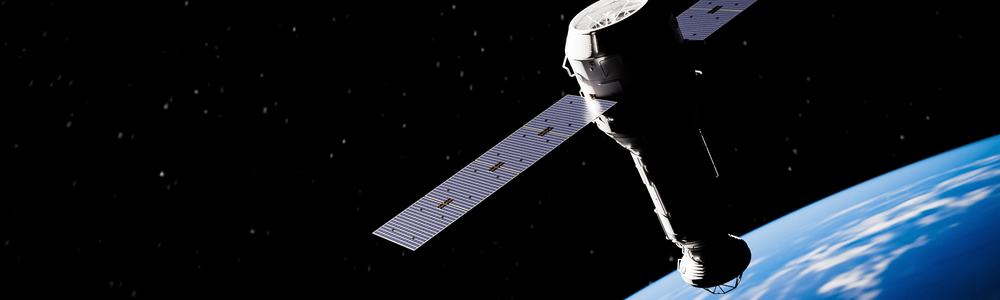
The South Korean government announced plans to build a national low-Earth orbit (LEO) satellite network formed of hundreds of satellites by 2035, and has revised its 2032 plan to send a 700-kilogram lunar lander to the moon to 2030.
Korea AeroSpace Administration (KASA) Administrator Oh Tae-Seok presented a promotion strategy, supporting initiatives at the industry hub in Yeongnam, declaring an ambition for the nation to capture 3% of the global aerospace market by 2035.
“Leading space nations are making all-out efforts to build low-Earth orbit satellite communications networks, which are critical infrastructure for safeguarding national security and communications sovereignty, as well as a strategic foundation for the 6G era,” Oh noted in a statement. “The statement underscores Seoul's view that space-based connectivity is no longer optional – it is a matter of sovereign infrastructure.”
The plan includes the establishment of a pan-ministerial task force and an industrial ecosystem capable of the mass production of satellites, estimating the total project cost, including satellite and terminal manufacturing, launch, ground station construction, and operation costs, could range between $2.5 billion and $9.4 billion.
The lunar lander plan is to be conducted using the South Korean Nuri rocket, which was acquired by Hanwha Aerospace in July 2025. Other aspirations include a lunar orbit communication satellite in 2029, a lunar science probe in 2031, an AI-based space data center, and a LEO production platform supporting pharmaceuticals, material science, semiconductor, and telecommunications industries.
This wishlist of bleeding-edge applications will all utilize the Nuri rocket in the interest of creating domestic demand for launch, supported by the expansion of launch infrastructure in Goheung, South Jeolla, with the potential for a second space center to be built elsewhere, with an intention to have 10 launches a year occurring in South Korea by the mid-2030s.
This is to occur alongside a diplomatic initiative, dispatching a public-private delegation to Europe to deepen space sector cooperation organized by the Foreign Ministry and KASA, holding a set of “space day” events in Belgium, Romania, and Poland.
These ambitions are part of a joint development effort to produce a new generation of South Korean commercial aircraft around 2028, pushing to onshore advanced civil aircraft engine building. There is also an intention to develop an electric-turbine hybrid vertical takeoff and landing aircraft, producing a prototype for testing in 2030.
This is to be developed in a new aerospace belt along the nation’s south coast, which features a cluster of aerospace corporations in Changwon, Sacheon, and Jinju in South Gyeongsang, and Suncheon in South Jeolla. Suncheong is to host a new public-private joint research institute, alongside “core infrastructure for space exploration."
This elaborate package of industrial targets is to be joined by institutional and organizational reforms.
"An overhaul is being reviewed to unify the Korea AeroSpace Administration's organization into an administrator and vice administrator structure," KASA Vice Administrator Noh Kyung-won noted in a statement. “We will maintain the existing mission organization but adjust the deputy minister position system to strengthen links between policy and missions and enhance the industry promotion function."






Comments