

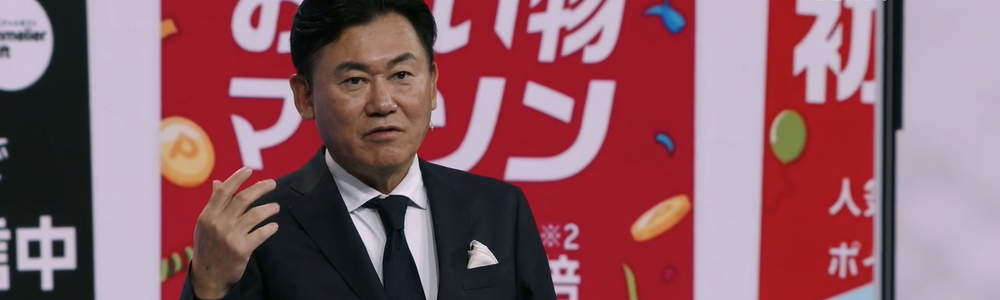
Mobile operators “have more data than Google” and are “sitting on a gold mine” they barely exploit, Rakuten founder and CEO Mickey Mikitani told attendees at this week's Mobile World Congress 2026 event.
During a keynote on the opening day of the conference, Mikitani argued that subscriber data and engagement – and not spectrum alone – can help operators fill the need for new means of revenue generation, with Rakuten taking full advantage to not only maximize revenues but also bring down the total cost of operations.
As a proof point, the CEO pointed to Rakuten’s own ecosystem, contending that when users sign up to Rakuten Mobile, they go on to use 2.43-times more services than before, spending around 50% more on its marketplace, booking 20% more travel, and using its credit card about 30% more.
“It’s huge, but you have to think about how you can connect it,” Mikitani said, with his team at Rakuten creating its Link rich communication service (RCS) application to drive that user interaction based on personalized user data.
The result? Some 45.6 million monthly active users, with 10 million of those becoming mobile subscribers.
“We have 17-plus services in Japan, based on this, we have more than three trillion data points per year. And we can guess, analyze it, and learn about the behavior of the consumers," Mikitani explained.
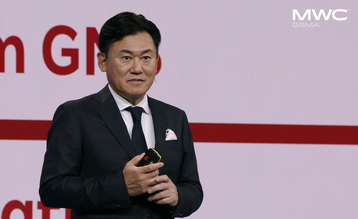
Mikitani told the MWC crowd that beyond analyzing user habits to drive basic subscribers to become high-engagement ecosystem members, Rakuten is using its data "gold mine" to help build out its own large language model (LLM) and maximize advertising revenue.
“Purely from the ad[s], we are making about €250 million ($293 million) of ad [revenue] based on our data, which we learn from mobile service,” the CEO revealed.
However, he warned that higher engagement alone will not save operators in a market where it is “very difficult to dramatically improve ARPU (average revenue per user).”
Rakuten’s answer has been to attack total cost of ownership (TCO) by rebuilding the network around software and cloud.
The company has adopted full virtualization, running its radio access network (RAN) on open RAN principles and using its own cloud stack, operating systems, and business support system (BSS), creating what Mikitani described as one of the world’s largest fully virtualized end-to-end mobile networks.
To help operators take full advantage of their data gold mines, Mikitani made his pitch to provide Rakuten’s ecosystem services to potential telecom clients.
“Not only are we trying to help telecom companies [with] our software, telecom software technologies, but also we would like to provide our expertise on how to convert your subscribers to the rewards program membership, which is going to be extremely profitable," Mikitani said.
“I really believe that [for] the telecom industry, it is time to change from just providing the network connectivity to more enriched consumer services, and if you can convert reward from your telecom service to the very enrichment of the ecosystem, it’s going to be very positive for your business," Mikitani added.




Comments