

With increasing numbers of enterprises wanting AI capabilities but not necessarily needing – or wanting to pay for – high-end hardware, one of the industry’s biggest players is looking to provide a mid-tier offering to bridge the gap.
During a press briefing, Justin Boitano, Nvidia’s VP for enterprise AI, revealed that an increasing number of big-name brands are turning to its RTX Pro servers to transition their computing stack from general-purpose clusters to “an AI factory” without a complete data center overhaul.
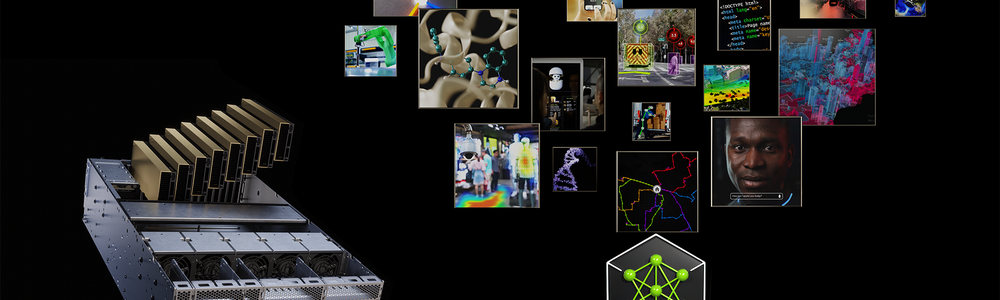
Nvidia’s latest RTX Pro server, the 6000 series, was unveiled earlier this year at Computex to provide enterprises with a more accessible path to AI infrastructure, reducing the need to spend big on Blackwell chips, while still harnessing its flagship architecture.
Earlier this month, the firm unveiled 2U editions at SIGGRAPH. These occupy two standard rack units and tend to focus on general-purpose computing and enterprise workloads, and are being offered by system partners including Cisco, HPE, and Supermicro.
Boitano said that the 6000 series, which Nvidia claims brings up to 45x better performance to bring GPU acceleration to traditional CPU-based workloads, is already seeing pickup from several big players, including its manufacturing partner, TSMC.
The semiconductor maker has applied RTX Pro servers, along with Nvidia’s simulation platform Omniverse, to deploy 3D digital twins of their fabrication facilities to optimize piping and system layouts, and reduce simulation times from “seconds instead of weeks.”
“[TSMC is] also using platforms like Nvidia cuOpt and Isaac Lab to accelerate logistics and automate using robotics,” Boitano added.
Another early RTX Pro series adopter Nvidia showcased was Disney. The entertainment giant is tapping the 6000 series servers to render scenes for rides at theme parks.
Specifically, the hardware will power DLSS 4 neural rendering technologies for simulations on rides like Star Wars: Millennium Falcon – Smugglers Run in May 2026.
“This incredible technology will allow us to bring our breadth of stories to life in spectacular detail and faster than ever before,” said Josh D’Amaro, chairman of Disney Experiences.
ERP giant SAP was listed as another user, with the firm using RTX Pro servers in its own data centers to support its business AI solutions to regulated industries on SAP Cloud Infrastructure.
Boitano outlined that the server line will also help to decrease response times for the vendor’s Joule copilot offering, answering user queries faster.
Stop buying CPUs?
The examples highlight Nvidia’s bet that most enterprise AI workloads don't require its flagship chips that grab headlines, with a growing market for 'good enough' AI acceleration.
Boitano said that the rising interest in AI from enterprises needs to be balanced with existing, older technologies, while also being flexible and powerful enough to handle the intense demands of AI.
“[The RTX Pro servers] run 100% of the things IT managers know,” Boitano added. “They run Windows, they run Linux, they run hypervisors or Kubernetes, all with enterprise-grade security and manageability.”
He outlined that the 6000 series servers are best applied not into mammoth, high-end computing clusters but “power-constrained facilities.”
“Where RTX Pro servers fit in is really in power-constrained data centers that need to be air-cooled, and run all the applications of an enterprise. That is the traditional infrastructure of every enterprise data center in the world.
"We're seeing great adoption really starting to take hold now across these enterprises we highlighted today, and many more who are moving to the RTX Pro platform for those reasons.”
While Nvidia touted the server line as offering a 45x performance gain upon its unveiling back at Computex, Boitano outlined that potential uptick should encourage companies to focus less on snapping up CPUs.
“Most enterprises at this point realize that computational performance with CPUs alone is not giving you the performance increases that enterprises need, and so it's a very low-risk thing to do is take your capex budget for this year, [and] kind of pause buying CPU servers, invest in this infrastructure of the future to power everything from accelerated computing to AI.”



Comments