


Nokia's first financials under new CEO Justin Hotard saw Infinera as a shining light in what was a mixed performance for the European telecom giant.
Total net sales saw a 1% year-on-year (YoY) drop in constant currency at €4.55 billion ($5.3bn), which Nokia put down to currency fluctuations, in particular the weaker USD. Gross margin as a result remained flat YoY at 44.7%, with a 5.67% increase from last quarter.
Nokia's mobile networks segment was down 13% YoY, with the difference attributed to contract settlements that took place in Q2 2024, alongside project delays in the Indian market.
In better news for the telecom giant, network infrastructure saw an 8% increase, while cloud and network services were up 14% due to momentum in 5G Standalone Core.
Nokia attributed its infrastructure success to its optical networks performance, which included a full quarter of financials from the recent acquisition of Infinera, the optical networking firm Nokia bought for $2.3 billion in March of this year.
Net sales in North America grew by 4% compared to last quarter, which Nokia put down to Optical Networks’ continued success in the hyperscale market.
'Mixed' outing but Nokia still 'uniquely positioned'
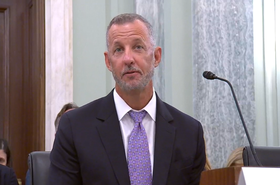
In Hotard's first Nokia briefing call since taking over in February, the CEO went straight out of the gate in calling the results “mixed”, later stating a desire for Nokia to be “more predictable… we haven’t been as predictable as certainly we would expect ourselves to be.”
More optimistically, Hotard noted continued investment in infrastructure. While not explicitly referencing the recent 'Big Beautiful Bill', the CEO noted the expected financial windfall for operators in the U.S., as mentioned by AT&T in its own financials this week, counting the carrier among Nokia’s major customers.
Hotard also sees Nokia as a “uniquely positioned” leader in the market transition towards AI, stating: “It is clear to me that connectivity will be a critical differentiator in the AI super cycle.
"That is true not only for the hyperscalers, where it's visible today, but also for communication service providers, and increasingly in areas like defense and national security.”
Infinera was referred to with multiple positive mentions, even if Hotard conceded Nokia was behind the competition in terms of optical networks – an area that has become “sexy” again, according to some industry analysts who cite AI’s increasing pervasion.
The deal sees Infinera as crucial to Nokia’s next steps, as the market moves toward transport and data center infrastructure, spurring rapid advancements in optical and Ethernet switching technologies.
As a result, Nokia is redirecting R&D toward these high-growth areas, while meeting expectations on performance, security, and usability from hyperscalers and public cloud providers - many of whom are already partners with Nokia on the mobile front.
Referring back to his first 100 days on the job, Hotard underlined what he noticed as a need for Nokia to “be better members in the tech ecosystem".
“What I mean by that is partner externally, think ‘outside in’, and collaborate more with what's happening in tech and across the industries that we play in.”


Comments