

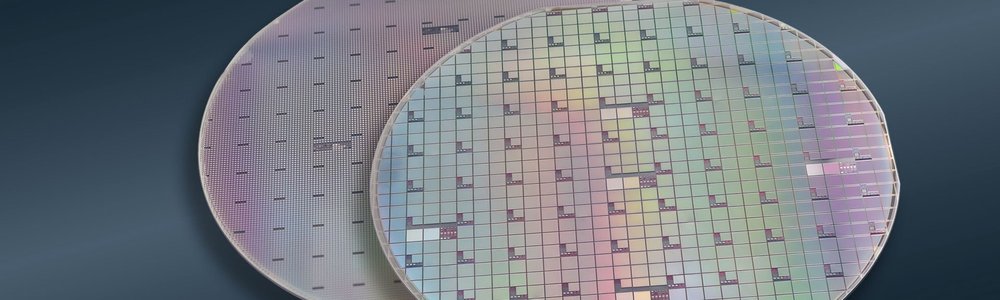
U.S. chipmaker Onsemi has unveiled a new semiconductor material technology it claims can handle far higher voltages and currents compared to traditional chip materials on a smaller footprint.
The Arizona-based firm revealed a line of what it’s calling vertical GaN (vGaN) semiconductors: These are gallium nitride (GaN) chips capable of handling 1,200 volts on a form factor three times smaller than contemporary devices.
Onsemi claims its vGaN units powering high-end systems can reduce losses by almost 50% thanks to its superior switching of high currents at high frequency.
The vendor touts its chips as boosting AI data centers, with the potential to reduce component counts while increasing power density for converters used in AI compute systems. Beyond digital infra, Onsemi is also targeting its vGaN units to provide faster bidirectional power in battery converters and microgrids, or improving higher voltage handling for inverters in renewable energy deployments.
“As electrification and AI reshape industries, efficiency has become the new benchmark that defines the measure of progress,” said Dinesh Ramanathan, SVP of corporate strategy at Onsemi. “With this breakthrough, Onsemi is defining the future where energy efficiency and power density are the currency of competitiveness.”
Material science
Compared to traditional silicon, GaN can handle far greater levels of power, making it efficient and durable for use in semiconductors.
The material’s abilities stem from it being a “wide bandgap” material – meaning it can withstand much larger electric fields without performance degradation. Gallium nitride also has a lower raw thermal conductivity than silicon, meaning it generates less heat while also being able to operate at far higher temperatures compared to traditional silicon.
While silicon has long dominated the semiconductor space, the ever-increasing demand for higher efficiencies and higher power devices has caused vendors to look for novel alternatives.
Late 2024 figures from Markets and Markets suggested the GaN chip market was worth $21.1 billion in 2023, a number projected to rise by a compound annual growth rate (CAGR) of 6.1% to reach $28.3 billion by 2028.
Onsemi’s attempt to bolster the market, then, is a little different compared to most other commercially available GaN devices. Rival systems are built on substrates that aren't actually GaN – typically either silicon or sapphire.
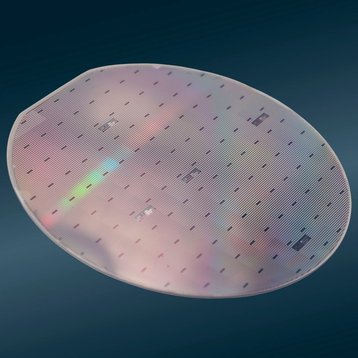
Onsemi's vertical architecture instead uses a GaN-on-GaN substrate, allowing current to flow vertically through the chip rather than laterally across its surface. This vertical current path is what enables the higher power density and voltage handling.
Its vGaN chips represent years of development from Onsemi's Syracuse, New York, R&D team. The firm holds some 130 global patents covering everything from the fundamental process and device architecture to manufacturing and systems innovations.
The company is currently sampling both 700V and 1,200V devices to early access customers, with plans to scale beyond 1,200 volts.
GaN's rough road
Onsemi’s vGaN offering comes after rival manufacturer SweGaN teamed up with Ericsson to work on gallium nitride chips for 6G.
The pair joined forces in early September to create gallium nitride-on-silicon carbide (GaN-on-SiC) solutions capable of being applied to use cases covering 7–15 GHz frequency ranges, spectrum bands widely being explored for 6G.
When combined, GaN and silicon carbide-based chips overheat at far lower rates, a boon for telecom equipment makers like Ericsson, offering units for power-intensive applications like 5G and 6G networks, as well as high-power systems in satellite communications and radar systems.
But while Onsemi and SweGaN are making strides to bring GaN chips to market, one of the biggest names in the semiconductor space stepped away from gallium nitride.
In July, TSMC announced intentions to wind down its gallium nitride foundry service, where it would offer the specialized manufacturing processes to build GaN chips for fabless firms. The news emerged after one of its GaN customers, Navitas Semiconductor, confirmed in a Securities and Exchange Commission (SEC) filing that TSMC would cease GaN production in 2027.
While Navitas would go on to then secure ties with Taiwanese foundry Powerchip Semiconductor Manufacturing Corporation (PSMC), having the world’s largest chip manufacturers drop production for materials that offer efficiency gains could prove costly.
“Growth in GaN power devices has been steady but not explosive,” Omdia’s Callum Middleton wrote in an analyst note. “The upside is still high, but the path has become a lot more challenging.”
TSMC dropped GaN production support to double down on its core of AI chip production, sticking to what it does best, while facing increased competition in the gallium nitride market from Chinese manufacturer Innoscience, as well as Germany’s Infineon.
“Keeping up with these and other players would have required serious amounts of investment at a time when TSMC was being inundated with requests for cutting-edge AI chips,” Middleton wrote. “Focusing there seems to make sense.”
“The richness of innovation in the GaN market is impressive. But it also poses a problem for a customer who requires a low-risk supply chain,” the analyst added. “A company like Nvidia can build a consortium to meet its needs, but for most others, the movement needs to come from the supply side. GaN vendors should work together to ensure that the tide rises and pushes them all in the direction of prosperity.”
Onsemi will, however, manufacture its vGaN chips at its fab in Syracuse.




Comments