

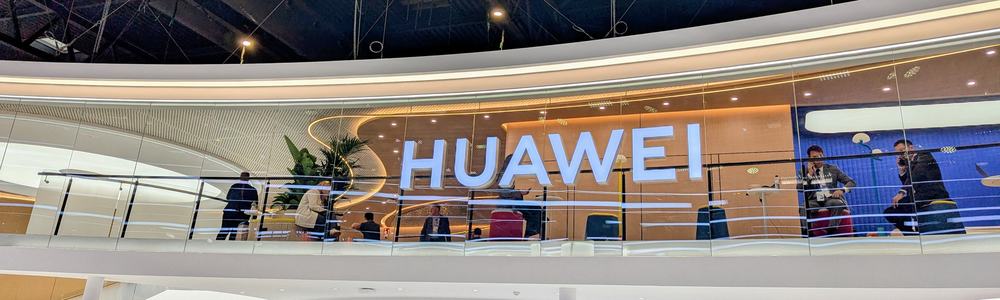
Denmark’s largest operator has won 80 million kroner ($12 million) from the state in compensation for the mandated removal of Huawei kit.
The Eastern High Court in Copenhagen ordered authorities to compensate TDC Net given the financial impact of replacing its dense wavelength division multiplexing (DWDM) network.
TDC had followed a 2023 order by the Center for Cyber Security, the Danish national IT security authority, to remove Huawei equipment from its security out of concerns for national security.
Having sourced DWDM equipment from Huawei since 2011, the firm signed an agreement in 2020 to extend its partnership. The following year, Denmark's Telecommunications Security Act came into force, granting authorities the power to block such agreements on national security grounds.
With TDC essentially deprived of property, the court said the order constituted expropriation.
“The High Court emphasized, among other things, that TDC Net had, since 2011, in good faith built and maintained an extensive DWDM network based on Huawei equipment, and that the ban in practice necessitated a total replacement of this network. The intervention was specifically directed at TDC Net and went beyond ordinary regulation,” the court said in a statement.
TDC had sought 195 million kroner (around $19.7 million) in compensation. Although the court ordered the Danish state to compensate TDC and cover the majority of its legal fees, it upheld the state's right to ban the equipment, ruling that the decision was justified by objective security assessments. For these reasons, it rejected TDC’s claim that
the order had been an illegal one.
The Huawei rip-and-replace saga
The use of Huawei equipment in Europe has long been a contentious issue for the continent, with the starting gun fired with the 2020 launch of the EU Toolbox for 5G security.
January saw the European Union (EU) propose enforcing compliance with the Toolbox, calling out the heightened vulnerability risk stemming from “high dependency on non-European suppliers, on high-risk suppliers, and single suppliers.”
Rumors of the high-risk vendor ban had been rumbling since late last year, with the European Commission reported to be enforcing the Toolbox by placing financial sanctions on nations that didn’t “rip and replace” the offending gear. That came amid reports Finland and Germany were galvanizing efforts to brick out Huawei from their national infrastructures.
According to Brussels' proposal at the start of the year, only 13 member states had implemented restrictions on high-risk suppliers since the Toolbox’s implementation. While Brussels did not outright name what it deemed as high-risk vendors, it did point to research from Strand Consult that the current proportion of 5G sites in the EU and five other countries provided by both Huawei and ZTE was 32%, dropping to a predicted share of 29% in 2028.
Analyst John Strand from the research firm told SDxCentral that networks from DT subsidiary T-Mobile are largely Huawei-based, with 100% penetration across Austria, Greece, and the Czech Republic; 70% penetration in its Poland operations; 58% penetration in Germany; and half across its Croatian networks.
While the Commission estimated replacing such networks would cost up to $5 billion for the non-upgradeable equipment over three years, its proposal did not give a deadline for members to meet in replacing the equipment, nor did it break down penalties for non-compliance.





Comments